
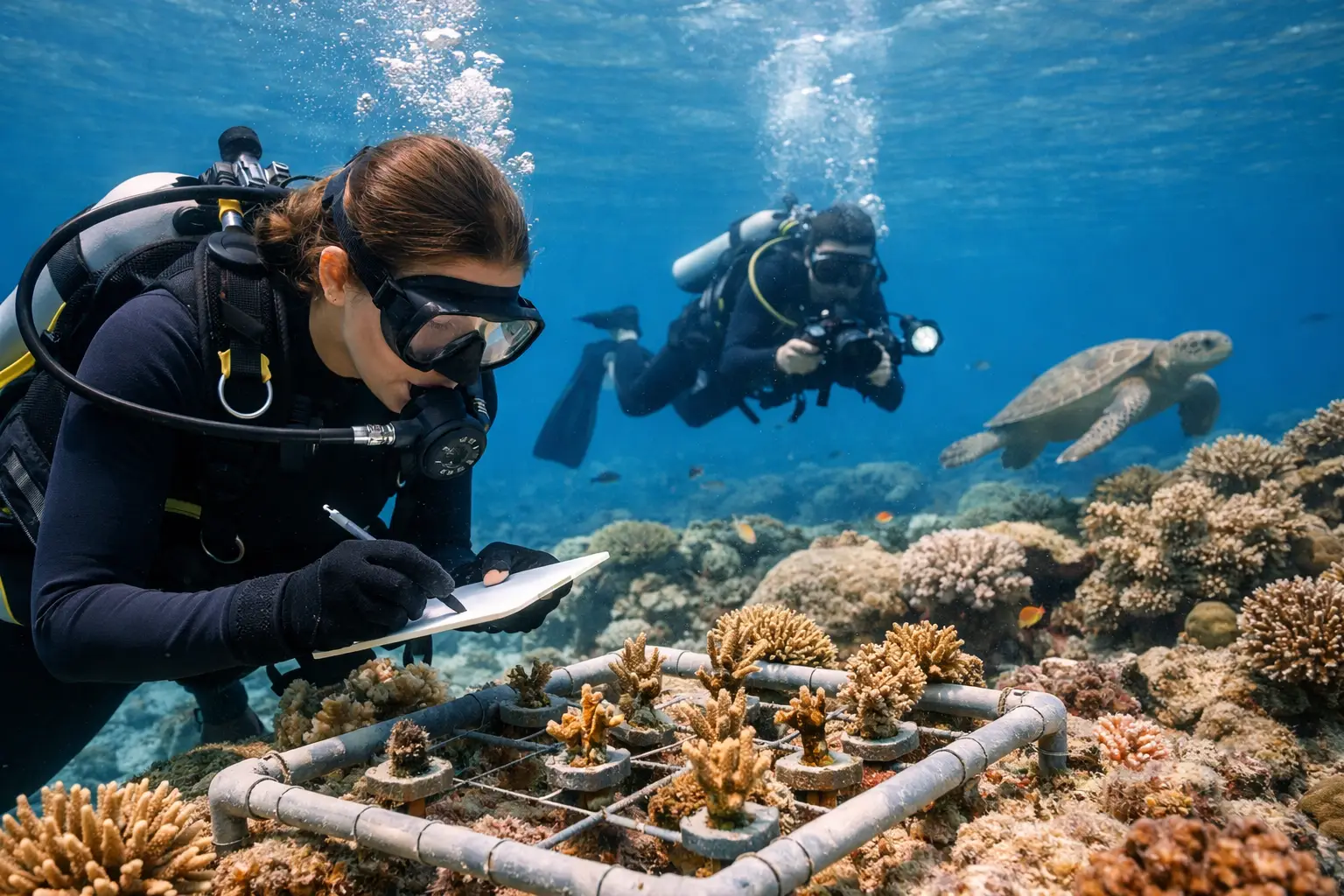
A healthy reef is loud in all the best ways: parrotfish crunching algae, damselfish defending their tiny territories, and schools of blue tang moving over coral heads in flashes of color. Reef conservation diving is about protecting that living energy while still experiencing the thrill that brought you underwater in the first place. For visitors to Tulum, it turns a beautiful day on the Caribbean into something more lasting: a chance to leave the reef in better condition than you found it.
This is not about expecting every recreational diver to become a marine biologist. It is about learning what your choices mean below the surface, from the way you control your buoyancy to the operators and activities you support. Small actions matter because reefs are complex systems, and damage often begins with small, repeated pressures.
What Reef Conservation Diving Really Means
Reef conservation diving combines responsible dive practices with a genuine commitment to reef protection. At its simplest, it means enjoying the reef without touching, chasing, feeding, collecting, or accidentally damaging the animals and corals that live there. At a deeper level, it means building the skills and knowledge to recognize what a reef needs and choosing experiences that support its future.
Coral is easy to mistake for rock or a tough underwater plant, especially from a distance. It is made up of living animals, and even a quick fin kick or handhold can break fragile branches, strip protective tissue, or stress a colony already coping with heat, storms, disease, and poor water quality. A diver with excellent buoyancy can hover close enough to appreciate intricate coral structures without making contact. That skill is conservation in action.
Conservation also means respecting the entire food web. Herbivorous fish such as parrotfish and surgeonfish help keep algae from overtaking corals. Predators play a role too. When divers avoid feeding wildlife or disturbing natural behavior for a photo, they protect the relationships that keep the reef functioning.
Start With the Skill That Protects Reefs Most
The most valuable conservation tool in a diver’s kit is not a camera, pointer, or reef-safe product. It is buoyancy control.
Before entering a reef site, take an honest look at your comfort level. Can you hold a safety stop without grabbing a line? Can you adjust your position without sculling your hands? Can you turn around in a tight space while keeping your fins clear of the bottom? If the answer is not yet, that is not a failure. It is a powerful reason to practice in open water, work with an instructor, and choose a site suited to your current ability.
Proper weighting is part of the picture. Carrying too much weight makes it harder to maintain a stable horizontal position and can lead to fast descents, kicking near the reef, or settling onto the bottom. A careful weight check with a professional can improve comfort, air consumption, and reef awareness at the same time.
Finning technique matters too. Wide, powerful kicks may be useful in open blue water, but they can stir up sand and harm corals in shallow areas. Controlled frog kicks and slow, deliberate movements help divers move through sensitive spaces with less impact. Keep gauges, alternate air sources, and camera equipment secured close to your body so they do not drag across the reef.
The photo rule: get close with your eyes, not your hands
Underwater photography can create powerful respect for the ocean, but it has a trade-off. The search for the perfect image can pull attention away from depth, air, current, and distance from the reef. Set your position first. Then take the photo.
Never brace yourself on coral, move an animal for a composition, or hover so close that your fins risk contact. A wide-angle image that shows a turtle or ray moving naturally through its habitat often tells a better story than a tightly framed shot created by crowding wildlife. The same applies to video: calm, patient observation beats pursuit every time.
Choose Operators That Put the Reef First
A responsible dive center does more than mention conservation in its marketing. You can see the difference in its daily decisions. Briefings explain local rules and reef etiquette. Guides manage group size, select sites based on conditions and diver ability, and step in when someone needs help refining their technique. Equipment is maintained, boats are operated thoughtfully, and staff make safety the foundation of every experience.
Ask direct questions before booking. How does the center handle accidental contact with coral? Do guides encourage wildlife interactions, or keep respectful distance? Are mooring buoys used rather than anchors at reef sites? Does the team participate in local cleanups, education, monitoring, or restoration work? There is no single perfect answer, and local regulations vary, but a serious operator should be comfortable explaining its practices.
At Infinity2Diving, reef adventures are guided with the same safety-led approach used across PADI training. That means matching the experience to your certification and comfort level, giving clear briefings, and helping divers build habits that travel with them to every ocean destination.
It also helps to look beyond the boat. Choose accommodations and travel habits that reduce single-use plastic, conserve freshwater, and avoid sending harmful products into local waterways. Coastal ecosystems are connected. What happens on land does not stay on land.
How to Take Part in Reef Conservation Diving
The right activity depends on your experience, travel schedule, and what is available locally. A first-time diver may make the biggest difference by learning strong fundamentals during an introductory program or certification course. A newly certified diver may benefit from a buoyancy-focused continuation course before trying more challenging conditions. Experienced divers can look for structured citizen-science, cleanup, monitoring, or restoration opportunities led by qualified local organizations.
Do not assume every cleanup is automatically low-impact. Removing debris from a sandy area can be useful, but pulling fishing line from living coral or handling sharp waste may require special training and tools. The same applies to coral restoration. Planting or maintaining coral can be meaningful, yet it should be part of a science-based program with permits, local expertise, and long-term monitoring. Good intentions are strongest when they follow sound practice.
If a formal conservation activity is not part of your trip, you can still make every reef dive more valuable. Pay attention to what you see. Notice unusual bleaching, broken coral, entangled animals, or invasive species, then report concerns to the guide or local professionals rather than trying to fix a problem alone. Share accurate stories and photos after the dive, especially the less glamorous ones that show why reef protection deserves support.
Respect the Reef Before You Enter the Water
A responsible reef day starts on the boat and even before that. Use only products permitted by local guidance and avoid treating sunscreen as a free pass to ignore other impacts. The most effective protection is often physical coverage such as a rash guard, dive skin, or hat when you are on the surface. Apply any necessary product well before getting in the water, and follow site-specific rules.
Bring a refillable water bottle, secure loose items, and make sure nothing can blow overboard. Avoid buying coral, shells, or marine life souvenirs. They may seem small, but demand encourages removal from ecosystems that need every living part.
Listen closely during the briefing, even if you have hundreds of logged dives. Conditions shift with currents, visibility, boat traffic, and seasonal wildlife activity. Local knowledge is one of the greatest safety and conservation resources a visiting diver has.
A better standard for experienced divers
Experienced divers set the tone underwater. If you are confident, make that confidence visible through calm control, not by getting closer than everyone else or taking unnecessary risks. Give newer divers room, point out good habits without shaming, and model patient behavior around wildlife.
This matters especially in popular destinations. When one diver touches coral or chases a turtle, others may assume it is acceptable. When a group holds position, keeps its distance, and moves slowly, that example spreads too. Conservation is cultural as much as it is technical.
Let Your Training Grow With Your Purpose
Every certification is a chance to become a more capable and more thoughtful diver. Open Water training builds the core habits of planning, awareness, and buoyancy. Continuing education can sharpen navigation, peak performance buoyancy, deep-diving judgment, and environmental knowledge. For divers working toward Divemaster or Instructor-level goals, conservation becomes part of leadership: setting standards, reading conditions, and helping others experience the ocean responsibly.
The goal is not to make reef diving feel fragile or restrictive. The goal is to make it richer. When you understand the reef as a community rather than a backdrop, you notice more. You see cleaner fish working at a station, juvenile fish sheltering in coral branches, and the subtle signs of a reef recovering or struggling.
On your next Caribbean dive, choose one simple intention before you descend: hold perfect position, keep every fin clear of the reef, or spend one full minute observing without reaching for a camera. That quiet attention is where a diver becomes a steward, and where the memory of Tulum’s blue water can become a reason to protect it.