
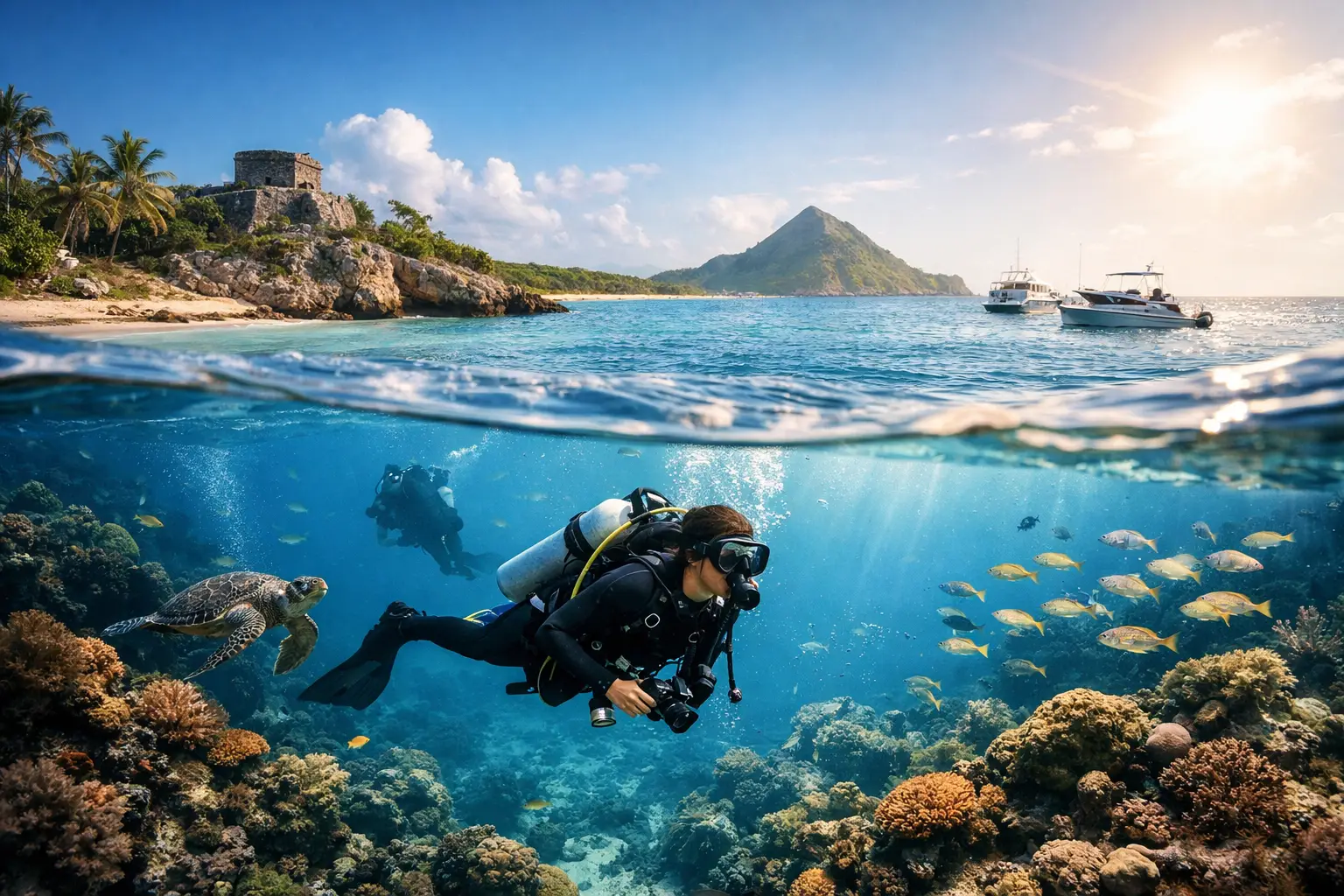
A morning cenote swim, an afternoon reef descent, and dinner with divers who started the week as strangers is still a Riviera Maya classic. But Mexico dive travel trends are changing what travelers expect from that experience. Visitors are no longer satisfied with simply collecting underwater photos. They want capable instruction, more personal itineraries, meaningful nature encounters, and a trip that leaves them more confident than when they arrived.
For travelers coming to Tulum and the wider Riviera Maya, that shift creates a better kind of choice. You can build a vacation around a first breath underwater, add a certification that travels home with you, or use a few focused days to move toward Divemaster or Instructor-level goals. The best itinerary depends on your experience, comfort in the water, available time, and what you want the trip to mean after the tan fades.
Mexico Dive Travel Trends: More Skill, Less Checklist
The strongest trend is a move from passive sightseeing to active learning. Divers still come for sea turtles, vibrant reef life, caverns filled with light, and the surreal calm of freshwater cenotes. Increasingly, though, they also want to understand buoyancy, improve air consumption, become more comfortable with navigation, and make better decisions underwater.
This is especially true for travelers who earned an entry-level certification years ago and have not been diving regularly. A quick refresher, a private guide, or a thoughtfully paced continuation course can turn nervousness into genuine enjoyment. It also makes the actual dives better. When you are not fighting your trim or wondering what to do next, you have more attention for the environment around you.
For newer divers, the appeal is clear: vacation time can become a real milestone. Completing an Open Water course or continuing into Advanced Open Water in Mexico offers far more than a digital certification card. It gives you a structured path into a sport that can shape future travels, friendships, and even careers.
For experienced divers, the demand is moving toward purposeful progression. Deep, wreck, nitrox, sidemount, technical, and cave training are attracting people who want their next challenge to be earned, not rushed. The right course is never the most extreme one available. It is the one that matches your current experience, goals, and readiness.
Cenotes Are Becoming a Main Event
Mexico’s cenotes have always been extraordinary, but they are increasingly the reason people plan the trip in the first place. Travelers are drawn to the contrast: warm Caribbean light above ground, limestone formations below, and water so clear that depth and distance can feel almost unreal.
That growing interest also makes guidance more important. Cenote diving is not one interchangeable experience. Conditions, depth profiles, overhead environments, visibility, access, and certification requirements vary by site. A certified cavern diver on a guided route has a very different experience from a recreational diver visiting an open-water cenote, and neither should be confused with full cave diving.
Choose a center that explains the distinction plainly and never blurs training limits for a dramatic photo. Great cenote experiences are built on conservative planning, excellent buoyancy, proper equipment, and guides who know how to bring the wonder of the environment forward without compromising safety.
There is a practical planning trend here, too. Travelers are building mixed itineraries rather than booking every day at sea. A cenote day can be a smart alternative when wind or surface conditions make boat diving less appealing. That flexibility is valuable, especially during a short trip where every day counts.
The appeal is contrast, not just novelty
A reef dive and a cenote dive can feel like two separate destinations. Reefs offer movement, color, fish behavior, and the rhythm of the ocean. Cenotes offer stillness, geological scale, and striking light effects. Pairing both creates a richer week than repeating the same style of dive each day.
Smaller Groups and More Personal Guidance
Travelers are paying closer attention to who will actually be in the water with them. They want groups that allow room for questions, equipment checks, individual pacing, and real connection with the guide. This matters to first-time divers, but it matters just as much to certified divers trying to sharpen their skills or explore a new environment.
Smaller groups are not automatically better in every circumstance. A social traveler may love a lively boat full of divers, while a family may prioritize a private experience. What matters is honest expectations. Ask about group size, instructor-to-student ratios for courses, who leads the dive, and how the day is organized from pickup through return.
All-inclusive pricing is also becoming more valuable because it removes unwelcome surprises. Divers should know what their package covers: transportation, equipment, entrance fees, marine park fees where applicable, course materials, certification costs, and meals or refreshments. Clear answers make it easier to compare experiences on quality instead of chasing a low headline price.
At Infinity2Diving, that clarity is part of treating every guest like a future member of the diving community, whether they are trying scuba for the first time or building a professional pathway.
Conservation Has Moved From Message to Practice
Marine conservation is no longer a decorative paragraph at the bottom of a booking page. Many travelers want to know how their choices affect reefs, wildlife, and freshwater systems. They are looking for operators that brief divers on responsible behavior and put those standards into daily practice.
That begins with buoyancy and awareness. Touching coral, chasing turtles, standing on the reef for a photograph, or stirring sediment in a cenote can change the experience for everyone who follows. Good guides set expectations before entering the water, and good divers see those expectations as part of the privilege of being there.
Travelers are also asking smarter questions about sunscreen, single-use plastics, local employment, marine protected areas, and wildlife encounters. The answer will not always be perfect. Tourism has an environmental footprint, and popular destinations must continually manage pressure on natural spaces. Still, choosing a safety-led, conservation-minded operator is one direct way to make your trip more responsible.
The Rise of Career-Track Dive Travel
Another defining shift is the growth of travelers who arrive with more than a vacation in mind. Remote workers, career changers, gap-year travelers, and committed enthusiasts are using extended stays in Mexico to begin professional dive training.
The Riviera Maya is well suited to this because students can gain experience across different environments while working through a structured program. A professional track can include practical workshops, assisting experience, skill demonstrations, theory development, rescue-level confidence, and leadership training. It is demanding by design. Becoming a dive professional requires consistency, judgment, fitness, and the willingness to keep learning after the course ends.
This path is not for everyone, and it should not be sold as an escape from serious work. It is serious work. But for people who feel most focused, useful, and alive underwater, professional development can become a powerful turning point. The key is choosing a program with recognized credentials, experienced instructors, transparent prerequisites, and enough time to develop rather than race through requirements.
Plan Around Conditions, Not Just Calendar Dates
Travelers often ask for the single best month to dive in Mexico. The honest answer is that it depends on what you want to see, where you plan to dive, and how flexible your schedule can be. Ocean conditions, visibility, rainfall, water temperature, seasonal wildlife, and weather patterns all influence the experience.
A better strategy is to choose your priorities first. If cenotes are at the top of the list, build in multiple freshwater days. If ocean wildlife and reef time matter most, leave enough room in your schedule for boat conditions to change. If you are taking a course, avoid overpacking your itinerary with late nights, long transfers, and activities that leave you exhausted before training.
Book early for periods of high demand, particularly if you want a specific instructor, private guidance, or a multi-day professional program. Then arrive with an open mind. Some of the most memorable days happen when a guide recommends a different site because the conditions are ideal there.
Your Mexico dive trip does not need to be a race through the most famous sites. Give yourself time to learn, ask questions, and notice what kind of diver you are becoming. The underwater world rewards curiosity, patience, and the confidence that comes from doing things well.