
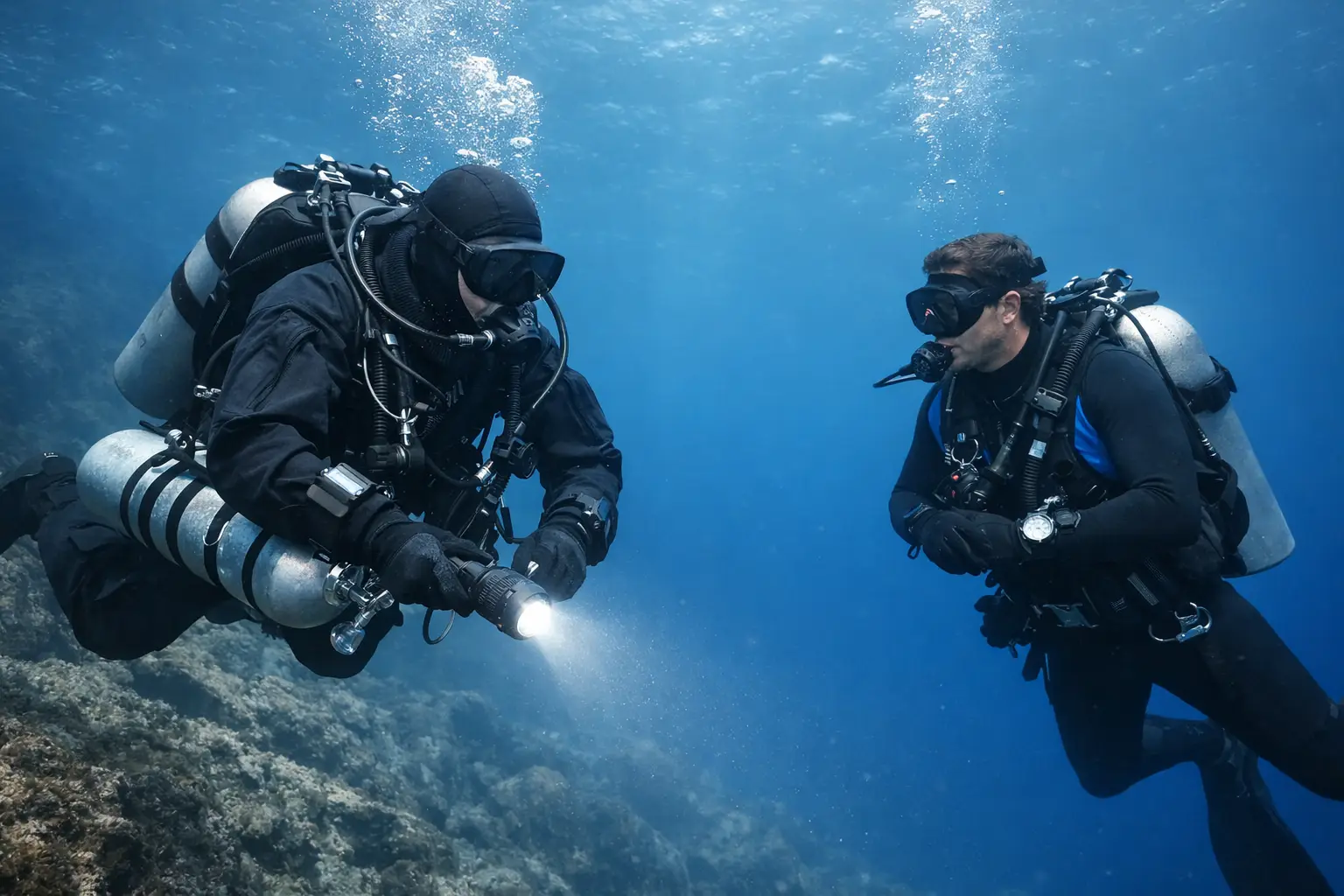
The moment a recreational dive stops being a simple no-decompression outing, the conversation changes. Technical diving for recreational divers is not about collecting a more impressive card or chasing depth for its own sake. It is about building the skills, equipment knowledge, and calm decision-making needed for dives with greater commitment – and greater responsibility.
For many certified divers, that next step begins with a question: What else is possible? Perhaps you have watched experienced divers descend with twin cylinders, heard about the quiet blue beyond recreational limits, or felt drawn to the extraordinary systems beneath the Riviera Maya. Technical training can open new doors, but only when the foundation underneath is solid.
What Makes a Dive Technical?
Technical diving generally involves planned decompression, specialized breathing gases, redundant life-support equipment, or diving in environments where a direct ascent may not be possible. A technical dive may include deeper open-water profiles, extended bottom times, staged decompression stops, or an overhead setting such as a wreck or cavern. Each element demands more preparation than a standard recreational dive.
The key difference is not simply depth. A 100-foot recreational dive can be demanding, while a shallower decompression dive can be technical. What matters is the level of commitment. When a diver cannot make a direct ascent to the surface, the team must carry the equipment, gas, knowledge, and contingency plans to manage problems underwater.
That is why technical training is built around discipline. You learn to analyze a plan, calculate gas needs, manage task loading, maintain precise buoyancy, and respond methodically when something does not go as expected. It is challenging, but for the right diver, deeply rewarding.
Technical Diving for Recreational Divers Starts With Honest Readiness
A strong recreational background is the best entry point into technical diving. You do not need to be a lifelong diver, but you should be genuinely comfortable in the water. Buoyancy should feel controlled rather than constantly corrected. Mask clearing, regulator recovery, and navigation should be familiar skills, not tasks that consume all your attention.
Experience matters because technical diving adds layers. You may be managing a long hose, two regulators, a backup mask, a stage cylinder, a decompression schedule, and a teammate’s position while maintaining depth and trim. The goal is not to make diving feel complicated forever. Good training makes the system repeatable, organized, and calm.
Before enrolling in a technical course, ask yourself whether you enjoy practicing fundamentals. Technical divers spend serious time refining propulsion techniques, holding stable stops, deploying surface marker buoys, and rehearsing emergency drills. If that sounds satisfying rather than tedious, you may be ready for the next challenge.
A trusted instructor will assess more than your certification level. They will look at comfort, awareness, buoyancy, attitude, and willingness to slow down. There is no prize for rushing. Sometimes the smartest route is to take an Advanced Open Water course, build more logged dives, or focus on peak performance buoyancy before moving into technical training.
The Equipment Has a Purpose
Technical gear can look intimidating at first. Twinsets, sidemount configurations, harnesses, long hoses, backup lights, cutting devices, and decompression cylinders are not accessories. Each piece is selected to solve a specific problem and create redundancy where it matters.
For example, a diver carrying two independent regulators has access to a backup breathing source if one fails. A long hose helps a team share gas while swimming in a controlled formation. Proper trim keeps the body stable and horizontal, which protects fragile environments and reduces effort during long dives.
Configuration is not one-size-fits-all. Backmount doubles can be an excellent choice for many open-water technical paths. Sidemount may suit divers who value streamlining, flexibility, and certain cave-oriented applications. The right system depends on your body, goals, local diving conditions, and the training route you choose.
What should never change is the principle behind the equipment: every item must be accessible, familiar, and used consistently. Technical divers do not improvise their setup on the day of a demanding dive.
Decompression Is Planned, Not Feared
One of the biggest shifts for recreational divers is learning to think beyond no-decompression limits. On a recreational profile, your computer may tell you when it is time to ascend. On a decompression dive, stops are part of the plan from the beginning.
That does not mean technical divers ignore their computers. They use them alongside written plans, gas calculations, backup timing devices, and conservative decision-making. The team knows the maximum depth, expected runtime, turn pressure, decompression gases, and what to do if the dive must end early.
This planning creates freedom, but it is a structured kind of freedom. A longer bottom time can mean more opportunity to observe a wreck, document a reef, or explore a deeper section of open water. It also means accepting that you cannot simply surface whenever you want. That trade-off must feel worthwhile to you.
Cenotes, Caverns, and Caves Are Different Paths
Tulum’s cenotes inspire many divers to think about technical and cave training, but these disciplines are not interchangeable. Cavern diving takes place within daylight-zone limits and follows strict boundaries. Cave diving moves beyond natural light into a true overhead environment, where navigation, line protocols, gas management, and emergency procedures become even more exacting.
Technical experience can support a future cave path, and cave skills can strengthen a diver’s awareness and control. Still, one certification does not replace the other. A deep technical diver is not automatically prepared for cave penetration, and a cave diver should not assume that decompression procedures require no further training.
This distinction protects both divers and the environment. Cenotes are living freshwater systems with delicate formations and unique cultural importance. The privilege of seeing them comes with an obligation to use excellent buoyancy, follow training limits, and choose guides and instructors who respect the site.
How to Build a Smart Progression
A practical progression often begins by strengthening recreational essentials: buoyancy, trim, propulsion, rescue skills, and comfort in varied conditions. From there, a diver may move into a technical foundations course, sidemount training, or an introductory technical program designed to teach equipment configuration and advanced skills before significant decompression is added.
The next stages commonly introduce decompression procedures and limited accelerated decompression using appropriate gases. Advanced technical training expands the planning, equipment, depth range, and gas options. The exact route depends on agency standards, instructor recommendations, medical fitness, and the type of diving you want to do.
Do not buy every piece of gear before your first course. Many students benefit from trying equipment under expert guidance, then investing after they understand how different systems feel in the water. Quality gear is valuable, but training, repetition, and sound judgment matter more than a fully loaded setup.
At Infinity2Diving, technical development is approached as a personal progression, not a production line. The best training environment combines high standards with the space to ask questions, repeat a drill, and build confidence at a pace that supports real competence.
The Mindset That Makes the Difference
Technical diving asks you to become more deliberate. You plan the dive, then remain ready to change it. You learn to recognize when conditions, equipment, or team readiness do not support the original plan. Calling a dive is never failure when it protects the team.
It also asks for humility. Even accomplished recreational divers can feel challenged by a new configuration or a precise valve drill. That is normal. The goal is not to look effortless on day one. The goal is to become reliable enough that, when the stakes are higher, your responses are steady and practiced.
If technical diving is calling you, let curiosity lead, but let preparation set the pace. The most memorable underwater adventures are not the ones that push past a limit. They are the ones you are trained, equipped, and fully present to enjoy.