
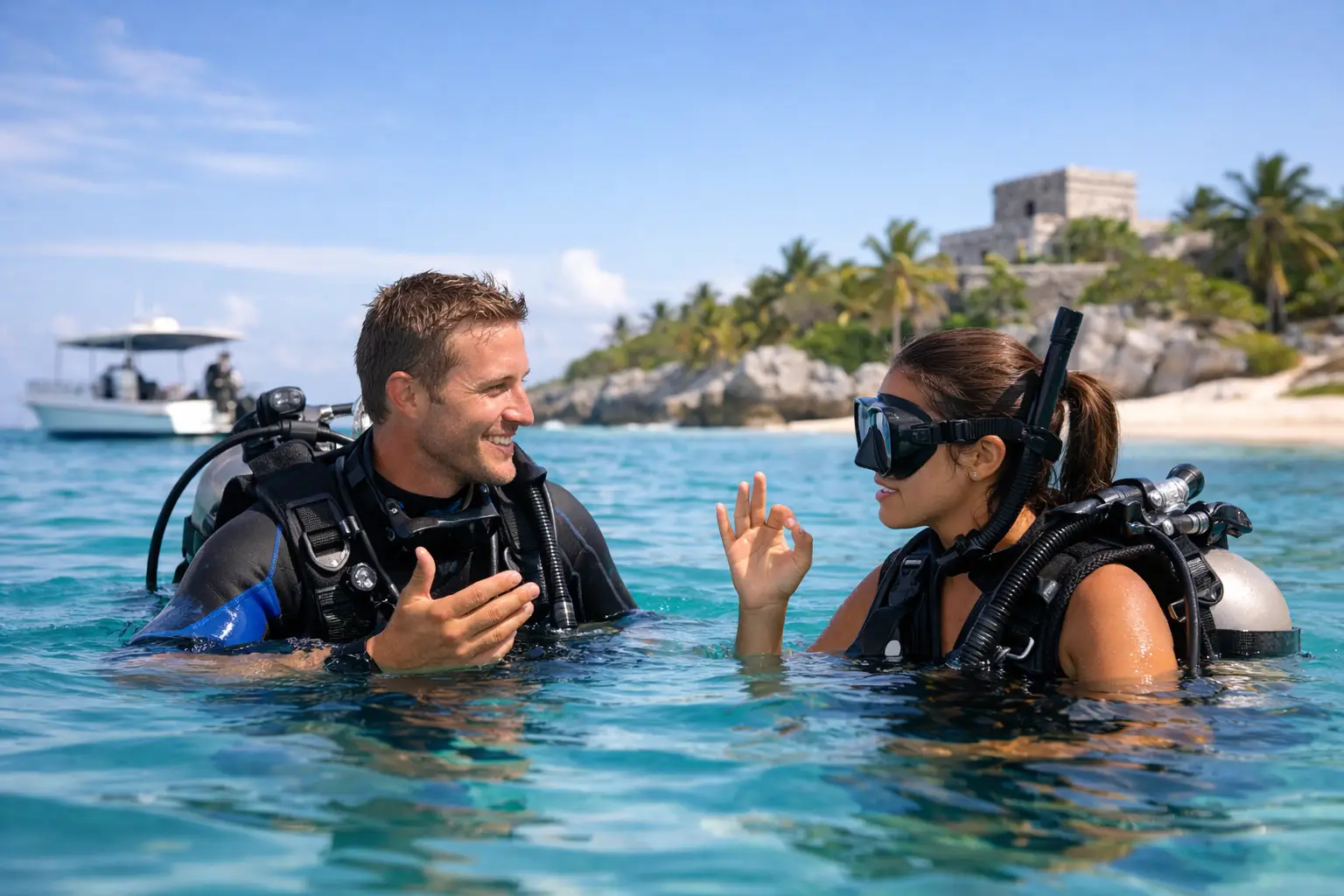
You can tell pretty quickly when someone chose scuba as a hobby and when they are starting to imagine a life built around it. The questions change. It stops being just about the next dive trip and starts becoming about teaching, leadership, confidence, and whether a PADI instructor internship is the right bridge between loving diving and making it your profession.
That bridge matters more than many divers realize. Passing an Instructor Development Course is one thing. Becoming the kind of instructor people trust with their first breath underwater is something else entirely. An internship helps close that gap by turning certification-level knowledge into real-world teaching experience.
What a PADI instructor internship actually does
A PADI instructor internship is designed to help a developing dive professional move from course theory into daily practice. Instead of only learning standards in a classroom or rehearsing confined-water presentations for an exam, you begin working in the rhythm of an active dive center. You see how briefings are delivered to nervous beginners, how student problems are spotted before they become safety issues, and how a strong instructor balances calm leadership with genuine enthusiasm.
That practical exposure is what gives the internship its value. You are not just collecting dives or adding another line to your resume. You are learning how to teach in changing conditions, communicate with different personalities, and maintain professional standards while still creating a memorable experience for students and certified divers alike.
For many candidates, the biggest shift is confidence. Before an internship, you may know the answer. During an internship, you learn how to explain the answer clearly, demonstrate it well, and adapt when a student still needs a different approach.
Why Tulum changes the experience
Location is not just a backdrop when you are training to become an instructor. It shapes the kind of diver and professional you become. Tulum offers a rare mix of training environments that can accelerate your learning in a very real way.
On one day, you may be refining teaching skills with entry-level students. On another, you may be observing how experienced professionals guide certified divers through reef or cavern environments with precise planning and strong situational awareness. That range gives context to your development. You start to understand not only how to teach, but how different types of diving operations function and what level of professionalism each environment demands.
There is also a mindset shift that comes from training in a destination people travel across the world to experience. Guests arrive excited, often a little nervous, and with high expectations. Learning to meet that energy with safe, polished instruction is excellent preparation for an international dive career.
What you should expect from a strong PADI instructor internship
Not every internship offers the same value. Some are little more than observation periods with extra costs attached. Others are structured to build genuine teaching ability. The difference usually comes down to mentorship, standards, and how much intentional practice is built into the program.
A strong internship should place you close to active instructors, not on the sidelines. You should be getting feedback on how you brief, demonstrate, manage student stress, organize equipment, and conduct yourself as part of a professional team. The best programs do not simply praise effort. They correct details, challenge weak habits, and push you toward consistency.
You should also expect exposure to the less glamorous side of the job. Real instructor life includes logistics, equipment care, student follow-up, timing, paperwork accuracy, and teamwork. That may not sound exciting compared with a giant stride into clear blue water, but those details are exactly what make an instructor reliable.
The ideal balance is hands-on, supervised, and structured. Too little responsibility and you do not grow. Too much responsibility too soon and the training can become risky or chaotic. Good mentorship sits in the middle.
The skills that matter most
When divers picture becoming an instructor, they often focus on dive skills and water comfort. Those absolutely matter, but they are only part of the picture. A successful internship develops a wider professional toolkit.
Communication is usually the biggest differentiator. Great instructors explain complex ideas in simple language, read body language quickly, and adjust their tone depending on whether they are talking to an anxious beginner, a highly analytical student, or a traveler who just wants clear direction.
Judgment is another major piece. You need to know when to slow down a course, when a student needs more practice, and how environmental conditions affect the plan. That kind of judgment is not built from a manual alone. It grows through repetition, observation, and honest feedback.
Then there is presence. Students feel it immediately. A strong instructor projects calm, preparation, and control without becoming cold or intimidating. That balance is one of the hardest things to teach and one of the most valuable things to practice during an internship.
Who a PADI instructor internship is really for
A PADI instructor internship makes the most sense for divers who are serious about doing this well, not just doing it quickly. If your goal is to pass the Instructor Examination and start working with the strongest possible foundation, an internship can be a smart investment.
It is especially useful if you have solid dive experience but limited teaching experience. Many excellent Divemasters are comfortable guiding certified divers yet feel less certain when they need to break down skills, correct mistakes, or manage the pace of a full training day. An internship helps turn those weak spots into strengths.
It can also be the right choice if you are changing careers or planning a long-term travel lifestyle. In that case, you are not just looking for a certification card. You are looking for employability, confidence, and a realistic understanding of what professional diving actually demands.
That said, it depends on your timeline and goals. If you already have extensive teaching or coaching experience in another field, you may need less supported practice than someone coming in completely new to instruction. The best decision is not always the fastest route. It is the route that leaves you genuinely ready.
Questions to ask before you commit
Before joining any internship, ask how much direct mentorship you will receive and who will be training you. Ask whether the program includes real teaching opportunities, whether feedback is formal or casual, and how performance is evaluated over time.
You should also ask about the training environment. Are you learning in a busy operational setting where you can observe different student profiles and real daily logistics? Are safety standards clear? Is the team experienced in developing dive professionals, not just selling courses?
Cost matters too, but value matters more. A cheaper internship that leaves you underprepared can become expensive later if you struggle to find work or feel shaky in front of students. An all-inclusive structure with transparent pricing often makes it easier to focus on training rather than constantly calculating add-ons.
Building a career, not just earning a rating
The strongest reason to choose an internship is simple. It helps you become the kind of instructor people remember for the right reasons. Not because you rushed them through a course, but because you made them feel safe, capable, and excited to continue diving.
That reputation starts long before your first independent teaching job. It starts in training, with the habits you build and the standards you accept. Working with a high-level professional team in a place like Tulum can sharpen those habits fast, especially when the environment combines world-class diving, diverse guests, and a clear commitment to safety and quality.
For divers looking at the professional path in Mexico, Infinity2Diving stands out because it brings together career development, premium instruction, and the kind of destination diving that reminds you why this path is worth pursuing in the first place. That combination matters. You want a training environment that pushes you, supports you, and still keeps the experience connected to the adventure that got you here.
A PADI instructor internship will not magically make someone a great teacher overnight. What it can do is give you the repetitions, feedback, and perspective that transform raw potential into professional readiness. And if you are standing at that point where diving feels bigger than a pastime, that kind of preparation can shape the entire career that follows.
Choose the path that makes you better, not just faster. Future students will feel the difference the moment you say, “Take a slow breath and look at me.”