
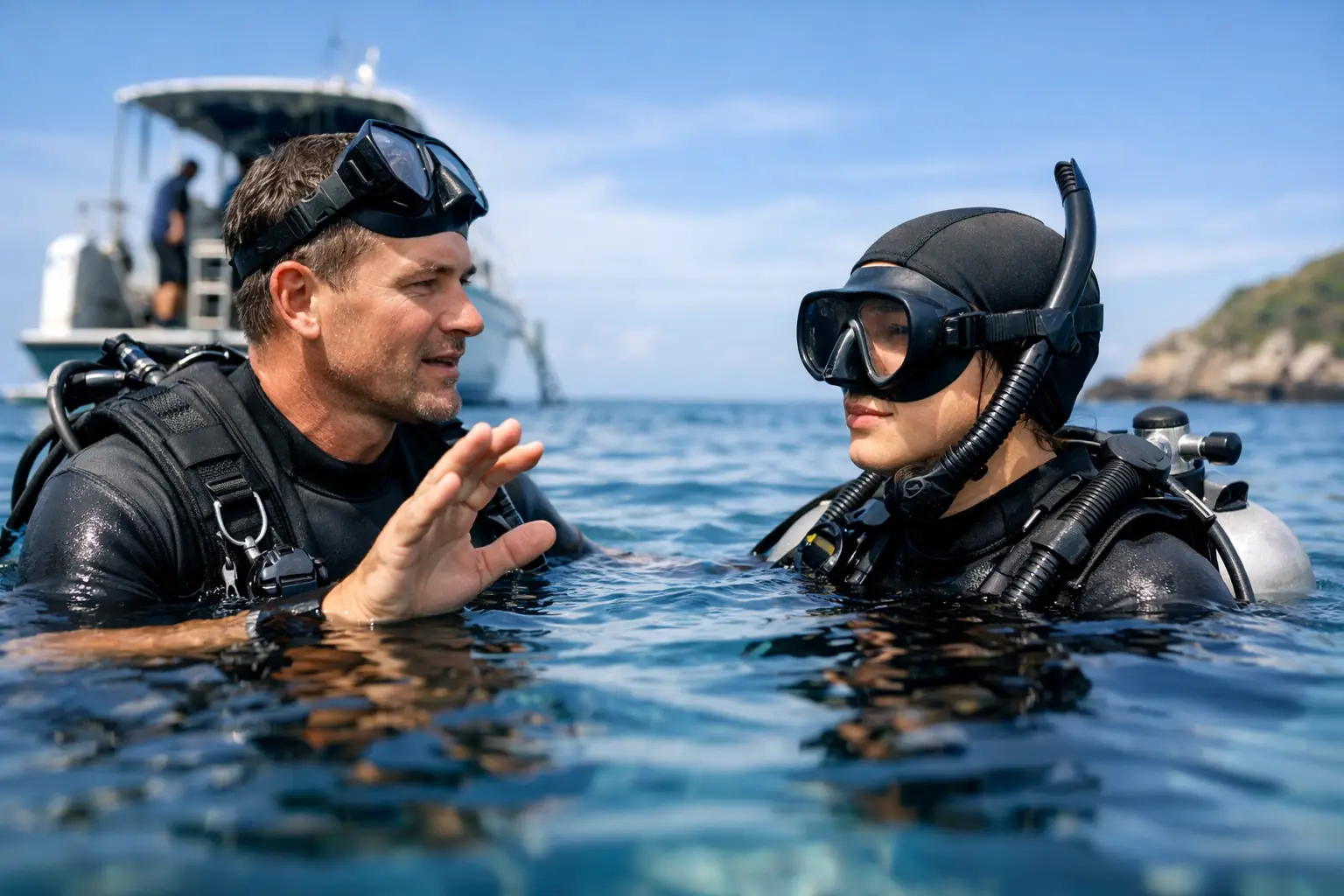
Your certification card may last a lifetime, but comfort underwater can fade much sooner. If your last descent feels like a different chapter of life, a scuba refresher course gives you the space to remember the skills, settle your breathing, and return to the water with purpose rather than nerves.
That matters even more when a trip includes the Riviera Maya’s distinctive diving. Drifting over a reef, descending along a wreck line, or entering the calm, light-filled world of a cenote is far more rewarding when your attention is on the experience, not on whether you still remember where your alternate air source sits.
What a Scuba Refresher Course Really Does
A refresher is not about proving that you are a “good” or “bad” diver. It is a practical reset led by a dive professional, designed for certified divers who have been away from scuba or simply want to feel sharper before a meaningful dive trip.
Most programs begin with a review of essential diving knowledge and equipment. You will revisit planning considerations, hand signals, pressure awareness, and the habits that help prevent small issues from becoming stressful ones. Then comes the part that changes how you feel underwater: practicing core skills in confined water or another controlled environment.
Expect to work on regulator recovery and clearing, mask clearing, alternate air source use, buoyancy control, controlled descents and ascents, and safe finning technique. Your instructor can also help you rebuild an efficient setup routine, because confidence often starts before you enter the water. Knowing your gear, checking it carefully, and moving through the steps without rushing makes the entire day calmer.
A quality refresher should never feel like a test you are trying to survive. It should feel supportive, unhurried, and specific to you. Someone who has not dived in three years may need a different level of attention than a diver who has been active but wants to prepare for cenotes after a long flight.
How Long Away Is Too Long?
There is no universal number of months that suddenly makes a refresher mandatory. Dive operators may have their own policies, and your comfort level matters just as much as the date stamped in your logbook. Still, if it has been a year or more since your last dive, booking a refresher is a smart decision. After two years, many professionals and destinations will strongly encourage one.
Time away is not the only factor. Consider a refresher if your previous diving was limited to training dives, if you have changed equipment, if you felt anxious on your last dive, or if you are moving into an environment that feels new to you. A tropical reef may feel familiar, while a freshwater cenote, with its remarkable visibility and unique light, may call for more deliberate buoyancy and awareness.
Be honest about where you are. The strongest divers are not the ones who pretend they remember everything. They are the ones who make thoughtful choices before the boat leaves the dock.
Why Buoyancy Is the Skill Worth Revisiting
Many divers expect a refresher to focus on masks and regulators. Those skills matter, but buoyancy is often the real difference between an okay dive and an extraordinary one.
Good buoyancy lets you hover without touching the reef, maintain a steady depth while checking your gauge, and move through the water with less effort. It protects fragile marine life and prevents accidental contact with the bottom. It also makes photography easier, improves air consumption, and reduces the feeling of being pulled in too many directions at once.
In cenotes, careful buoyancy is especially valuable. These environments reward slow, controlled movement and respectful awareness of your surroundings. A refresher gives you time to fine-tune your weighting, practice breathing for small depth changes, and get comfortable holding position. Those details turn spectacular scenery into a more relaxed and responsible experience.
What to Expect on the Day
Arrive ready to learn, not ready to impress. Bring your certification information and logbook if you have one, and share any concerns with your instructor before the session begins. If you are unsure about a skill, say so. The best time to ask is on land, before the water adds pressure and distractions.
Your instructor will typically help you assemble and check your equipment, then guide you through the skills at a pace that supports real learning. You may repeat a skill more than once, and that is exactly the point. Muscle memory is built through calm repetition, not by racing to the next exercise.
Once you are in open water, the focus shifts from individual drills to using those skills naturally. You will practice managing your position, communicating with your buddy, monitoring depth and air, and responding thoughtfully to normal changes in the environment. The goal is not perfection. The goal is to feel capable, aware, and ready to enjoy the dive.
At Infinity2Diving, that readiness is treated as part of the adventure, not a delay before it. A well-led refresher can be the bridge between an old certification and the kind of underwater experience you traveled to Tulum to find.
Refresher Course or Full Course: Which One Fits?
A refresher is right for divers who already hold a recognized certification and need to rebuild familiarity. It does not replace an entry-level course, and it is not a shortcut into more advanced conditions.
If you have never been certified, an Open Water Diver course provides the foundation you need. If you are certified but want to expand your abilities, an Advanced Open Water course, specialty training, or guided experience may be a better next step after your skills are current. For divers interested in overhead environments, formal training requirements and experience levels matter. A recreational cenote or cavern tour is not the same as cave diving, and responsible operators will explain the difference clearly.
It depends on your goals, your recent experience, and the kind of diving you hope to do. A trusted instructor can help you choose the path that fits rather than pushing you into a course you do not need.
A Few Smart Ways to Prepare Before You Travel
You do not need to study for hours to get value from your refresher. Review your certification materials if you still have access to them, especially hand signals, pressure changes, and safe ascent practices. Think through your last dive and identify what felt easy and what felt uncertain.
Give yourself enough time in your itinerary. Scheduling a refresher immediately before a major dive day can work, but adding a little breathing room makes the experience more enjoyable. You will also want to follow safe diving practices around flights and altitude, so plan your diving days with your travel schedule in mind.
Finally, choose comfort over ego. Tell your guide if you are cold, over-weighted, nervous, or unclear about a briefing. Professional diving is built on communication. The more openly you share what you need, the more your instructor can help you succeed.
Questions Divers Often Ask
Will I have to repeat my certification?
Usually, no. A refresher is designed to review and practice the skills you already learned. Your original certification remains valid, though an operator may ask you to complete a refresher based on your recent diving history or the conditions planned.
Can I refresh before diving cenotes?
Yes, and it can be an excellent choice. Cenote diving calls for controlled buoyancy, close attention to briefings, and calm awareness. A refresher helps you arrive prepared to enjoy the setting while following the guide’s procedures carefully.
What if I am still nervous afterward?
That is useful information, not a failure. Ask for an easier dive profile, additional practice, or more time with your instructor. Diving should challenge you in inspiring ways, but it should never require you to ignore your limits.
The ocean and cenotes will still be there tomorrow. Give yourself the training day that lets you meet them with steady breathing, reliable skills, and the confidence to look up, look around, and truly be present underwater.