
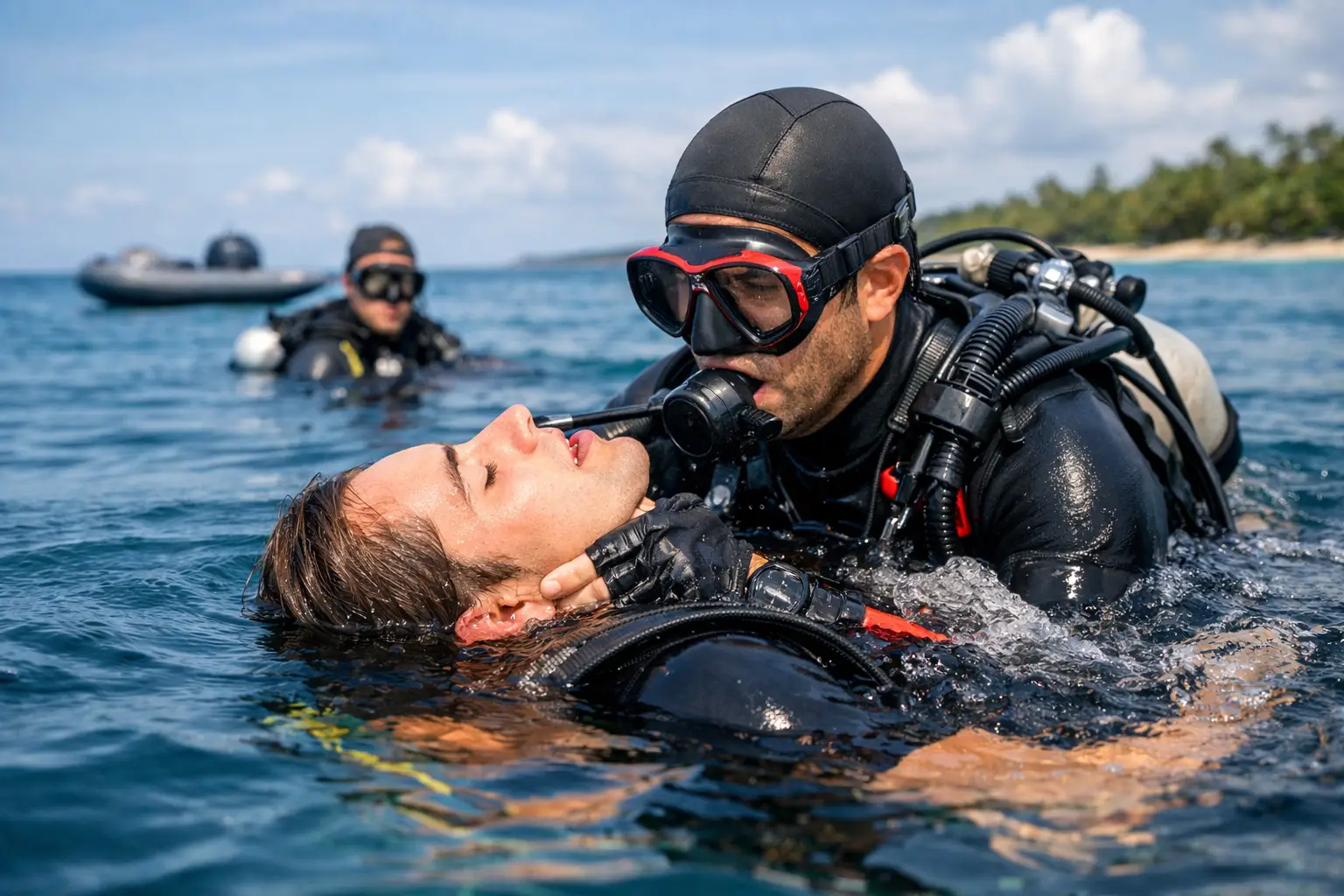
The moment most divers stop thinking only about themselves is usually the moment they level up. That is why any honest PADI rescue course review has to start here: this course changes the way you see the water, your buddy, and your own role as a diver. It is not just another certification card. It is the point where diving becomes more aware, more skilled, and far more rewarding.
A real PADI rescue course review, not the sales pitch
The Rescue Diver course has a reputation. Some divers hear it is the best course they ever took. Others worry it will be stressful, physically demanding, or packed with worst-case scenarios that take the fun out of diving. The truth sits somewhere in the middle.
Yes, it is more challenging than Open Water or Advanced Open Water. You are asked to think faster, notice problems earlier, and respond with purpose. But no, it is not designed to scare you. A well-taught rescue course builds confidence by replacing vague anxiety with practical action. Instead of wondering what you would do if something went wrong, you start to know.
That shift matters, especially in a destination like Tulum where many divers come for adventure and end up wanting more from their training. Cenotes, ocean dives, current, navigation, gear issues, stress responses – these are all easier to manage when you have stronger situational awareness and better control under pressure.
What you actually do in the course
A lot of rescue training is about prevention. That surprises people. They expect dramatic saves, towing tired divers, and bringing someone to shore. Those skills are included, but the deeper lesson is learning to spot small issues before they become big ones.
You practice recognizing stress in yourself and others, helping a panicked diver, managing an unresponsive diver, assisting from shore or boat, organizing an emergency response, and handling scenarios where multiple problems appear at once. You also sharpen surface control, communication, and decision-making.
That last part is where the course earns its reputation. The scenarios are not hard because each skill is individually complicated. They are hard because they demand calm thinking while you are moving, monitoring, communicating, and adapting. It feels much closer to real diving than many earlier training exercises.
The emergency first response piece
If you have not already completed CPR and first aid training, you will need that before earning the Rescue Diver certification. Some divers treat this as a box to check. That is a mistake. The first aid side gives the rescue course real weight because it connects what happens in the water to what happens after surfacing.
It also makes the whole experience more grounded. You are not just learning dive theory. You are learning how to help another human being when things are not going well.
What feels hard and what feels surprisingly fun
The hardest part for many divers is not the swimming or the towing. It is managing stress while staying organized. When an instructor adds realism to a scenario, your brain can get busy very quickly. You may miss an obvious clue, forget a step, or focus too hard on one problem while another develops nearby.
That can be humbling. It is also exactly why the course works.
The fun comes from the same place. Rescue scenarios are active, hands-on, and often memorable in a way classroom-heavy courses are not. There is teamwork, movement, problem-solving, and a real sense of progression. You usually finish the course tired, proud, and more capable than when you started.
A good instructor makes a huge difference here. Rescue training should be serious without becoming heavy. The best courses keep standards high while creating an environment where divers can make mistakes, learn fast, and grow in confidence.
Who should take it and who might want to wait
This is where any fair PADI rescue course review needs some nuance. The course is worth it for most certified divers, but timing matters.
If you are freshly certified and still working on buoyancy, trim, or basic comfort underwater, there is no shame in waiting a bit. Rescue training is more valuable when your core skills are steady enough that you have mental space to notice and help others.
On the other hand, you do not need to be an expert to start. Many divers take Rescue Diver soon after Advanced Open Water and do very well. If you are comfortable in the water, eager to improve, and ready to be challenged, it is one of the smartest next steps you can make.
It is especially valuable for divers who travel often, dive in varied conditions, or see themselves moving toward Divemaster or instructor-level training. Rescue is where recreational diving starts to feel more mature. You are no longer just participating. You are contributing to safety around you.
Is the PADI Rescue Diver course worth the money?
For most divers, yes.
Not because it gives you access to deeper dives or more exotic sites on its own. It does not work like that. Its value is more personal and more lasting. You come out of the course calmer, sharper, and more useful. You understand how incidents develop. You communicate better with buddies. You tend to dive with more intention.
That may sound less exciting than a new environment or specialty card, but in real life it is often more important.
The biggest trade-off is that Rescue Diver is not a casual vacation add-on if your schedule is already packed. You need energy for it. You need focus. If you try to squeeze it between too many dives, tours, and late nights, you may not get the full benefit. This course rewards commitment.
At a premium training center, pricing can be higher than bare-bones options, but that often reflects instructor quality, equipment standards, small-group attention, and overall safety culture. With rescue training, those details matter. This is one course where bargain shopping is not always the smartest move.
What makes the experience better or worse
The best rescue courses feel realistic, well-paced, and personal. You should be pushed, but not overwhelmed. You should leave understanding not just what to do, but why each response matters.
Small groups help. Clear briefings help. Instructors who can read student confidence levels and coach accordingly help even more. The environment matters too. Training in a destination with diverse dive conditions can make the course feel especially relevant because you are not learning in a bubble.
If you train with a team that values safety, strong standards, and supportive teaching, the course can be a turning point. That is one reason so many traveling divers choose to do advanced training in places where diving is already central to the trip. With the right center, such as Infinity2Diving in Tulum, the experience can feel both professional and deeply personal.
My honest take on the PADI rescue course review question
If you are asking whether the course is easy, the answer is no.
If you are asking whether it is intimidating at first, often yes.
If you are asking whether it is one of the most useful and confidence-building courses in recreational diving, absolutely.
This is the certification that teaches you to stay calm when a dive stops being simple. It sharpens awareness in ways that carry into every dive after it. It also changes how your buddies see you. Divers who complete Rescue Diver training tend to become the people others trust more on the boat, in the briefing, and in the water.
That does not mean you become invincible. Good rescue training should actually make you more aware of limits, judgment, and prevention. The strongest divers are not the ones chasing drama. They are the ones who notice early, act clearly, and keep small issues small.
For travelers building their dive skills while exploring places like the Riviera Maya, this course has another kind of value. It turns a dive vacation into a genuine milestone. You go home with more than photos and memories. You go home more capable.
If you are on the fence, ask yourself a simpler question than whether you need the card. Ask whether you want to become the kind of diver who can help, lead calmly, and think clearly when it counts. If the answer is yes, the rescue course is probably your next best move.
And if you choose the right team to guide you through it, the challenge becomes part of the reward.