
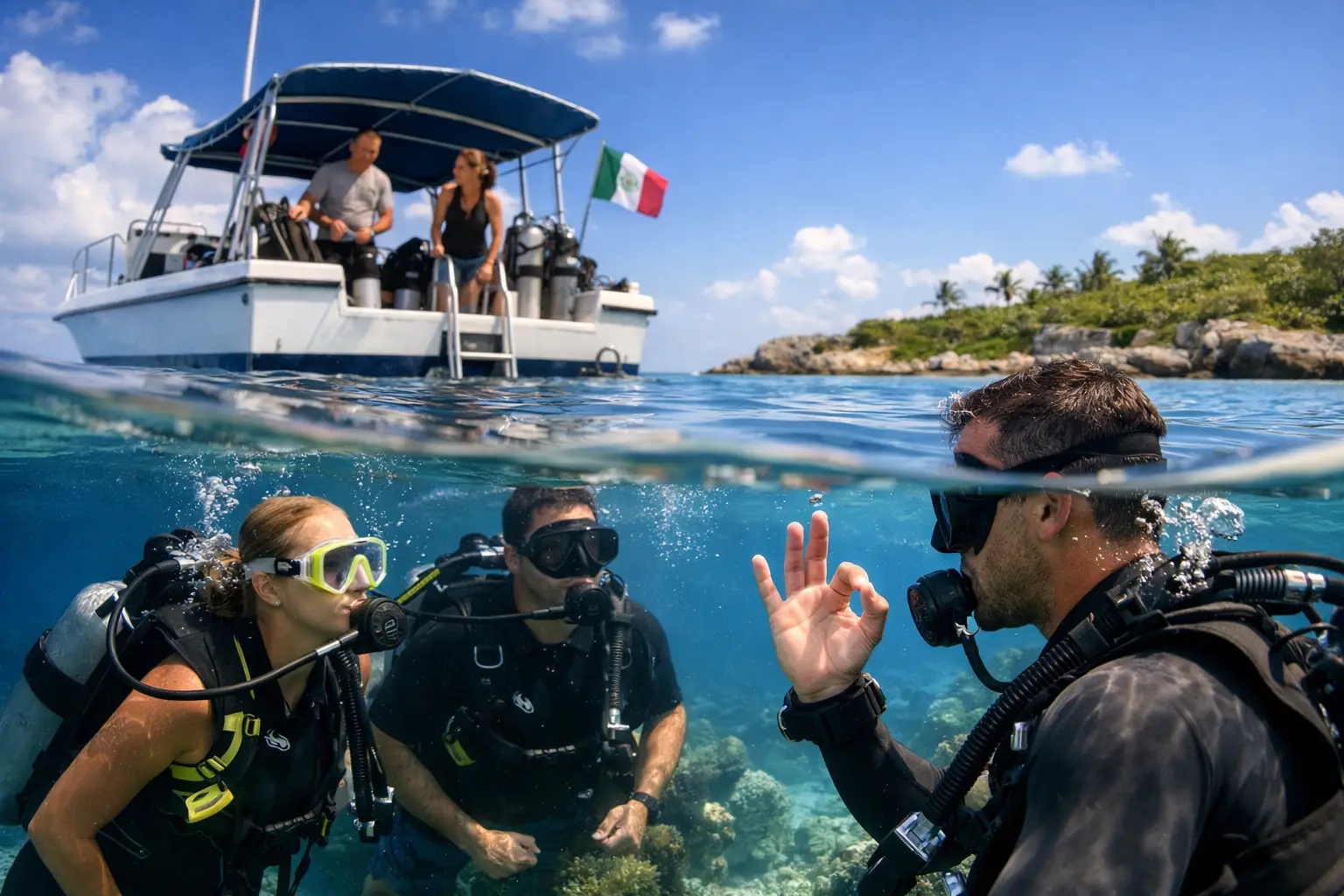
Your first descent into a Tulum cenote is not a moment to rush. Sunlight filters through the jungle above, freshwater wraps around you with astonishing clarity, and limestone formations lead into a world that feels completely separate from the surface. A multi day scuba course in Mexico gives you the time to meet that moment with real confidence, not just a quick introduction and a borrowed mask.
For travelers who want more than a single vacation activity, learning to dive in the Riviera Maya can become the beginning of a lifelong skill. You can build solid PADI foundations, experience both cenotes and Caribbean reefs, and leave Tulum with an internationally recognized certification that travels with you. The right course balances adventure with patient instruction, careful planning, and enough time in the water for the skills to feel natural.
Why Choose a Multi Day Scuba Course in Mexico?
A multi-day schedule creates room for the part of scuba training that matters most: repetition. In a one-day experience, you may discover whether breathing underwater excites you. Over several days, you learn how to manage buoyancy, communicate with a buddy, respond calmly to common problems, and make good decisions before and during every dive.
Mexico is especially rewarding for this kind of learning because the conditions offer variety without requiring complicated travel between destinations. Tulum places you near calm Caribbean reef sites, dramatic freshwater cenotes, and a dive community built around every level of diver, from curious beginner to future instructor.
The format also lets you enjoy your vacation. Rather than compressing classroom learning, confined-water skills, and open-water dives into an exhausting sprint, a thoughtful itinerary gives your body and mind time to absorb each day. You can ask questions, review a skill, enjoy lunch, and return the next morning ready for the next step.
Start With the Course That Matches Your Experience
The best multi day scuba course Mexico visitors can choose depends on where they are beginning, not on what sounds most impressive online. A professional dive center should help you select a path that fits your comfort level, available days, and long-term goals.
Complete beginners: PADI Open Water Diver
If you have never worn scuba equipment, the PADI Open Water Diver course is the natural starting point. You will learn essential dive theory, practice foundational skills in confined water, then complete open-water training dives under the direct guidance of an instructor.
Expect to learn practical habits that make diving safer and more enjoyable: fitting and checking equipment, equalizing comfortably, clearing water from your mask, controlling your position in the water, monitoring air, and staying connected with your buddy. The certification qualifies you to dive independently with a buddy within the limits of your training, up to 60 feet.
For many first-time divers, the biggest transformation is buoyancy. At the beginning, it can feel like juggling breathing, fins, weights, and unfamiliar equipment. With coaching and repeat practice, you begin to hover, move more gently over the reef, and use less energy. That is when the underwater world opens up.
Certified divers: Advanced training with purpose
Already certified? A multi-day advanced course can add meaningful experience rather than simply adding a card to your wallet. PADI Advanced Open Water training typically introduces five adventure dives, including a deep dive and underwater navigation, with additional options shaped by local conditions and your interests.
In Tulum, that may mean refining buoyancy on a reef, exploring the distinctive light and rock formations of a cenote with appropriate training and site limits, or building more confidence with navigation. The goal is not to collect specialties as fast as possible. It is to become a more capable, aware diver who can enjoy a wider range of future trips.
If you are drawn to wrecks, deeper profiles, technical training, or the professional route, ask about the progression before you arrive. Some goals need prerequisite certifications, logged dives, or more days than a short vacation allows. Clear guidance protects both your safety and your investment.
What Your Training Days Should Feel Like
Great scuba education is structured, but it should never feel impersonal. Your instructor should explain the plan before entering the water, demonstrate skills at a pace you can follow, and make space for questions afterward. Nervousness is common, even for confident travelers. It is not a failure, and it is not something you need to hide.
A typical course day combines knowledge development with hands-on practice. You may complete digital learning before travel or between dive sessions, then spend the day applying what you studied. Instructors evaluate performance against PADI standards, but the strongest teaching also helps you understand why each skill matters.
For example, removing and replacing a mask is not a party trick. It teaches you that you can handle an unexpected splash of water calmly. Practicing an alternate air source is not about expecting trouble. It builds the muscle memory to respond as a team if a buddy ever needs help.
Small groups are valuable here. They give instructors more opportunity to watch your trim, notice a difficult equalization early, and adjust the pace when needed. They also create a warmer experience. You are not just moving through a production line of certifications. You are learning alongside people who may become your next travel buddies.
Cenotes and Reefs: Choose Adventure Within Your Training
Tulum offers two very different underwater environments. Caribbean reef dives bring color, movement, and marine life – think schools of fish, turtles, rays, and the shifting blue of the open sea. Cenotes offer freshwater clarity, ancient limestone, jungle surroundings, and a quiet sense of scale that stays with divers long after the trip.
Both are extraordinary, but they are not interchangeable. Cenote diving requires disciplined buoyancy, respectful behavior around delicate formations, and site-specific procedures. Some cenote experiences are suitable for newly certified divers when led within recreational limits. Others involve overhead environments and require dedicated cavern or cave training. No responsible operator should blur that line.
If cenotes are high on your wish list, tell your dive center early. Your instructor can recommend an itinerary that matches your certification and comfort, or explain the training needed to expand your options. The right answer may be yes, not yet, or yes with a carefully selected site. Each is a good outcome when safety leads the plan.
Questions to Ask Before You Book
Course price alone does not tell you what your experience will be. Ask what is included, how many students are assigned to each instructor, whether equipment and transportation are covered, and how the schedule handles weather or a skill that needs extra practice. All-inclusive pricing can make vacation planning easier, but confirm exactly what it covers.
You should also ask about instructor credentials, emergency procedures, dive insurance recommendations, and medical requirements. Scuba is accessible to many people, but certain health conditions, medications, recent surgeries, pregnancy, and respiratory concerns may require medical clearance before you can participate. Be honest on your paperwork. The purpose is to keep you safe, not to exclude you from adventure.
Good operators will discuss conservation as part of the experience, too. Reef-safe practices, careful finning, proper weighting, and never touching marine life are not optional extras. They are how divers help protect the places that make this journey possible.
At Infinity2Diving, students train with a female-led team at Tulum’s only PADI 5* Career Development Center, whether they are taking their first breaths underwater or working toward a professional career. That combination of personal attention, recognized education, and local knowledge matters when your course is meant to be more than a checkbox on a travel itinerary.
Plan for Comfort, Not Perfection
Bring curiosity, a swimsuit, sun protection for surface time, and a willingness to learn one skill at a time. Arrive well-rested and hydrated, and leave room in your travel plans after diving. Divers should follow their instructor’s guidance on flying after scuba diving, rather than scheduling a flight immediately after their last underwater session.
Most of all, release the pressure to look experienced on day one. Every confident diver once paused at the water’s edge, checked their gear twice, and wondered what that first breath would feel like. Give yourself a few days to learn it properly. The reefs, cenotes, and new version of yourself beneath the surface are worth the time.