
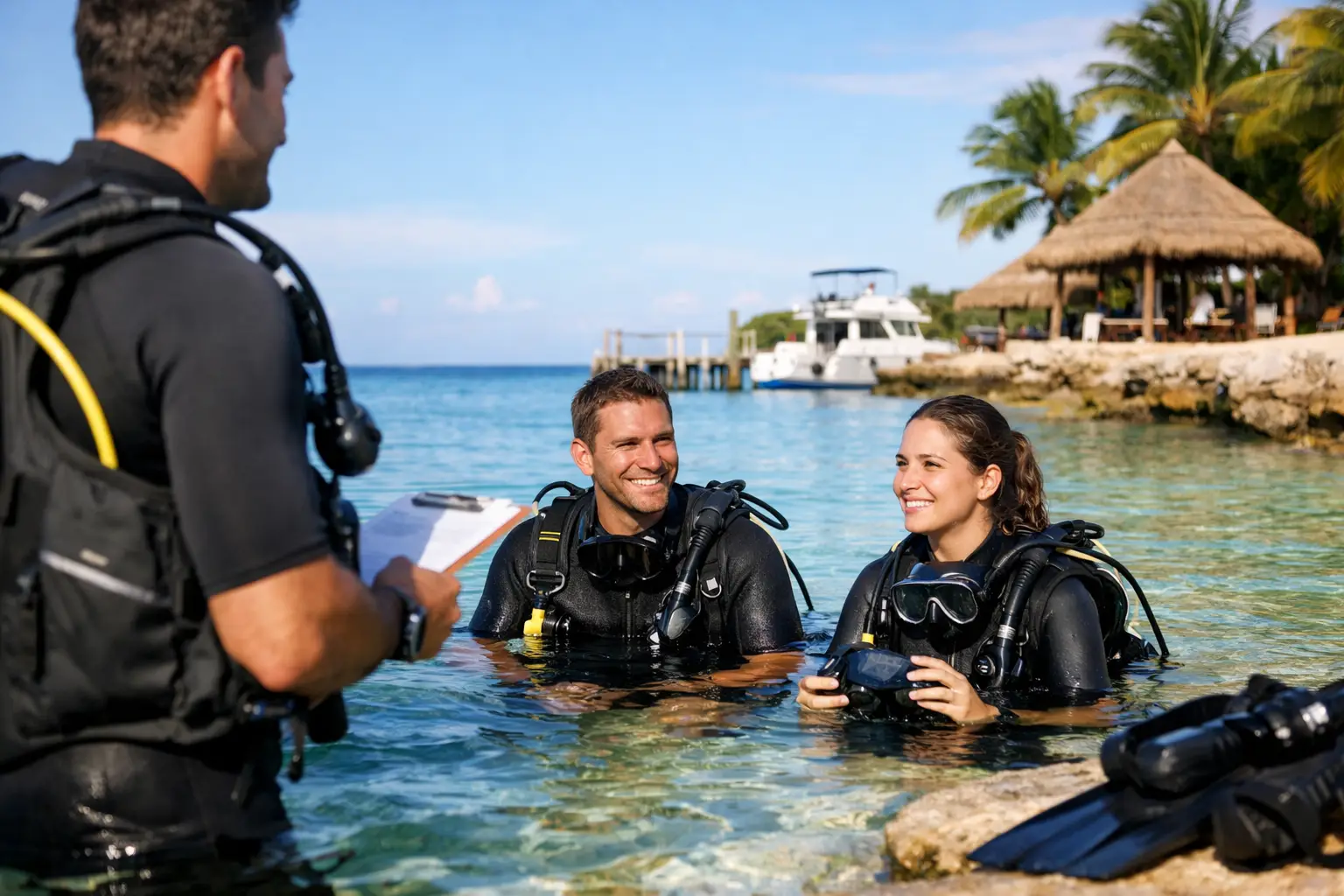
If you’re already picturing life beyond the Instructor rating, an msdt preparation course mexico option makes a lot of sense. You are not just adding specialties to your resume. You are building the kind of teaching range that helps you stand out, teach more often, and grow faster in a destination where students want variety from day one.
For many dive professionals, Mexico is where career training starts to feel real. The setting matters. So does the volume of student divers, the quality of sites, and the chance to move from classroom theory into actual teaching in reef, cavern, and open water environments that keep your skills sharp. If your goal is to become a more capable, employable, and confident PADI Pro, MSDT prep here can be a smart move.
Why choose an MSDT preparation course in Mexico
MSDT preparation is about momentum. After earning your Open Water Scuba Instructor certification, the next step is often gaining the five PADI Specialty Instructor ratings and 25 certifications required to apply for Master Scuba Diver Trainer. That sounds simple on paper, but the way you earn those ratings can shape the quality of your teaching for years.
Mexico gives you a training environment with real advantages. In places like the Riviera Maya, students are constantly looking for continuing education, from Deep Diver and Enriched Air to Peak Performance Buoyancy and underwater navigation. That means your specialty training does not live in a vacuum. You can often connect it directly to the kinds of courses divers actually book.
The second advantage is range. Warm water, ocean diving, and access to unique environments create stronger learning conditions than a location where training is limited by season or site availability. You are not just checking boxes. You are learning how to teach specialties in a place where those specialties feel relevant and exciting.
There is also a practical side. Many divers considering an MSDT preparation course in Mexico are already traveling for lifestyle reasons. They want a professional program that also gives them a memorable chapter of their diving life. That matters more than people admit. Training is demanding, and being in a destination that keeps you inspired helps.
What an MSDT preparation course Mexico program usually includes
A strong program is more than five random specialties grouped together. The better courses are built around employability and teaching confidence. You should expect guidance on selecting specialties that make sense for the market, your interests, and the types of divers you want to teach.
Most MSDT prep programs include five PADI Specialty Instructor courses. Common choices include Enriched Air Nitrox, Deep Diver, Peak Performance Buoyancy, Drift Diver, Digital Underwater Photographer, Search and Recovery, and Wreck Diver. In Mexico, some centers may also offer options that reflect local demand and conditions more closely.
The right mix depends on where you want your career to go. Enriched Air is useful almost everywhere because it is in high demand and easy to pair with other courses. Deep Diver is valuable because many certified divers want to expand their limits. Peak Performance Buoyancy is one of the most underrated specialties because almost every diver needs it, and teaching it makes you a better instructor across the board.
A quality program should also include mentoring. This is where the difference between a basic package and real professional development shows. You want experienced Course Directors or senior instructors who explain not just standards, but delivery. How do you brief clearly? How do you adapt for nervous students? How do you balance efficiency, safety, and a great experience? Those details matter when you begin teaching independently.
Who this course is really for
Not every new instructor needs to rush into MSDT prep immediately. Sometimes the right move is to gain a little field experience first. Sometimes it makes sense to stack specialties right away while your instructor-level knowledge is still fresh. It depends on your confidence, budget, and timeline.
This path is ideal for newly certified instructors who want to be more employable quickly, especially in busy dive destinations. If you are trying to work abroad, join a large teaching team, or move into a training-focused role rather than only guiding certified divers, MSDT prep gives you more tools and more credibility.
It also suits career changers who are serious about building a long-term place in the dive industry. If you have already decided that diving is more than a travel phase, this is one of the clearest ways to signal commitment.
For some candidates, the bigger question is not whether to do it, but where. A center with strong professional development can make the process feel focused and exciting. A weak one can make it feel like a transaction.
How to choose the right training center
This is where people make expensive mistakes. The lowest price is not always the best value, and the fanciest marketing does not always reflect the quality of mentoring in the water.
Start with the professional credentials of the center. A facility that is deeply involved in PADI Pro development usually has better systems, more experienced mentors, and a stronger understanding of what instructors need after certification. Ask who will conduct your specialty training and how much real teaching support is included.
Then look at the environment. A center that offers access to varied diving conditions can help you become a more adaptable professional. If the operation also runs regular recreational and continuing education courses, that is a good sign. It means you are training in a place where those specialties are part of everyday diving, not just an occasional add-on.
You should also ask practical questions. Is pricing all-inclusive, or are materials, fees, and dives added later? How many days does the program take? Is there support for gaining your 25 certifications if you have not reached that number yet? Those details affect the real cost and the real timeline.
In a destination like Tulum, where professional training and world-class diving meet, centers such as Infinity2Diving appeal to candidates who want structured career development with the warmth of a local team and the standards of a high-level PADI operation. That combination can make a big difference when training gets intense.
Timing, budget, and the trade-offs to consider
An MSDT preparation course in Mexico can be efficient, but it is still an investment. You are paying for Specialty Instructor ratings, instructor-level mentoring, and access to training environments that support professional growth. Depending on the center and the specialties chosen, costs can vary quite a bit.
That is why the cheapest package is not always the smartest one. A low-cost course may leave out materials, certification fees, extra dives, or personalized coaching. On the other hand, an all-inclusive program can look more expensive upfront but save money and stress once you arrive.
Timing matters too. If you are on a short trip, ask whether the schedule is realistic or rushed. Cramming multiple specialties into a few days may technically work, but it can reduce how much you actually absorb. If your goal is a stronger career foundation, a slightly longer pace is often worth it.
There is also the question of specialty selection. Choosing only the easiest or cheapest specialties may get you to five ratings faster, but it may not help you as much professionally. The best strategy usually blends marketable specialties with ones that genuinely improve your teaching skill set.
What you gain beyond the rating
The title matters, but the real value is what happens while you earn it. A good MSDT prep course changes how you carry yourself as a professional. You get more comfortable leading, clearer when briefing, and better at matching teaching style to student needs.
That growth is especially powerful in Mexico, where many divers are combining vacation energy with serious personal goals. You learn to teach people who are excited, distracted, nervous, ambitious, or all four at once. That is the real world of instruction, and it sharpens you quickly.
You also start seeing the business side of teaching. Which specialties book often? Which ones create repeat students? Which combinations make sense for travelers with limited time? Understanding that helps you become not just a certified instructor, but a useful member of a dive team.
For divers who want a career with more range, more purpose, and more time in the water, MSDT prep is a practical next step. And when you do it in a place that reminds you why you fell in love with diving in the first place, the training tends to stick in a different way.
Is Mexico the right place for your MSDT prep?
If you want cold-water experience, local networking in your home region, or specialties tied to a specific future job market, another destination may make more sense. That is the honest answer. But if you want strong year-round diving, exposure to a broad mix of student needs, and a training experience that blends professional development with destination-level diving, Mexico is hard to beat.
The best msdt preparation course mexico option is the one that helps you leave with more than certifications. You should leave with sharper teaching instincts, better specialty choices, and a clearer idea of the kind of dive professional you want to become.
Choose the center carefully, ask better questions than just price, and give yourself enough time to learn properly. The ocean will reward the effort, and so will your future students.