
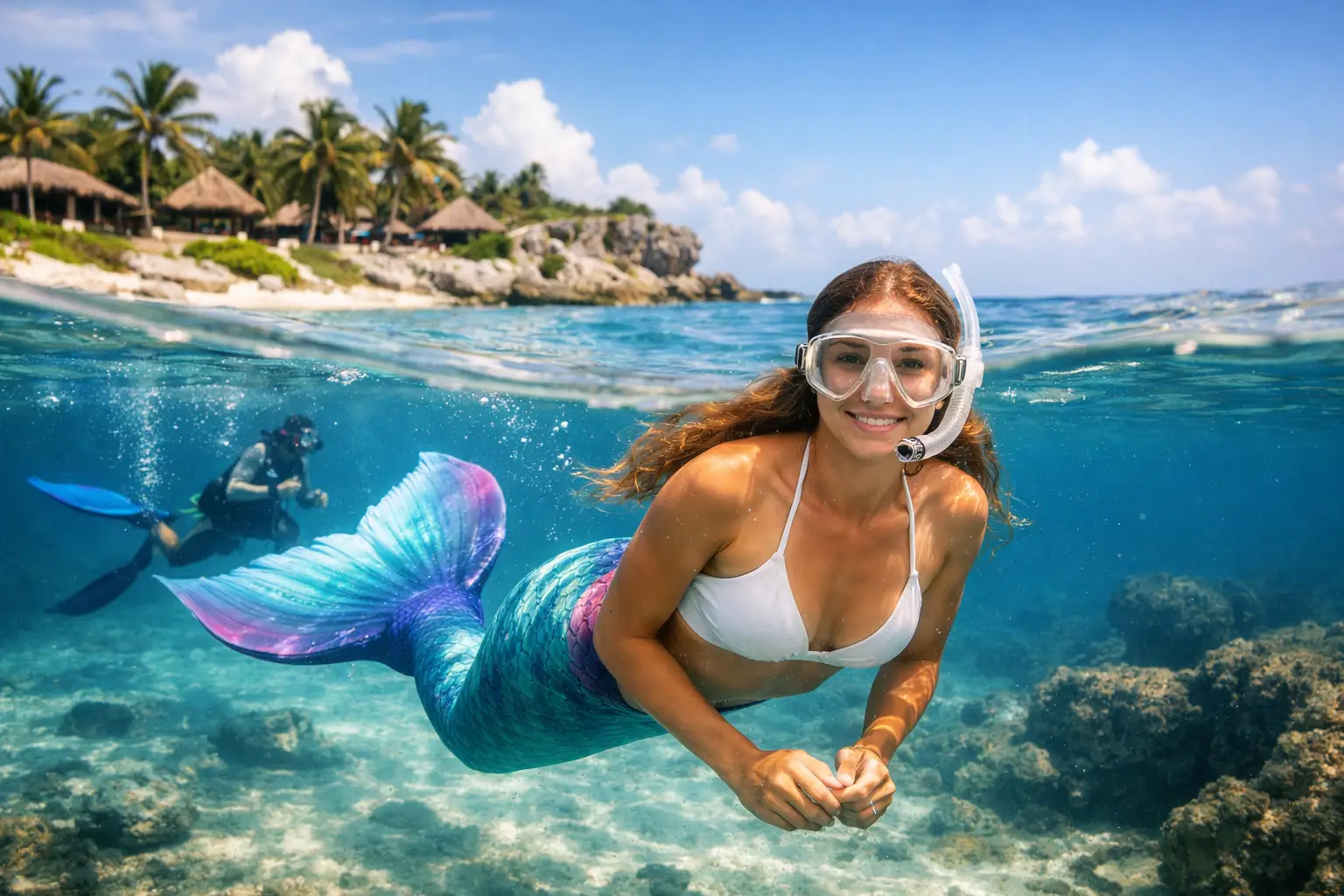
The first time you put on a mermaid tail in Tulum, one thing becomes obvious fast – this is not just a photo moment. A real mermaid course Tulum experience blends performance, breath control, water confidence, and pure joy in a setting that already feels cinematic. Warm Caribbean water helps, but the best part is how quickly a playful idea turns into a real skill-building session.
For travelers, it is a memorable way to experience the water without committing to a full scuba certification. For confident swimmers, it can be the start of a new discipline. And for families, couples, or solo adventurers, it offers something Tulum does exceptionally well: a mix of fantasy, nature, and professional instruction that still feels personal.
Why a mermaid course in Tulum feels different
Tulum is built for water-based experiences, but not all of them feel equally accessible. Scuba can be life-changing, yet some travelers are not ready for tanks and equalization on day one. Snorkeling is easy to join, but it does not always offer the same sense of progression or achievement. Mermaid training sits in an interesting middle ground.
You still learn technique. You still work with an instructor. You still leave with a stronger relationship to the water. But the mood is lighter, more expressive, and often more confidence-building for beginners who want structure without pressure.
That matters in a destination like Tulum, where many guests come looking for more than a standard activity. They want a story they will remember. A mermaid class delivers that, but the better programs are not built on costumes alone. They are built on coaching, safety, and an environment where beginners can relax enough to actually improve.
What happens in a mermaid course Tulum session
A well-run mermaid course usually starts on land, not in the water. That surprises people. Before anyone slips into a tail, instructors typically cover the basics of movement, body position, safety signals, and how to enter and exit the water correctly. If the course includes a recognized training structure, there may also be skill benchmarks rather than just free play.
Once you get in the water, the first goal is comfort. You learn how the tail changes your kick, how to use dolphin-style movement efficiently, and how to maintain control without fighting the water. Some students pick this up right away. Others need a little time, especially if they are used to separate leg movement from swimming or fitness classes.
From there, the session often becomes more fluid and fun. You may practice glides, turns, underwater posing, surface swimming, and basic breath-hold techniques. Some programs include photos, but the strongest courses do not let the camera become the main event. Good instruction always comes first.
That is the difference between a novelty activity and a professional experience. One gives you a few nice images. The other leaves you feeling capable.
Who this course is actually for
A lot of people assume mermaid training is mainly for kids. It can be fantastic for children, but that idea misses half the picture. Adults often love it just as much, especially travelers who want an experience that feels active, creative, and a little outside their normal routine.
If you are comfortable in the water and open to learning, you are likely a good fit. You do not need scuba experience. You do not need to be an athlete. You do need to be honest about your swimming level, because mermaid movement changes the way your body works in the water.
For complete beginners, the right course should feel welcoming rather than intimidating. For stronger swimmers, it can be a chance to refine technique and enjoy a new challenge. And for anyone who has ever felt self-conscious in aquatic settings, a supportive instructor can make a huge difference. There is something empowering about learning a skill that looks graceful from the outside but is built on real control underneath.
Safety matters more than the fantasy
This is where quality matters most. A mermaid tail restricts leg movement, which means safety standards cannot be casual. Professional training should include direct supervision, clear briefings, and an instructor who knows how to adapt the class to different ability levels.
That does not mean the session should feel strict or overly serious. It means the fun is built on preparation. Students should understand how to remove the tail, how to avoid overexertion, and how to pace breath-hold practice responsibly. If a provider glosses over these details and focuses only on the look of the experience, that is a red flag.
The best dive centers and water schools treat mermaid training with the same respect they bring to snorkeling or scuba introductions. The setting may feel playful, but the teaching should be professional. That is especially valuable in Tulum, where many travelers are trying something in the water for the first time while on vacation.
How to choose the right mermaid course in Tulum
Not every mermaid course offers the same value, and this is where expectations matter. Some visitors want a short, fun introduction. Others want a more structured lesson with recognized training standards and real progression. Neither is wrong, but you should know which one you are booking.
Look closely at how the experience is described. If the emphasis is entirely on photos, aesthetics, or social media moments, it may be more of a themed activity than a course. If the provider explains safety, instruction, student comfort, and skill development, that is usually a stronger sign.
Instructor quality is the other major factor. In water-based training, experience changes everything. A skilled teacher can read your comfort level quickly, correct technique without making you feel awkward, and create the kind of environment where beginners improve fast. That level of care is often what turns a one-time experience into a lasting interest.
It also helps to choose a center that already has deep roots in aquatic education. At a professional operation like Infinity2Diving, that broader training culture tends to shape the whole experience – from safety standards to the way guests are welcomed and coached through the session.
What to wear, bring, and know before class
The practical side is simple, but a little preparation makes the session better. Wear a swimsuit that stays secure when you move. Bring a towel, water, and sun protection for before and after the class. If the training takes place in an outdoor setting, you will want to stay hydrated even if the session itself feels light.
If you have long hair, tie it back in a way that still feels comfortable in the water. Avoid jewelry that can snag or distract. And if you are nervous, say that early. Good instructors would much rather know your concerns before the class starts than have you try to hide them.
This is also one of those experiences where comparison does not help. Some people look naturally fluid in the water from the start. Others need a few tries before the movement clicks. Both are normal. Progress in a mermaid course is not about looking perfect in minute one. It is about becoming more relaxed, more efficient, and more connected to the water as the class goes on.
More than a vacation activity
The reason people remember mermaid training is not only that it is beautiful. It is that it changes how they feel in the water. That can sound dramatic until you watch a hesitant beginner finish class smiling like a different person.
Tulum has no shortage of bucket-list experiences, and plenty of them are worth doing. But a mermaid course stands out because it combines play with progress. You get the thrill of doing something unusual, and you also get the satisfaction of learning a real skill in a place designed for aquatic adventure.
If that is what you want from your trip – something vivid, confidence-building, and guided by professionals who care about safety as much as the experience itself – then this might be the session you talk about long after the tan fades. The tail is the fun part. The feeling you leave with is the reason to book it.