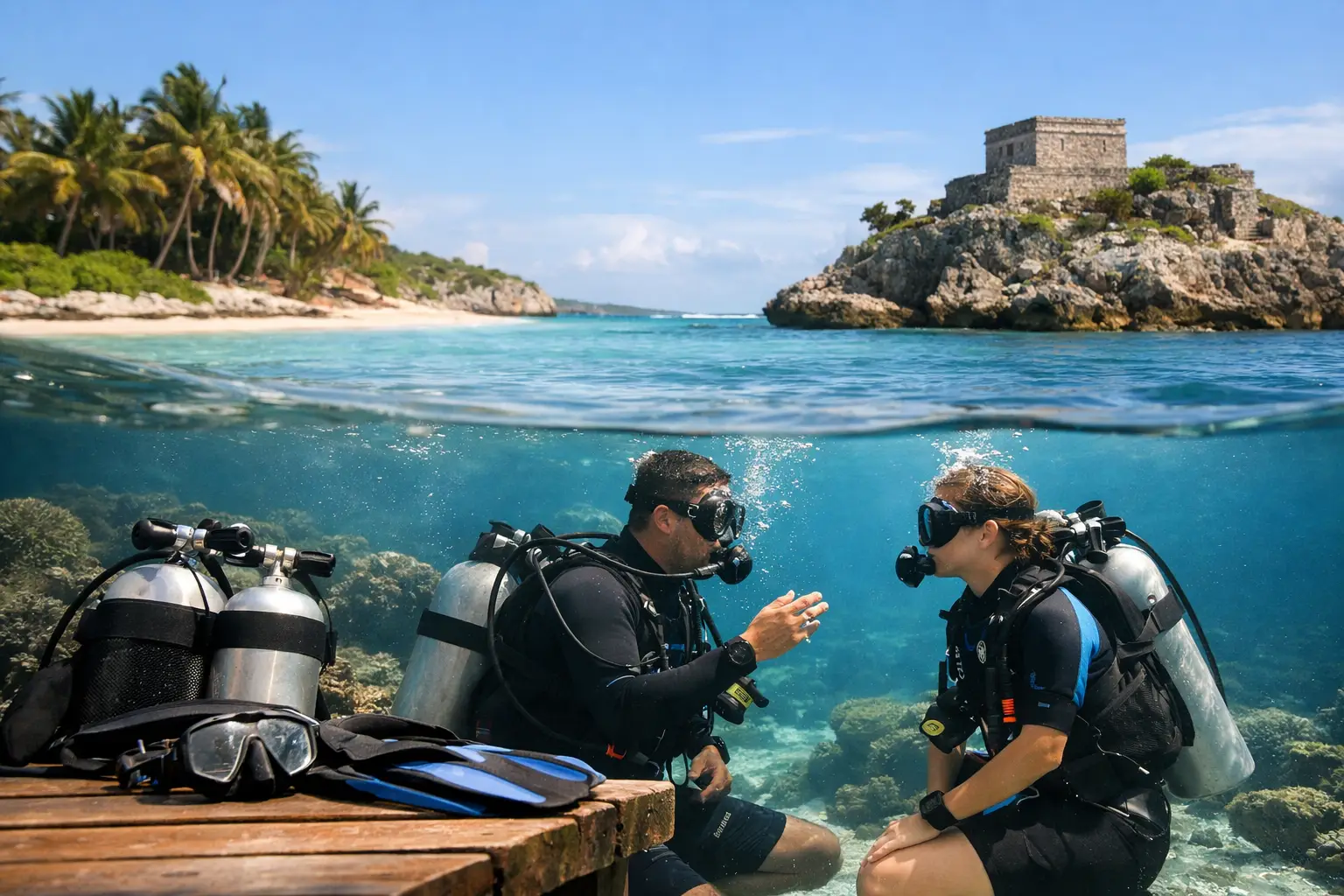
The first breath underwater is a moment most divers remember forever. Before that moment, though, there is a practical question almost everyone asks: how much a scuba certification costs. The honest answer is that pricing varies by destination, course format, group size, and what is genuinely included. A cheaper number can look tempting until rental gear, course materials, certification fees, transportation, or required dive fees appear at checkout.
For travelers coming to Tulum, scuba certification is more than a box to check before a vacation. It can be the start of reef adventures, cenote exploration, wreck dives, and a lifelong connection with the ocean. Choosing training based on value, safety, and instructor quality – not the lowest advertised price alone – helps make that beginning an exceptional one.
How Much Does Scuba Certification Cost?
In the United States, an entry-level PADI Open Water Diver course commonly costs about $400 to $800. In destination dive locations such as Tulum, a fully inclusive beginner course often falls around $500 to $900, depending on the operator, the number of students, the dive sites, and the services included.
That range may feel broad, but it reflects meaningful differences in the experience. One school may offer a limited pool-based course with a separate fee for each open-water dive. Another may include academic materials, instructor-led sessions, complete equipment rental, transportation, certification processing, and the open-water dives needed to earn the card.
For most new divers, the PADI Open Water Diver certification is the benchmark. It allows you to dive independently with a qualified buddy, within the limits of your training, to a maximum depth of 60 feet. It is recognized worldwide and opens the door to future continuing education.
A lower-priced option may be a Discover Scuba Diving experience, often around $100 to $250 in many destinations. This is an instructor-supervised introduction, not a full certification. It is a brilliant choice if you are curious about breathing underwater but are not ready to commit to a multi-day course. Just be clear about the distinction before booking.
What Should a Scuba Certification Price Include?
When comparing courses, ask for an itemized explanation of what the price covers. A transparent dive center will be happy to answer. The best course package should make it easy to focus on skills, confidence, and the extraordinary underwater world around you instead of surprise expenses.
For a typical Open Water course, the price may include digital learning materials, classroom or instructor-led knowledge development, confined-water skill sessions, four open-water training dives, certification processing, and rental gear. That gear generally includes a mask, fins, snorkel, BCD, regulator, tanks, weights, and wetsuit when conditions call for one.
In Tulum, transportation can be a major detail. Training dives may take place from the beach, on local reefs, or in nearby freshwater cenotes, depending on the course plan and conditions. If pickup, boat transportation, entrance fees, or lunch are part of the itinerary, confirm whether they are included. These details affect the final price and the quality of your day.
Also ask about student-to-instructor ratios. Training in a smaller group can cost more than a high-volume class, but it gives you more time to practice, ask questions, and build calm, repeatable habits. For someone who feels nervous in the water, that personal attention is not a luxury. It is part of safe learning.
Potential costs that are sometimes separate
Some costs are not always included in a course headline price. These can include PADI eLearning, marine park or cenote entrance fees, boat fees, transportation, dive insurance, photos, and tips. Personal items such as a mask, snorkel, or dive computer may also be recommended but are not usually required for beginner certification.
Medical clearance is another consideration. Most students complete a health questionnaire before training. If your answers indicate that a doctor’s approval is needed, the cost and timing of that visit are separate from the dive course. Handle this early, especially if you are visiting Tulum on a limited schedule.
Why Tulum Can Be Worth the Investment
Getting certified at home can be convenient, particularly if you want to finish before a beach vacation. Yet completing your course in Tulum brings a different kind of momentum. Warm water, dramatic light, tropical marine life, and access to the Riviera Maya’s famous underwater environments turn training days into a real adventure.
There is a trade-off. Destination certification takes time from your trip, typically three to four days for a full Open Water course. If your vacation is short, a referral course may be a smarter route. You complete the academic and confined-water portions at home, then finish your four required open-water dives with a PADI dive center in Tulum. This can preserve more of your vacation while still letting you earn your certification in remarkable water.
Weather, water conditions, and logistics also matter. Ocean dives can be affected by wind, while cenotes offer calm conditions but may have admission requirements and strict environmental practices. A professional dive center plans around conditions rather than rushing a course to fit a rigid schedule. Flexibility protects both your experience and your safety.
The Cost of Continuing Your Dive Education
Open Water certification is the beginning, not the finish line. Once you are certified, you can continue toward Advanced Open Water Diver, specialty courses, Rescue Diver, Divemaster, and professional instructor training.
An Advanced Open Water course commonly costs about $400 to $700, with the exact amount shaped by the dives included. In Tulum, this can be an exciting next step because your adventure dives may introduce deeper diving, navigation, buoyancy control, night diving, boat diving, or other skills suited to local conditions.
Specialty courses vary more widely. A focused class may cost a few hundred dollars, while technical, sidemount, or cave-focused training requires more equipment, more days, and highly specialized instruction. Those higher prices reflect the level of planning and safety systems required. They should never be treated as a place to cut corners.
For divers with professional ambitions, Divemaster and Instructor programs are a larger financial and personal commitment. The total includes training, materials, application fees, equipment needs, and often several weeks or months of development. The return is not simply a credential. It is the chance to guide others, strengthen your knowledge, and build a career around the underwater world.
How to Choose a Course That Delivers Real Value
Start with the dive center’s credentials and teaching philosophy. Look for an established PADI operation, active and experienced instructors, well-maintained equipment, and a clear approach to safety. Read the course description closely, but also pay attention to how the team communicates. You should feel welcome asking basic questions, requesting extra practice, or saying that you need more time with a skill.
Then compare complete packages rather than headline prices. A course that includes all core equipment, materials, transport, and certification may be better value than one that initially appears less expensive. If the package includes smaller groups and a dedicated instructor, that can make an even greater difference in your confidence underwater.
At Infinity2Diving, training is designed around that bigger picture: expert PADI education, all-inclusive planning, and an encouraging team that understands every diver begins somewhere. Whether your goal is your first ocean descent or a future dive career, the right instruction makes the journey feel possible.
Your scuba certification is an investment in skills that travel with you. Choose the course that gives you time to learn well, an instructor you trust, and an underwater experience that leaves you eager for the next breath below the surface.