
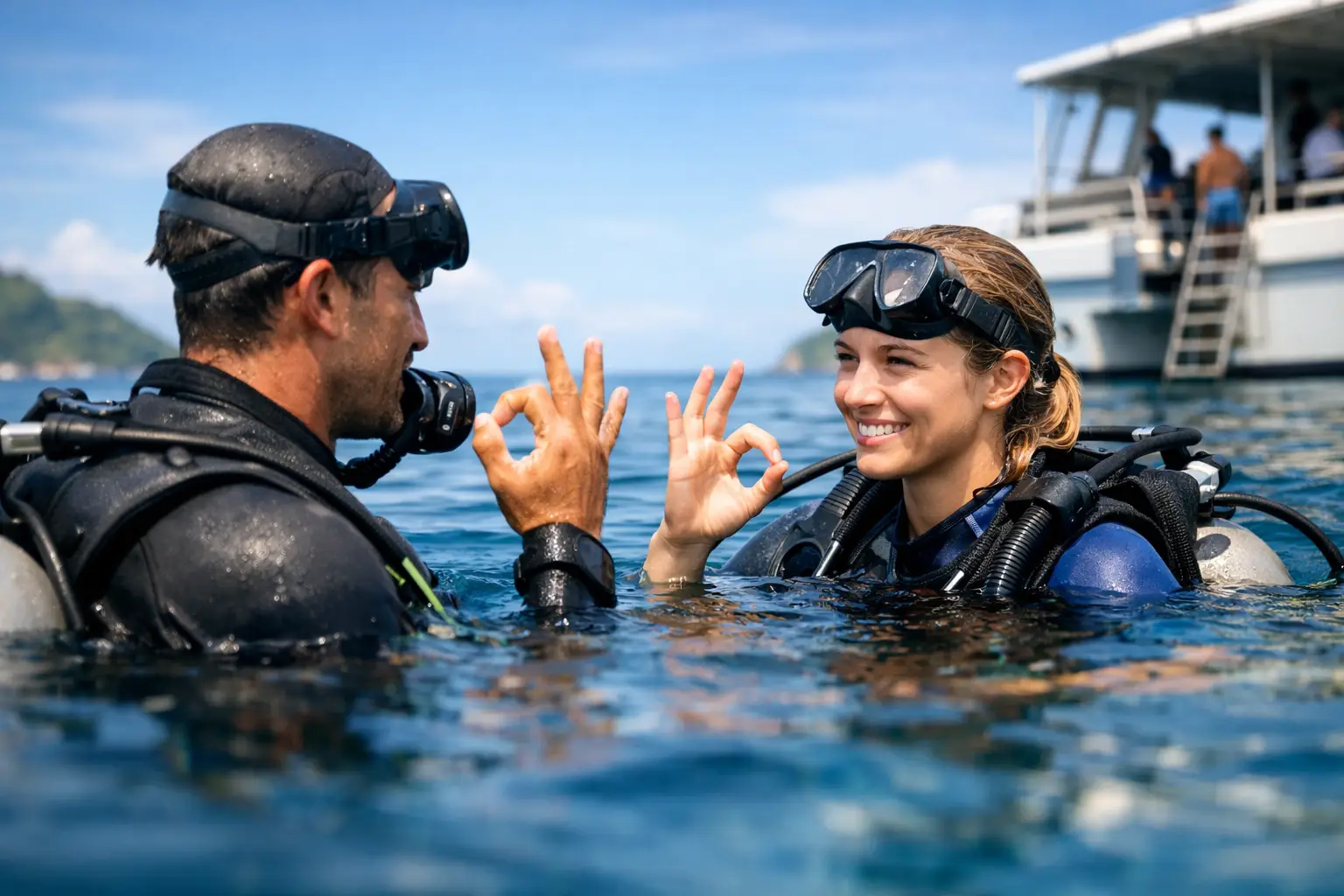
The moment you descend beneath Tulum’s bright surface, the coastline feels like a different planet. Reef colors sharpen, schools of fish move as one, and the noise of the day disappears. This guide to PADI Open Water is for travelers who want more than a one-time underwater photo. It is for anyone ready to gain the skills, confidence, and certification to keep exploring long after their vacation ends.
The PADI Open Water Diver course is the world’s most recognized entry-level scuba certification. It is designed for complete beginners, but it is not a rushed ride in a tank. You will learn how scuba equipment works, how to manage yourself and your buddy underwater, and how to make calm decisions when conditions change. The reward is freedom: after certification, you can plan recreational dives with a buddy within the limits of your training and experience, up to 60 feet for most adult Open Water Divers.
What a Guide to PADI Open Water Should Tell You
A great course is not about collecting a card. It is about building reliable habits before you are surrounded by blue water, reef life, or the dramatic limestone formations of the Riviera Maya. PADI’s training structure moves in a logical order: knowledge development, confined-water practice, and open-water training dives.
Knowledge development gives you the why behind every action. You will cover pressure and equalization, breathing rules, buoyancy, dive planning, hand signals, equipment care, and environmental awareness. Many students complete this portion through PADI eLearning before arriving in Tulum. That can make your vacation schedule more flexible, but leave enough time to review rather than clicking through lessons at the airport.
Next comes confined-water training. This may happen in a pool or another calm, controlled environment. Here, your instructor introduces the skills that turn a first-time swimmer with a regulator into a capable new diver. You will practice clearing water from your mask, recovering a regulator, controlling your buoyancy, sharing air with a buddy, and responding to common situations without panic. Repetition matters. A skill that feels awkward on the first attempt often becomes natural after patient coaching.
The final stage is four open-water dives. These are not sightseeing dives with a few exercises added at the end. They are supervised training dives where you demonstrate the skills you have practiced and apply them in a real underwater setting. Depending on weather, course schedule, and your center’s training plan, this may take place over several days.
Who Can Take the PADI Open Water Course?
Most healthy, comfortable-in-the-water adults can begin. The minimum age is generally 10 years old, with Junior Open Water Diver options and depth limits for younger students. You do not need to be an elite swimmer, and you do not need previous scuba experience. You do need to be honest about your comfort level and ready to participate fully.
Before training, students complete a medical questionnaire. Some answers may require a physician’s approval before entering the water. This is not unnecessary paperwork. Asthma, heart conditions, recent surgery, certain medications, ear concerns, and other factors can affect diving safety. A professional dive center will treat this process seriously while helping you understand the next step.
You will also complete basic watermanship requirements, including a swim and a float or tread-water exercise. The exact format follows current PADI standards. If you are nervous about swimming, say so early. A supportive instructor can explain what the assessment involves and help you choose a realistic path, but they should never promise to bypass a required safety standard.
What You Will Actually Learn Underwater
New divers often imagine that scuba is mostly about breathing from a tank. Breathing is the easy part. The real transformation comes from learning to move slowly, solve small problems, and stay aware of your surroundings.
Buoyancy is one of the biggest skills you will develop. Good buoyancy helps you hover without kicking the reef, use less air, maintain a comfortable depth, and feel more relaxed. It takes time. Some students find it quickly, while others need several dives before their body position and breathing settle into place. Neither experience predicts whether you will become a great diver.
You will also learn to be a thoughtful buddy. Recreational scuba is built around shared awareness: checking in, staying close enough to help, communicating clearly, and ending a dive conservatively when needed. The strongest divers are not the ones who push deepest or stay down longest. They are the ones who recognize limits early and make smart choices without ego.
Expect to become familiar with your own equipment, too. Your mask, fins, buoyancy control device, regulator, weights, and gauges each have a purpose. Many centers provide rental gear for the course, which is practical for travelers. Still, a properly fitted mask can make a major difference in your comfort. If something pinches, leaks constantly, or feels distracting, speak up. Equipment adjustments are part of professional instruction.
How Long Does PADI Open Water Take?
For many travelers, the course takes two to three days when eLearning is completed in advance. A more relaxed schedule may be better if you are arriving after a long flight, have limited water confidence, or want extra time to absorb the material. Faster is not always better. Certification is performance-based, meaning you earn it by meeting the requirements, not simply by showing up for a certain number of hours.
Tulum is an exceptional place to learn because the journey can feel as memorable as the qualification itself. The Caribbean offers warm-water conditions and vibrant reef environments, while the region’s cenotes reveal a completely different side of Mexico’s underwater world. Your instructor will select appropriate sites based on conditions, logistics, and training standards. Open Water certification does not qualify you for cave or overhead-environment diving, but it can be the first step toward a much bigger diving future.
At Infinity2Diving, that future can grow from beginner certification into reef diving, cenote experiences, advanced education, and professional-level pathways. What matters first is starting with an instructor and team that make you feel supported, never rushed.
Choosing a Course That Puts Safety First
Price matters, especially when you are planning a trip, but compare what is included before choosing the cheapest course. Ask whether eLearning, equipment, certification fees, transportation, marine park fees, and training materials are included. An all-inclusive price can be easier to plan around than a low starting rate followed by surprise add-ons.
More importantly, pay attention to group size and instructor approach. Small groups often mean more time for individual feedback, especially during buoyancy practice and skill repetition. A quality instructor will explain what you are doing before the water entry, demonstrate it clearly, let you practice at a comfortable pace, and give direct feedback without making you feel embarrassed.
Conditions also matter. The ocean does not run on a vacation itinerary. Wind, currents, visibility, and rain can change plans. A responsible dive operation may adjust sites or schedules for safety. That flexibility is a sign of good judgment, not a disappointing service. The goal is to create divers who understand that the best dive is always the one completed safely.
Preparing for Your First Training Day
Arrive rested, hydrated, and ready to learn. Avoid heavy drinking the night before, and do not plan to fly immediately after diving. Your dive center will advise you on the appropriate no-fly interval based on your course schedule. Bring a swimsuit, towel, reef-safe sun protection for surface time, and a sense of patience with yourself.
It also helps to set the right expectation: you do not need to look experienced on day one. Asking for another demonstration, taking a moment to equalize, or repeating a skill is exactly what training is for. The confidence you want underwater is built through practice, not performance.
Your first certification can become the beginning of reef mornings, ocean friendships, and travel plans shaped around the next descent. Arrive curious, stay present, and give yourself the time to learn well. The underwater world will still be there tomorrow, ready for you to meet it with real confidence.