
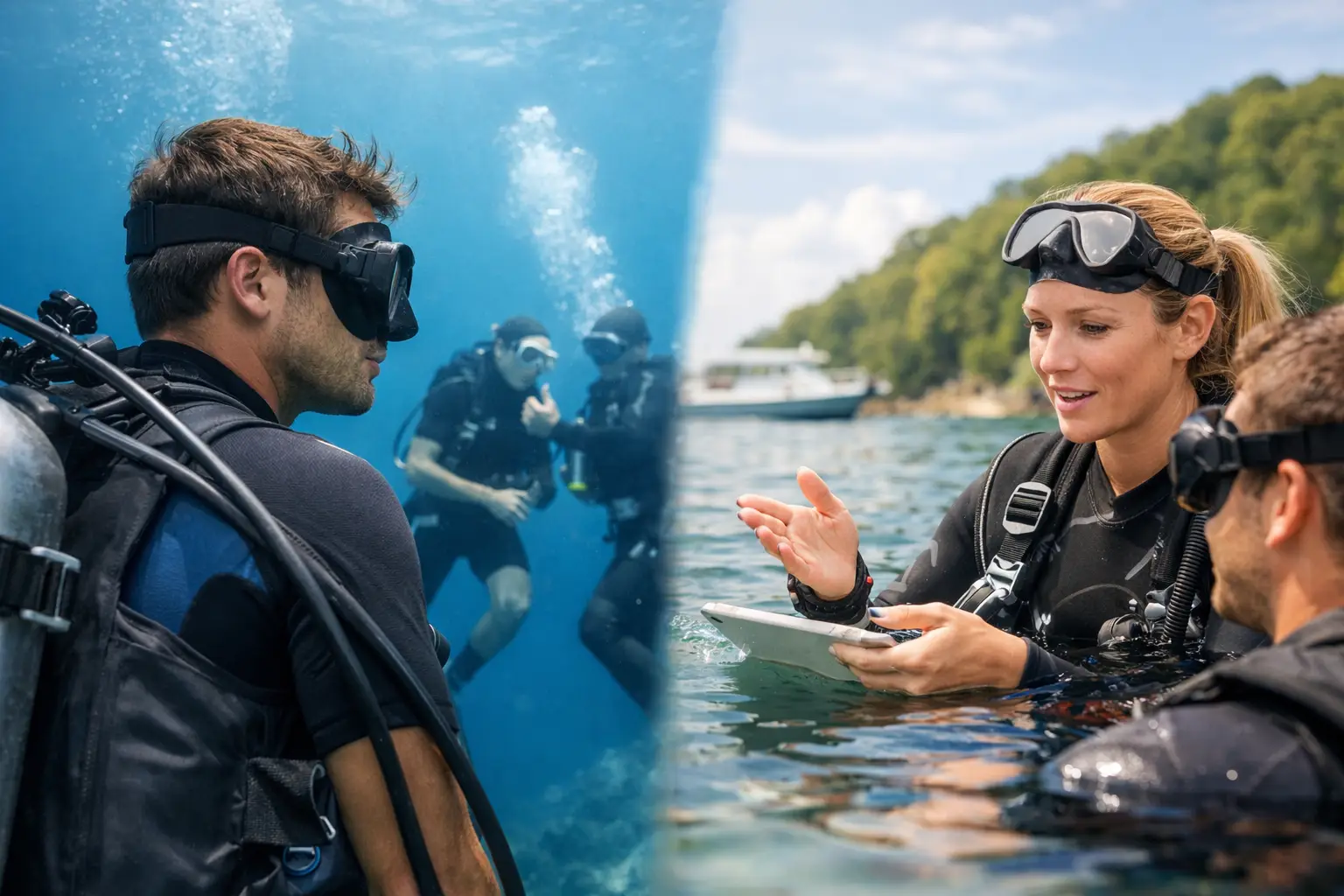
The divemaster vs instructor pathway is not simply a choice between two certification cards. It is a decision about how you want to spend your days underwater: guiding divers through remarkable places, building operational confidence, teaching life-changing skills, or eventually doing all of it. In Tulum, where cenotes, reefs, and wrecks create an extraordinary training environment, your professional journey can become as memorable as the career it prepares you for.
Both routes begin with a serious commitment to skill, safety, and service. The best choice depends on your goals, your timeline, and whether you feel most energized by supporting a dive operation or taking responsibility for a student’s learning from their first breath underwater.
What a PADI Divemaster Is Really About
PADI Divemaster is the first professional level in the PADI system. It moves you beyond being a capable recreational diver and asks you to think like a dive leader. You learn to anticipate problems before they grow, manage groups with calm authority, assist instructors, map dive sites, brief divers clearly, and help create the kind of experience people remember long after they leave the water.
A Divemaster can lead certified divers on appropriate dives and support instructors during training. That means the role is hands-on and people-focused. One morning, you may be preparing equipment and leading a reef excursion. The next, you might be helping an Open Water student steady their nerves before a first descent or assisting with skills in a cenote.
The course is demanding in the right way. You will sharpen your rescue skills, demonstrate dive skills to a professional standard, build knowledge of dive theory, and complete practical assessments that reflect real dive-center life. You also gain experience by observing how instructors organize courses, communicate with different personalities, and put safety first without draining the fun from the adventure.
For many divers, Divemaster is a destination in itself. It can open opportunities to work seasonally, travel, guide certified divers, and become part of the professional dive community. It is also an excellent way to discover whether teaching is genuinely your next step rather than an idea that sounds exciting from a distance.
What Changes When You Become an Instructor
A PADI Open Water Scuba Instructor carries a different level of responsibility. Instructors do not just guide certified divers. They teach, evaluate, certify, and inspire new divers under PADI standards. They are responsible for helping students understand not only what to do, but why they are doing it and how to make sound decisions underwater.
The route to instructor involves an Instructor Development Course, often called an IDC, followed by a PADI Instructor Examination. Before entering that stage, candidates typically need to meet prerequisites that include Divemaster certification, first-aid and CPR training, medical clearance, logged-dive experience, and a period as a certified diver. Requirements can change, so it is wise to confirm the current standards with your chosen PADI Career Development Center before planning travel or training dates.
Instructor training is not only about showing a mask-clear or explaining buoyancy. You practice presenting academic material, conducting confined-water sessions, managing open-water teaching, correcting student performance constructively, and applying risk-management procedures. You learn how to turn a complicated topic into a clear, encouraging lesson for a nervous beginner, an enthusiastic traveler, or a future dive professional.
That teaching responsibility is what makes the role deeply rewarding. An instructor may be the person who helps someone replace fear with confidence, gives a family a new way to explore together, or sets the foundation for a diver who later chooses conservation, technical training, or a full dive career.
Divemaster vs Instructor Pathway: The Core Difference
The simplest distinction is this: Divemasters lead and assist, while instructors teach and certify. But the lived experience is more nuanced.
A Divemaster role can suit you if you love being in the water often, enjoy logistics and group leadership, and want to learn the rhythm of a dive operation from the inside. You may want a professional qualification that creates work opportunities without immediately committing to the pressure and preparation that comes with teaching full courses.
The instructor pathway can suit you if you are drawn to education, enjoy explaining skills in different ways, and want to take ownership of a student’s progress. It requires more preparation, more assessment, and an ongoing willingness to stay current with standards. It also offers wider teaching opportunities and the chance to build a long-term career around developing divers.
Neither is more meaningful than the other. A brilliant Divemaster can transform a diver’s day through exceptional leadership, awareness, and local knowledge. A great instructor can change a person’s relationship with the ocean forever. The right path is the one that matches how you want to contribute.
Should You Stop at Divemaster First?
For most aspiring instructors, Divemaster is not a detour. It is the foundation. The practical experience you gain while assisting courses and working alongside active professionals makes instructor training far more valuable. You begin to recognize common student challenges, understand how a busy day is structured, and develop the calm presence that cannot be learned from a manual alone.
There is also value in giving yourself time. Some candidates begin Divemaster certain they want to teach, then realize they thrive most when leading fun dives and supporting the team. Others find that assisting an instructor confirms exactly what they want: to stand in front of a class, guide the learning process, and celebrate every student certification.
If your goal is instructor certification, choose a Divemaster program that includes meaningful real-world exposure rather than rushing through requirements. Look for opportunities to assist courses, practice briefings, receive individual feedback, and develop experience across varied conditions. Tulum offers a particularly rich setting for this work, because dive professionals may encounter ocean dives, freshwater cenotes, changing light conditions, and divers with very different experience levels.
How to Choose Your Timeline
Your timing should be based on readiness, not pressure. A traveler with a limited vacation may prefer to complete Divemaster first, then return for an IDC after gaining experience and logged dives. Someone taking a career break or planning a dedicated professional training stay may choose a structured package that takes them from Divemaster through Instructor training in one extended period.
Consider your finances realistically, too. Professional training is an investment that may include course fees, materials, equipment, diving, insurance, living expenses, and examination costs. All-inclusive pricing can make planning easier, but ask exactly what is covered so there are no surprises. The least expensive route is not always the strongest value if it limits mentoring, water time, or practical experience.
It also helps to think about where you want to work afterward. Resort destinations often value professionals who are confident with guests, multilingual teams, equipment handling, and customer service. A future instructor benefits from learning these skills early, because a successful diving career is built on more than teaching standards. It is built on trust.
Questions to Ask Before You Commit
Before enrolling, ask what your average training day looks like, how much individualized mentoring you will receive, and how often candidates assist real courses. Find out who will be evaluating your progress, what experience they bring, and whether the center can support your next step after certification.
Ask about the training environment as well. A professional pathway should feel challenging, but it should also feel supportive. You need room to make mistakes, ask questions, repeat skills, and grow into your leadership style. The strongest teams set high standards while making candidates feel seen and encouraged.
At Infinity2Diving, professional development is designed around that combination of high-level PADI training, practical experience, and the adventure of learning in one of Mexico’s most distinctive diving destinations. The aim is not to rush people toward a title. It is to help them become capable, thoughtful professionals who earn the confidence of every diver in their care.
Let the Work You Want to Do Guide You
Picture the moments that excite you most. If you imagine leading a group of certified divers through a sunlit reef, sharing the story of a cenote, and keeping every guest comfortable and safe, Divemaster may be the professional level that fits your next chapter. If you picture teaching a first skill, guiding a student’s breakthrough, and signing off a certification that opens a new world for them, instructor training may be calling.
You do not need to have your entire career mapped before beginning. Start with the level that challenges you, choose mentors who expect your best, and give yourself enough time to become the kind of dive professional you would trust underwater.