
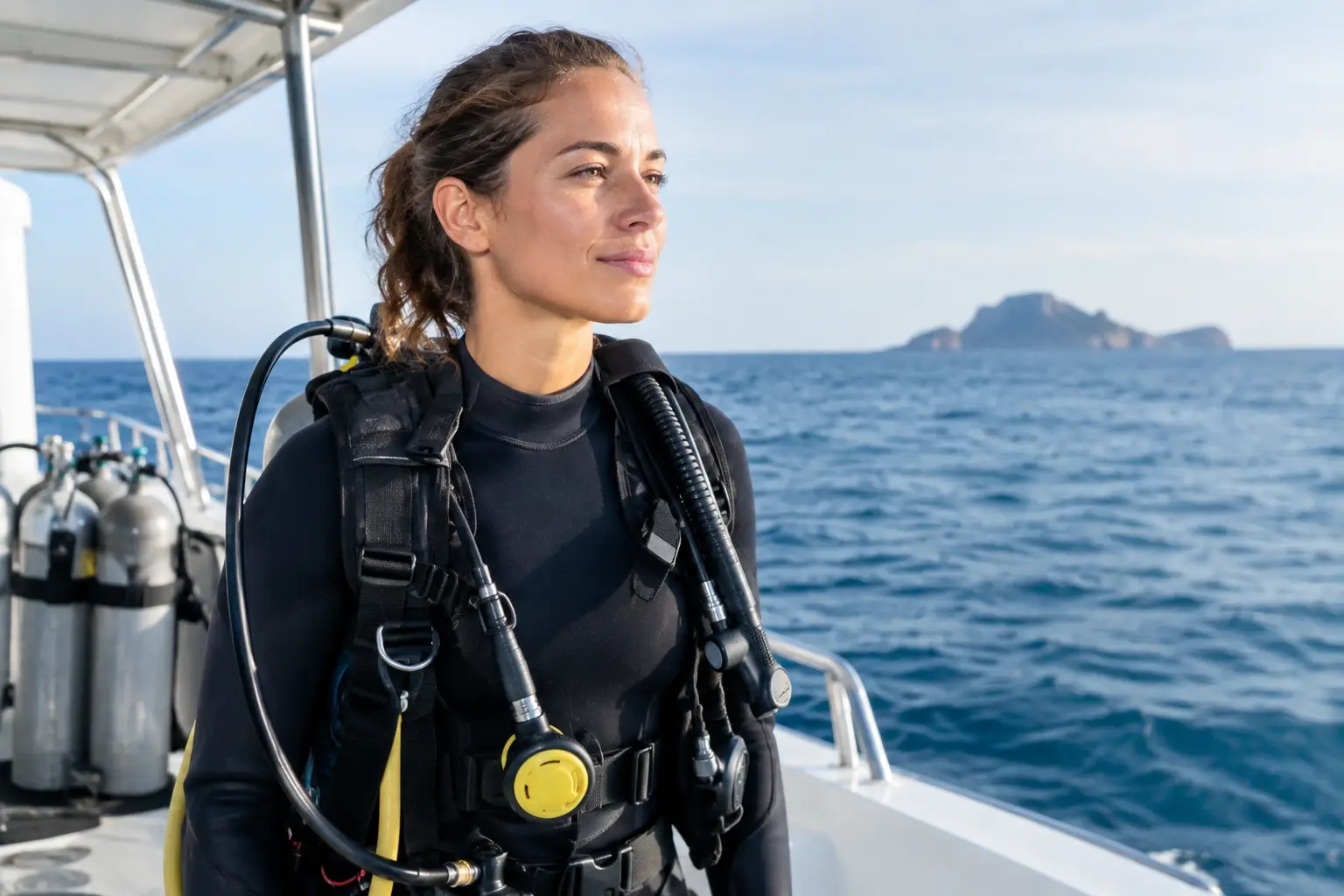
The moment you stop watching a dive professional lead the group and start wondering, “Could I do that?” is worth paying attention to. Dive careers are built by people who want more than a great vacation photo. They want to help someone take their first underwater breath, guide a nervous diver through a cenote, identify the creature no one else noticed, and make every adventure feel safe, personal, and unforgettable.
For some, that path begins after a single Open Water course. For others, it follows years of recreational diving. There is no single timeline, but there is a real progression from curious beginner to paid professional, and it asks for more than a love of the ocean.
What a Dive Career Really Looks Like
A career in diving is not one job. It can mean working as a Divemaster who leads certified divers, an instructor who changes lives through certification, a technical or cave specialist, a boat crew member, an underwater photographer, a conservation professional, or a resort and dive center leader. Many professionals combine several roles over time.
The daily work is wonderfully varied, but it is also practical. A Divemaster may begin before sunrise by checking weather, preparing equipment, reviewing guest files, and confirming emergency supplies. Then comes guiding, problem-solving, carrying tanks, helping guests feel confident, completing paperwork, and resetting everything to do it well again tomorrow.
That reality is not a reason to step away. It is the point. The best dive professionals love the extraordinary moments, but they earn trust through the ordinary ones: a careful briefing, perfectly fitted gear, calm judgment, and genuine attention to every person in the group.
The Path Into Dive Careers
PADI training creates a clear framework, but your experience, confidence, and goals shape the pace. The journey often begins with the Open Water Diver course, where you learn essential skills, buoyancy foundations, dive planning, and the habits that keep diving fun and safe.
From there, continuing education gives you range. Advanced training introduces new environments and skills, while Rescue Diver training changes how you think underwater. You become more aware of your buddy, the conditions, and the small issues that deserve action before they become problems. Emergency First Response training supports that responsibility with first aid and CPR skills.
The professional track begins at PADI Divemaster. This is where recreational diving becomes leadership training. Candidates refine their skills, learn to supervise activities, assist instructors, map sites, manage groups, and understand the operational standards behind a successful dive day. It is demanding by design. A Divemaster is often the professional divers remember most because they set the tone both above and below the surface.
After Divemaster, the PADI Instructor Development Course prepares candidates to teach. The focus shifts from performing a skill to explaining it clearly, spotting errors, adapting to different learners, and creating an environment where students can grow with confidence. Instructor-level training can lead to a career that travels well, connects you with people from around the world, and continues to challenge you long after your first certification is issued.
Choose Your Starting Point Honestly
You do not need to arrive in Tulum as an advanced diver with a flawless logbook to explore a professional path. You do need curiosity, consistency, and the willingness to receive feedback. If you have never dived before, start with strong foundational training rather than rushing toward a title. Skills learned carefully at the beginning will support every course that follows.
If you are already certified, look at where your confidence is strongest and where it needs work. Can you hold neutral buoyancy while assisting another diver? Are you comfortable planning dives, navigating, managing your air, and communicating calmly when conditions change? Honest answers make a better professional than a long list of cards.
A concentrated professional program can be a powerful option for divers who are ready to focus, especially in a destination with frequent access to different environments. In the Riviera Maya, a training week might include ocean dives, wreck experiences, and the remarkable freshwater systems of the cenotes. That variety can sharpen awareness and buoyancy, but it never replaces deliberate practice. More dives only help when you actively learn from them.
Why Tulum Is a Strong Place to Train
Training in Tulum brings together the energy of a global travel destination with access to distinctly different underwater settings. Warm Caribbean reefs offer color, currents, marine life, and boat-diving experience. Cenotes demand excellent buoyancy, trim, awareness, and respect for a unique overhead environment. These are not interchangeable experiences, and that is exactly why a thoughtful training environment matters.
A quality program should never treat cenotes or professional training as a quick checklist. You want instructors who explain the why behind every standard, give direct feedback, and protect the experience for both divers and the environment. At Infinity2Diving, professional development is supported by a PADI 5 Star Career Development Center approach, with all-inclusive planning designed to let candidates focus on skills, growth, and the experience itself.
Location is valuable, but the people teaching you matter more. Look for a center where you feel welcomed enough to ask questions, challenged enough to improve, and supported enough to keep going when a skill takes longer than expected.
The Trade-Offs Future Professionals Should Know
A dive career can offer freedom, travel, purpose, and a community that becomes family. It can also involve seasonal work, early mornings, physical labor, modest entry-level earnings, and schedules built around weather rather than weekends. The first professional role is rarely glamorous every day.
Financial planning deserves the same seriousness as dive planning. Before committing to a Divemaster or Instructor path, consider tuition, equipment, insurance, living costs, visa requirements where relevant, and the time needed to build experience. Some candidates choose an intensive route; others train over months while maintaining another job. Neither choice is automatically better. The right option is the one that gives you time to learn well without creating unnecessary pressure.
It also helps to think beyond the certification. What kind of professional do you want to become? Someone known for exceptional beginner instruction may follow a different path than someone working toward technical diving, marine science, freediving, videography, or dive-center management. Your first credential opens a door. Your character, work ethic, and continued education determine what happens after it.
Skills That Make Great Dive Professionals
Strong dive professionals are not always the loudest person on the boat or the fastest swimmer in the group. They are observant. They can read a guest’s body language, simplify a complicated instruction, and stay calm when a plan changes.
Communication is central, particularly in international destinations. You will work with people who have different languages, comfort levels, body types, learning styles, and reasons for being underwater. Patience is not an optional personality trait. It is a professional skill.
Environmental responsibility belongs here too. A dive leader sets the example: good buoyancy, no touching marine life, thoughtful site practices, and honest education about protecting fragile ecosystems. When guests see that care modeled consistently, they carry it into future dives.
Make the First Move With Purpose
You do not have to decide your entire future before your next dive. Start by choosing the course that matches where you are now, then treat every session as preparation for the diver you want to become. Ask instructors for feedback. Keep your logbook detailed. Practice the skills that feel awkward instead of hiding from them. Learn to be an excellent buddy before you try to lead one.
The underwater world needs professionals who can pair adventure with responsibility and ambition with care. If you feel that pull when you descend into blue water or hover quietly beneath a cenote ceiling, give it room to grow. One committed course, one better skill, and one brave decision at a time can turn a dream into work you are proud to call your own.