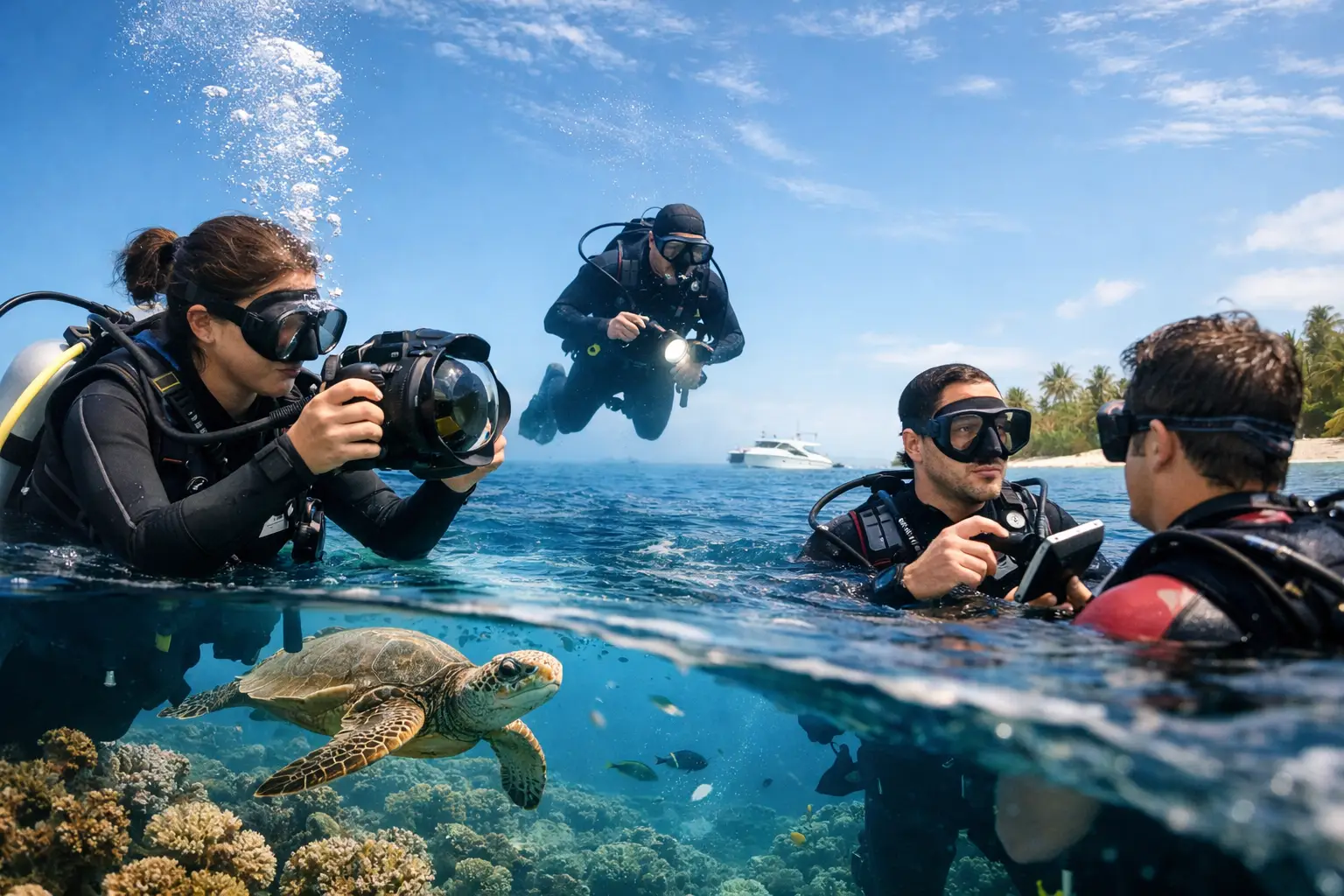
You got your Open Water card, finished those first training dives, and now the real question starts showing up between surface intervals – what comes next? The best PADI courses after open water are not always the highest level course you can sign up for. They are the ones that match the kind of diver you want to become, the conditions you want to handle confidently, and the adventures you actually want to say yes to.
For some divers, the next step is about building comfort and control. For others, it is about getting into deeper sites, exploring wrecks, navigating with confidence, or preparing for a professional path. If you are traveling to a place like Tulum, where reefs, cenotes, and advanced training all sit in one destination, choosing well matters even more because the right course can change the kind of diving available to you right away.
How to choose the best PADI courses after open water
The biggest mistake new certified divers make is assuming there is one correct ladder and everyone should climb it the same way. That is not how strong divers are built. Some people need more repetitions and confidence in basic skills before taking on depth or overhead-related environments. Others already feel comfortable in the water and benefit from a course that expands range quickly.
A good next course should do one of three things. It should make you safer, make you more capable, or open doors to dives you are excited about. The sweet spot is a course that does all three.
Your dive frequency matters too. If you certified on vacation and have not been in the water much since, a course with instructor support and multiple dives can help rebuild muscle memory. If you are already diving regularly, you may be ready for more focused specialties. And if your long-term goal is Divemaster or Instructor, your choices now should build experience with purpose instead of collecting random certifications.
1. Advanced Open Water Diver
For most divers, this is the smartest first answer to the question of the best PADI courses after open water. Not because it is mandatory for everything else, but because it gives you guided exposure to new types of diving while sharpening core skills.
Advanced Open Water is often misunderstood. It is not an intimidating course for elite divers. It is a practical confidence-building program that introduces you to areas like deep diving and underwater navigation, plus additional adventure dives that can reflect local conditions and your interests. That structure makes it ideal after Open Water because you are still learning what kind of diver you are.
The trade-off is that this course is broad rather than specialized. You will sample different skills, but you will not go deeply into one subject. That is exactly why it works so well early on.
2. Peak Performance Buoyancy
If you want one course that improves almost every dive you will ever do, this is it. Better buoyancy means better air consumption, better trim, less stress, less contact with reefs and delicate environments, and more control when conditions are less than perfect.
This course does not always get the same attention as deeper or more adventurous specialties, but experienced instructors know how valuable it is. Divers with excellent buoyancy look calmer because they are calmer. They are not fighting their position in the water or overcorrecting every movement.
It is especially worth considering if you felt a little task-loaded during Open Water, or if you are dreaming about environments where control matters more, like photography, drift dives, wrecks, or cenotes. It may not sound flashy, but it pays off immediately.
3. Enriched Air Diver
Nitrox is one of the most useful certifications you can add early. It teaches you how to dive with enriched air blends and manage exposure differently than with standard air. For recreational divers, the practical benefit is often longer no-decompression limits on certain profiles, especially on repetitive dives.
That makes it a strong choice for travelers doing multiple dives over several days. If your vacation plan includes reef diving, boat trips, or a packed dive schedule, this certification can add flexibility. It is also a common and helpful credential to have as your diving becomes more regular.
The reason it is not always the first recommendation is simple – Nitrox is valuable, but it does not replace in-water skill development. If you still need work on buoyancy, trim, or confidence, pair this with a course that gets you more supervised diving time.
4. Deep Diver
A lot of iconic dive sites sit below the standard Open Water depth limit, so Deep Diver can be a natural next move once you have built a solid base. This course develops the planning, awareness, and discipline needed for deeper recreational dives. You learn how depth affects air consumption, narcosis, time management, and decision-making.
For divers who feel ready to go beyond entry-level profiles, this course opens new terrain. It also tends to make divers more thoughtful overall because depth punishes sloppy habits quickly. Good training here is not about chasing numbers. It is about becoming more methodical and aware.
That said, deeper is not automatically better. If your buoyancy, gas awareness, or comfort under pressure still feels inconsistent, work on those first. The best next step is not the deepest one. It is the one you can handle well.
5. Underwater Navigator
Navigation is one of those skills that separates a diver who follows from a diver who truly understands what is happening underwater. This course teaches you to use natural references, compass work, and structured navigation patterns more effectively.
Why does that matter so much? Because confidence changes when you stop feeling dependent on someone else to orient every moment of the dive. You become more aware of your surroundings, your return point, and your team position. That reduces stress and improves safety.
This is a particularly smart course for divers who want to be more self-sufficient, who plan to dive in varied conditions, or who have professional ambitions later. It is not the most glamorous specialty, but it builds a kind of quiet competence that experienced divers respect immediately.
6. Wreck Diver
If wrecks are high on your travel wish list, this specialty can be one of the best PADI courses after open water, but timing matters. Wreck diving is exciting because it combines history, structure, marine life, and a totally different visual experience from reef diving. It also demands stronger control, awareness, and discipline than many newer divers expect.
A good Wreck Diver course teaches more than sightseeing. You learn about hazards, lines, limited spaces, and how to approach wreck environments with respect rather than curiosity alone. Depending on the site and local conditions, this can be a fantastic specialty after Advanced Open Water and buoyancy-focused training.
If your basic skills are still shaky, take a beat before jumping into it. Wrecks reward precision. They are much more fun when you have the control to enjoy them instead of just manage them.
7. Rescue Diver
Ask dive professionals which course changed them the most, and Rescue Diver comes up again and again. Not because it is the flashiest, but because it shifts how you think. You stop seeing diving only through your own mask and start noticing team awareness, prevention, stress signals, and problem-solving before a small issue turns into a larger one.
This course builds real confidence, not the performative kind. You become more capable, more observant, and usually more relaxed because you understand what to do if something goes sideways. It is also a major step toward Divemaster for anyone considering a professional track.
The reason it is not always the immediate next course after Open Water is that it helps to have a bit more diving experience first. You do not need to wait forever, but you will usually get more from Rescue once basic skills feel natural.
Which course is right for you?
If you want the broadest next step, choose Advanced Open Water. If you want to improve every single dive, choose Peak Performance Buoyancy. If you are planning a busy dive trip, Enriched Air Diver is incredibly practical. If deeper sites are calling your name, Deep Diver may be the right fit once your fundamentals are strong.
If your goal is precision and confidence, Underwater Navigator is a smart investment. If you are drawn to structure and history, Wreck Diver can be unforgettable with the right preparation. And if you want to become the kind of diver others trust, Rescue Diver is hard to beat.
For divers visiting the Riviera Maya, course choice also depends on what kind of underwater world you want to experience. Reef diving, wrecks, and overhead environment training all place different demands on your skills. At a training-focused destination with serious instruction standards, like Infinity2Diving, it makes sense to choose a course that fits both your current level and your next big goal.
A smarter way to build your dive path
The best divers are not the ones who rush through the most certifications. They are the ones who build range with intention. One well-chosen course can sharpen your skills, expand your access, and make every future dive safer and more rewarding.
If you are standing at that point right after Open Water, that is a great place to be. You do not need to do everything next. You just need to choose the course that makes you more ready for the kind of underwater life you want to live.