
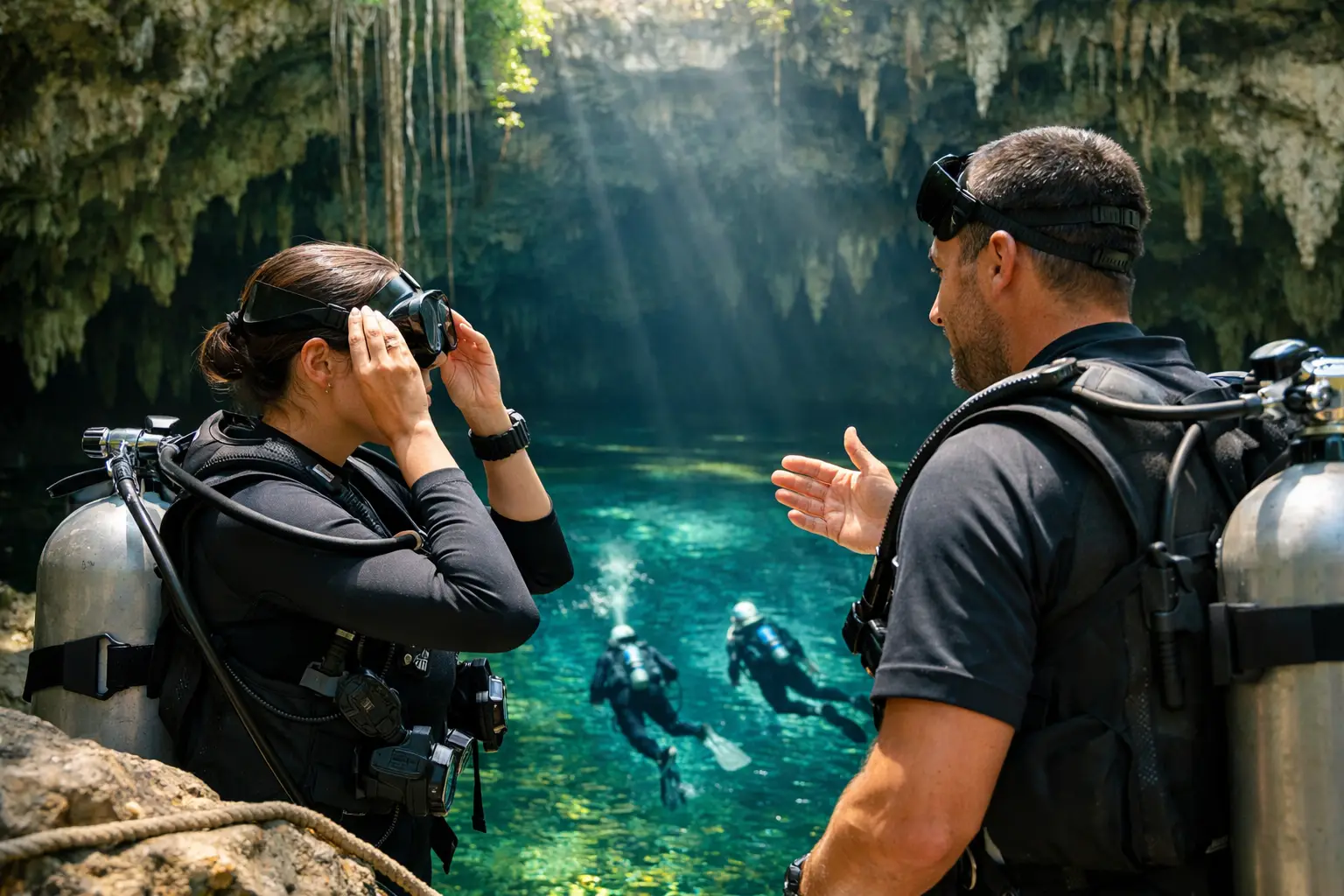
The first time you hover beneath a limestone ceiling in crystal-clear freshwater, the question gets very real: is cenote diving safe? It’s a fair question, especially if you’ve seen dramatic photos of caverns, light beams, and dark passages and wondered whether this is an adventure for trained cave divers only.
The short answer is yes, cenote diving can be very safe when it is done in the right environment, with the right guide, and within the right limits. It is not risk-free, because no form of scuba is. But for certified divers entering open cavern zones with professional supervision, proper briefing, and conservative dive planning, cenote diving is one of the most controlled and rewarding experiences in the Riviera Maya.
Is cenote diving safe compared with ocean diving?
In some ways, cenotes feel easier than the ocean. There are no waves overhead, no surge, and usually no current pushing you around. Visibility is often exceptional, which helps divers feel calm and in control. Entries are usually straightforward, and conditions do not change as quickly as they can on a reef or boat dive.
At the same time, cenotes are overhead environments. That single difference matters. Even in cavern areas where natural light is always visible, you are not simply ascending into open blue water anywhere you want. The dive follows a planned route, a permanent guideline, and strict depth and gas limits. That structure is exactly what makes the dive safe, but it also means cenotes demand more discipline than a casual reef dive.
So, are cenotes more dangerous than the ocean? Not automatically. They are different. Ocean diving often brings current, surface conditions, marine life, and navigation challenges. Cenote diving removes some of those variables and replaces them with overhead-environment procedures. Safety depends less on the location itself and more on whether the dive matches the diver.
What actually makes cenote diving safe
The biggest factor is staying in the cavern zone, not the cave zone, unless you have formal cave training. That distinction is not marketing language. It is the foundation of safe cenote operations. Cavern diving for recreational divers stays within daylight zones, follows established lines, and is led by qualified professionals who know the site intimately.
A strong pre-dive briefing is another major safety layer. Good guides do not rush this part. They explain the route, hand signals, light use, gas management, depth, positioning, and what to do if visibility changes. You should know exactly where you are going and how the team will move before anyone enters the water.
Equipment and group control matter too. In cenotes, small groups are not a luxury. They make communication easier and reduce the chance of silting, crowding, or confusion. Well-maintained gear, proper weighting, and good trim all help protect both the diver and the cave environment.
And then there is the guide. This is where a premium dive center earns its reputation. An experienced cenote professional does more than lead the way. They set a calm pace, keep the group within conservative limits, read diver comfort levels, and make smart decisions early. That kind of leadership turns an unusual environment into a safe, unforgettable one.
Who can dive cenotes safely?
Most cenote dives are designed for certified divers, not absolute beginners. If you already hold an Open Water certification and feel comfortable with your buoyancy, mask skills, and basic underwater communication, you may be ready for a cavern dive in Tulum. Some cenotes are especially suitable for recently certified divers, while others are better for divers with stronger control and more experience.
This is where honesty matters. If you have not dived in a while, if you still struggle with buoyancy, or if tight spaces make you anxious, say so. A good dive center will not shame you. They will help you choose the right site, recommend a refresher, or suggest building confidence first on easier dives. That is good safety culture, not gatekeeping.
Advanced certification is not always required, but comfort in the water absolutely is. Cenote diving is not about speed, depth, or bravado. It rewards calm breathing, careful finning, and the ability to listen and follow a plan.
Common risks and how professionals reduce them
When people ask, is cenote diving safe, they are usually asking about worst-case scenarios. The real answer comes from understanding the actual risks, not the cinematic ones.
One concern is disorientation. Cenotes can look otherworldly, and some passages can feel unfamiliar if you are used to reefs. That is why divers stay on a permanent guideline and follow a guide who knows the site. In cavern diving, the route is not improvised.
Another risk is poor buoyancy and silt-out conditions. In some cenotes, a careless kick can disturb the bottom and reduce visibility. Good guides solve this before it becomes a problem by checking experience levels, spacing divers properly, and choosing routes that fit the group.
Gas management is also more conservative in cenotes than many recreational divers expect. That is a good thing. Professional teams plan turn pressures carefully and build in margins. You are not there to stretch a tank to the limit. You are there to enjoy the dive and exit with room to spare.
Stress response is another factor. Some divers discover that the idea of rock overhead feels bigger underwater than it did in the briefing. This does not mean cenotes are unsafe. It means emotional readiness matters. A guide who notices tension early can slow the pace, simplify the experience, or end the dive if needed. The safest operation is not the one that pushes everyone through. It is the one that protects the diver first.
Is cenote diving safe for newer divers?
Yes, often it is, but only if newer really means newly certified and reasonably comfortable underwater. A diver with ten calm, well-controlled dives may be a better cenote candidate than someone with fifty dives and messy buoyancy.
For newer divers, the best cenote experiences are usually the most open and light-filled caverns. These sites let you enjoy the famous beams, haloclines, and cathedral-like spaces without adding unnecessary complexity. The key is proper matching. Not every cenote is right for every diver on every day.
If you feel excited but unsure, a refresher dive before your cenote day can make a huge difference. Reviewing mask clearing, regulator recovery, buoyancy, and trim gives you more mental space to enjoy the setting. Confidence is part of safety.
How to choose a safe cenote diving operator
This is the part travelers sometimes underestimate. The cenote itself does not create a safe experience. The operation does.
Look for a center that asks about your certification, recent dives, and comfort level before assigning a site. That shows they are screening, not just selling. You also want guides with clear cenote experience, small groups, quality rental gear, and a briefing style that feels thorough rather than rushed.
Pricing alone tells you very little. A cheap tour can be perfectly fine, and an expensive one can still cut corners. What matters is standards. Do they talk about cavern versus cave limits clearly? Do they build the day around diver ability? Do they create a calm, organized flow from check-in to water entry? Those details reveal a lot.
As a diver, you should also feel comfortable asking direct questions. Who will guide the dive? How many divers are in the group? Which cenote are we diving, and why is it appropriate for my level? A professional team will welcome those questions.
What you can do to make cenote diving safer
Your role matters more than you might think. Arrive rested, hydrated, and honest about your experience. If your buoyancy is rusty, say so. If equalization is sometimes difficult for you, mention it. If enclosed spaces make you nervous, do not hide that in an effort to seem adventurous.
You can also help by slowing down. Cenote diving is not a race to cover distance. The best divers in caverns move gently, breathe steadily, and pay attention. When you relax into the dive, everything gets better – your air consumption, your buoyancy, your awareness, and your enjoyment.
Listen carefully during the briefing, keep your body position streamlined, and stay where your guide places you. These are simple habits, but in cenotes they have real value.
The real answer to is cenote diving safe
Cenote diving is safe when it is treated with respect. That means diving only within your training, choosing a professional operator, and understanding that these spaces are spectacular precisely because they are different from open water.
For many divers, a cenote becomes the highlight of their time in Tulum because it blends adventure with order. You get the drama of ancient freshwater caverns, but also a highly structured dive built on procedure, guiding, and site knowledge. At a safety-focused center like Infinity2Diving, that balance is exactly the point.
If you are curious about cenotes, you do not need to be fearless. You just need to be properly prepared, well guided, and willing to experience the underwater world with a little more intention than usual. That is often when the magic shows up.