
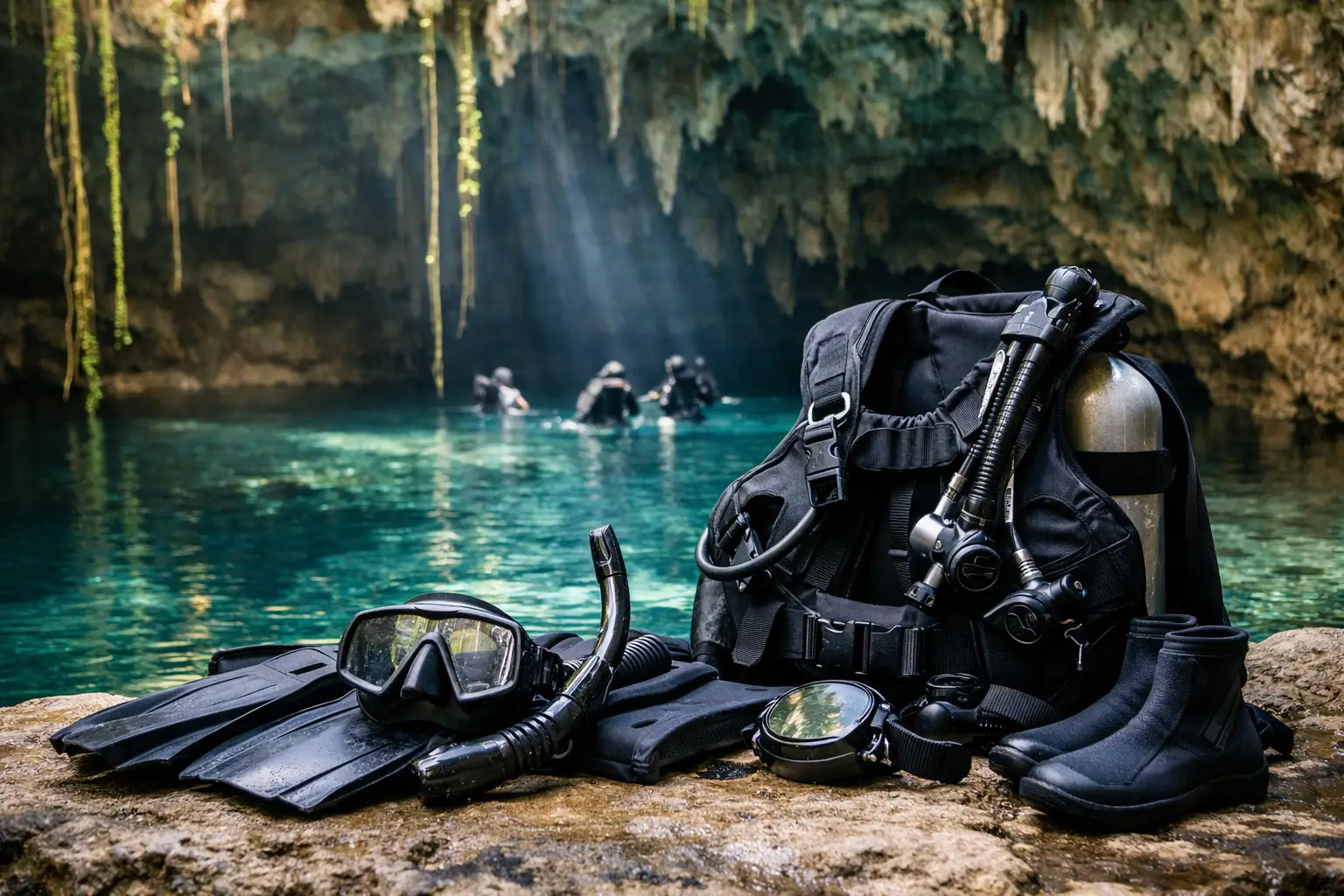
The first time you drop below the jungle canopy and see sunlight slicing through clear freshwater, cenote diving stops being a bucket-list idea and becomes something much more real. It is calm, surreal, and unlike reef diving in almost every way. If you are wondering how to prepare for cenote diving, the best approach is to think beyond excitement and focus on the skills, mindset, and planning that make the experience feel effortless underwater.
Cenotes are not just beautiful dive sites. They are overhead environments with specific procedures, tighter buoyancy requirements, and a style of diving that rewards control more than speed. You do not need to be an advanced technical diver to enjoy them, but you do need to arrive ready to listen, adapt, and treat the environment with respect.
What makes cenote diving different
For many certified divers, the biggest surprise is how precise everything feels. On a reef, small buoyancy changes might be manageable. In a cenote, a careless fin kick can disturb sediment, reduce visibility, or damage fragile formations that took thousands of years to form. The water is often incredibly clear, which makes every movement more noticeable.
There is also the psychological difference of diving in an overhead setting. Even on routes designed for recreational divers, you are not simply swimming in open water with direct vertical access to the surface at every point. That does not make cenote diving dangerous when it is guided properly, but it does mean preparation matters more.
How to prepare for cenote diving before your trip
Start with your certification and recent experience. In most cases, you will need at least an Open Water certification to join a guided recreational cenote dive, but that minimum does not always equal comfort. If you were certified years ago and have not been diving recently, a refresher is a smart move. A diver with 20 old logged dives may be less prepared than someone with six recent ones.
Comfort in the water matters more than bravado. You should feel confident clearing your mask, recovering your regulator, controlling your ascent, and hovering without flailing. If those skills still feel rusty, get a tune-up before you book. A short skills review can make a huge difference once you are under a cave ceiling with incredible visibility and no room for sloppy technique.
It also helps to be honest about nerves. Some divers feel totally relaxed in cenotes. Others discover that dark sections or enclosed spaces make them tense. Neither reaction is wrong. If you know you are uneasy in overhead environments, say so before the dive. A professional guide can choose suitable sites, explain what the route will feel like, and help you build confidence instead of pushing past your limits.
Training that helps more than people expect
You do not need full cave training for a standard guided cenote tour, but continuing education can make the experience smoother and more enjoyable. Peak Performance Buoyancy is one of the most useful specialties for cenote divers because control is everything. Good trim, slow breathing, and efficient finning are not just nice to have here – they protect the site and help you relax.
Advanced Open Water can also be valuable, especially if your original training was brief or your experience is limited. Navigation, deeper water comfort, and general underwater awareness all carry over. If you plan to spend real time diving in Tulum and the Riviera Maya, building a stronger training foundation before your cenote dives is rarely wasted effort.
For divers who fall in love with the environment, cave and cavern development can come later. That is a separate path with stricter standards and a lot more responsibility. For now, your goal is not to impress anyone. Your goal is to become the kind of diver who is calm, precise, and easy to guide.
Gear choices and what to bring
Most divers join cenote trips with rental equipment, and that is completely fine when the gear is well maintained and fitted properly. What matters most is not owning expensive equipment. It is knowing how your setup works and avoiding surprises on the day of the dive.
Pay special attention to exposure protection. Cenote water is often cooler than ocean water in the area, usually around 75 to 77 degrees Fahrenheit. That can feel refreshing at first and chilly by the second dive, especially if you are lean or tend to get cold easily. A full wetsuit is usually the better call over minimal exposure gear.
Mask fit matters more than people think. In very clear water, you want a mask that seals comfortably and does not distract you. If you own one you trust, bring it. The same goes for fins if you are used to them and have good control. Cenote diving rewards efficient, gentle kicks, and familiar equipment helps.
Avoid overpacking accessories you do not know how to manage. Extra gadgets can become clutter. A clean, simple setup is usually better. Your dive center will handle essentials like lights when they are required for the site and dive plan, and they will brief you on how those tools are used.
Physical and mental prep the day before
Preparation starts long before you step into the water. Sleep well, hydrate, and avoid partying the night before. Tulum can tempt people into treating every evening like a celebration, but dehydration and fatigue show up quickly underwater. Cenote diving is peaceful, yet it still demands focus.
Eat a balanced meal before diving, but do not overdo it. You want steady energy, not a heavy stomach. If you are prone to motion sickness, you may not need the same strategies as for boat diving, but if anxiety affects your stomach, light meals and hydration still help.
The mental side matters too. Cenotes are extraordinary, and many divers get so excited that they rush. Slow yourself down before the dive. Listen carefully during the briefing. Visualize moving calmly, checking gauges, staying close to your guide, and enjoying the scenery without chasing it. Good cenote divers are rarely the fastest people in the water.
What your guide needs from you
A great cenote experience is built on teamwork. Your guide is not there just to point out the best light beams for photos. They are managing route choice, gas planning, spacing, visibility protection, and group pace. The more clearly you communicate, the better the dive usually goes.
Be upfront about your certification level, total dives, recent dives, air consumption, and any concerns. If your buoyancy is inconsistent or you get anxious in enclosed spaces, say it early. Hiding that information does not make you look experienced. It makes proper planning harder.
At a professional operation like Infinity2Diving, the briefing should feel detailed and intentional. That is a good sign. Cenote diving is not the place for vague instructions or rushed entries. You want a team that explains procedures clearly, emphasizes environmental respect, and creates the kind of calm structure that lets you enjoy the adventure.
In-water skills that matter most
If there is one skill to focus on while preparing for cenote diving, it is buoyancy. Not average buoyancy. Precise buoyancy. You should be able to hover without sculling with your hands, avoid bouncing up and down, and maintain awareness of where your fins are in relation to the floor and formations.
Trim comes right after buoyancy. A flat, balanced body position helps reduce effort and keeps your movements clean. Finning technique matters too. Depending on the site, guides may coach divers to use modified kicks that reduce disturbance. Even if you only know a basic flutter kick, being able to make it smaller and gentler helps a lot.
Air consumption is another practical factor. Cenote dives are not races, but breathing fast because you are tense can shorten the dive and increase stress. Slow inhalations and relaxed exhalations make a difference. So does good weighting. Being overweighted is common and creates more work than many divers realize.
Respect the environment you came to see
Cenotes are not just dive attractions. They are delicate natural systems with cultural and ecological significance. That means preparation is not only about your comfort. It is also about how lightly you move through the space.
Do not touch formations, walls, or roots. Do not chase the perfect photo at the expense of your position in the water. If you wear sunscreen or insect repellent before the trip, follow eco-conscious guidance from your dive operator, especially if swimming or gear handling may affect the site. Small choices matter in freshwater systems.
The best cenote divers often look effortless because they are not trying to dominate the environment. They are moving through it with humility. That attitude will improve your safety, your control, and honestly, your enjoyment.
What to expect on your first cenote dive
Your first dive may feel easier than you imagined or more technical than expected. Sometimes it is both. The water clarity can create a false sense that everything is simple, while the overhead environment quietly demands discipline. That contrast is part of what makes cenotes so memorable.
You may notice that sounds feel different, the pace slows down, and visual references shift as light changes between open sections and darker passages. Stay close to the plan. Follow the line of the group. Check your gauges regularly. Let the experience unfold instead of trying to force it into a perfect social media moment.
If you prepare well, cenote diving feels less intimidating and more intimate. You stop thinking about whether you belong there and start noticing details – the halocline shimmer, the cathedral-like spaces, the silence. That is where the magic is, and it always starts with good preparation.
The best way to arrive at a cenote is curious, rested, and ready to be coached. Bring your certification, your patience, and your respect for the environment. The rest can be learned one calm breath at a time.