
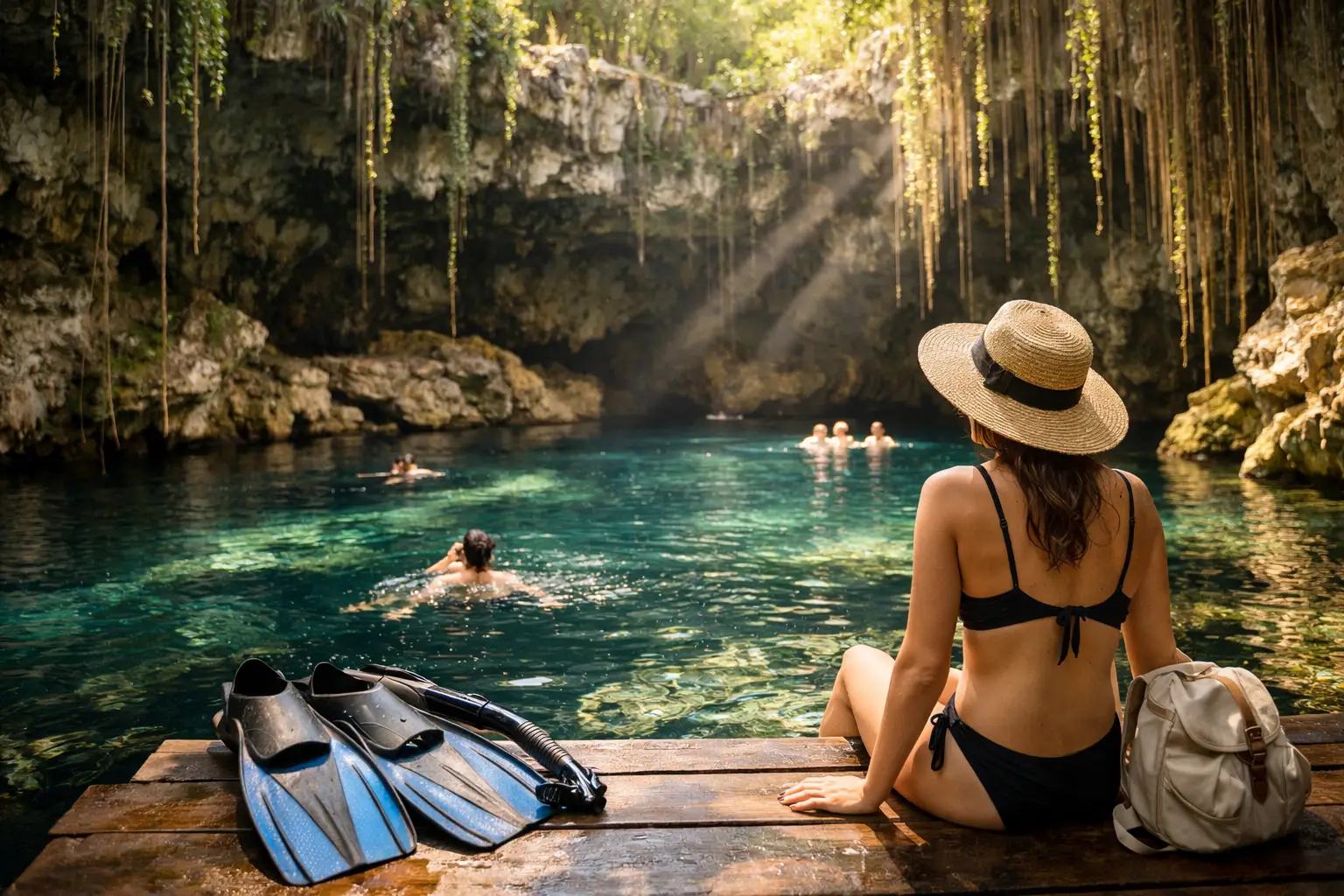
Your cenote day can go two very different ways. It can be the trip where you glide through clear blue water under jungle light and leave wondering why you waited so long to do it. Or it can be the day you show up at the wrong cenote, in the wrong gear, at the busiest hour, and spend more time figuring things out than enjoying the water. If you’re wondering how to plan a cenote trip, the difference usually comes down to a few smart decisions made before you ever get in the car.
Cenotes are one of the Riviera Maya’s most unforgettable experiences, but they are not all the same. Some are open-air and easy for casual swimmers. Others are partly enclosed, with dramatic cavern ceilings, light beams, and stricter rules. Some are ideal for snorkeling and photos. Others are designed for certified divers with proper training and a guide. Planning well means matching the cenote to your experience level, your budget, and the kind of day you actually want.
How to plan a cenote trip without wasting a day
The first step is deciding what kind of cenote experience you’re after. A lot of travelers make the mistake of searching for the most famous name instead of the best fit. If you want a relaxed jungle swim, choose a cenote with easy access, basic facilities, and space to linger. If you want a true underwater adventure, your plan should look very different, especially if cenote diving is part of the goal.
In Tulum and the surrounding area, you can broadly think of cenotes in three categories: swimming cenotes, snorkeling cenotes, and diving cenotes. There is some overlap, but the logistics are not identical. A swimming-focused day may be easy to do independently. A snorkeling trip may benefit from local guidance, especially if you want to visit more than one spot efficiently. A diving trip should always be organized with a professional dive center, since cenote diving requires site knowledge, safety procedures, and in many cases proof of certification.
That choice affects everything else – what time you go, what you bring, how much you spend, and whether you should book in advance.
Pick the right cenote for your travel style
If you’re traveling as a couple or with friends who all want different things, this is where good planning matters most. Not everyone wants a technical dive briefing at 8 a.m., and not everyone wants to spend the day at a crowded swimming hole with loud music and photo lines.
For first-time visitors, open cenotes usually feel the most approachable. They’re easier to navigate, often brighter, and better for a casual half-day outing. Semi-open or cavern-style cenotes feel more dramatic and are often what people imagine when they picture Tulum’s underground world. They’re stunning, but they may have stricter access rules and are not always the best choice for nervous swimmers.
For certified divers, cenotes are a different category entirely. This is where the experience becomes less about hanging out and more about precision, buoyancy, lighting, formations, and the surreal stillness of freshwater caverns. If that’s what you’re coming for, don’t treat it like a casual add-on. Build the day around it.
Timing matters more than most travelers expect
The best cenote trip is rarely the one that starts at noon. Midday brings heat, crowds, and in many popular spots, a very different atmosphere from the peaceful one people imagine. Going early usually means cooler air, softer light, fewer people, and a smoother check-in process.
There is also a seasonal trade-off. High season brings great energy and reliable services, but also more traffic and busier sites. Shoulder season can be excellent if you want a calmer experience. Rain does not always ruin a cenote day, since many cenotes are partly sheltered and the water itself remains beautifully clear, but road conditions and transport timing can be less predictable.
If photos matter to you, ask when light beams are strongest at your chosen cenote. If diving matters more, focus on operator quality, group size, and logistics rather than chasing a perfect Instagram hour.
Book transportation before you need it
This is the part of how to plan a cenote trip that travelers often underestimate. A cenote can look close on a map and still be inconvenient in real life. Some are easy to reach by car or taxi. Others require rougher access roads, careful timing, or a driver willing to wait. If you plan to visit multiple cenotes in one day, transportation can make or break the experience.
Renting a car gives you flexibility, but only if you’re comfortable driving in the area and handling parking, cash entry fees, and route changes. Taxis are simple for one stop but can get expensive if you build a full-day itinerary. Organized tours or guided dive trips often remove the most stressful parts of the day, especially when gear, site entry, and timing are handled for you.
For travelers who want a premium experience, that convenience is not a luxury. It’s often the reason the day feels smooth instead of rushed.
Know what to bring and what to leave out
Pack lighter than you think, but pack smarter. Cenotes are natural freshwater systems, and many have strict rules to protect them. In most places, regular sunscreen, insect repellent, and heavy skin products are either discouraged or not allowed before entering the water. Even reef-safe products may be restricted depending on the site.
Bring a swimsuit, towel, change of clothes, water, and cash. Water shoes can help at rocky entrances, though fins may be more useful for snorkeling or diving depending on the site. A dry bag is worth bringing if you’re carrying a phone, keys, or camera. If you’re diving, your operator will usually advise exactly what is included and what you should bring personally.
Do not assume every cenote has lockers, food service, shaded seating, or strong cell signal. Some have excellent facilities. Others are intentionally simple. That natural feel is part of the charm, but it requires a little preparation.
Safety is not the boring part – it’s what protects the magic
Cenotes feel calm, but that can make people casual in ways they shouldn’t be. Depth changes, slippery edges, visibility shifts, and overhead environments all require respect. Good planning means being honest about your comfort in the water.
If you’re not a strong swimmer, choose a cenote with easy entry points, life jackets, and staff on site. If you’re snorkeling with kids or nervous adults, ask about current conditions and access before you go. If you’re diving, go with a professional team that treats briefing standards, equipment checks, and small group supervision as non-negotiable.
This is especially true in cenotes. Cavern and cave environments are not the place for shortcuts, overconfidence, or bargain-first decision making. The right guide does more than lead the route. They shape the whole experience through calm instruction, site knowledge, and safety-led pacing. In Tulum, working with an experienced center such as Infinity2Diving can make that difference very clear from the first conversation.
Budget for the real trip, not the idealized one
A cheap-looking cenote day can become expensive fast once you add transportation, entry fees, food, equipment rental, lockers, and extra stops. Before you commit to an itinerary, price out the whole day. Sometimes a self-planned trip is the better value. Sometimes an all-inclusive guided option costs more upfront but saves money, time, and stress overall.
The answer depends on what kind of traveler you are. If you love flexible, DIY days and only want one easy swim stop, independent planning can work well. If you’re trying to fit in multiple locations, dive with proper support, or avoid logistical guesswork on a short vacation, paying for expertise is usually worth it.
That is the real trade-off. You’re not just choosing between cheap and expensive. You’re choosing between managing every variable yourself or handing the complicated parts to people who do this every day.
Build your day around energy, not just distance
One cenote can be enough. Two can be perfect. Three or more can start feeling like a checklist unless you’re very intentional. The best days leave room to slow down, eat well, and enjoy the setting instead of racing between entrances.
If you’re swimming or snorkeling, pair one dramatic cenote with one more relaxed stop. If you’re diving, let the dives be the center of the day and keep everything else secondary. Cenotes are not an attraction to rush through. They’re one of those rare places where the atmosphere matters as much as the activity.
When you plan around how you want to feel instead of how much you want to squeeze in, the day almost always gets better.
A great cenote trip doesn’t need to be complicated. It just needs to be honest about your goals, your comfort level, and the kind of experience you want to remember once you’re back home.