
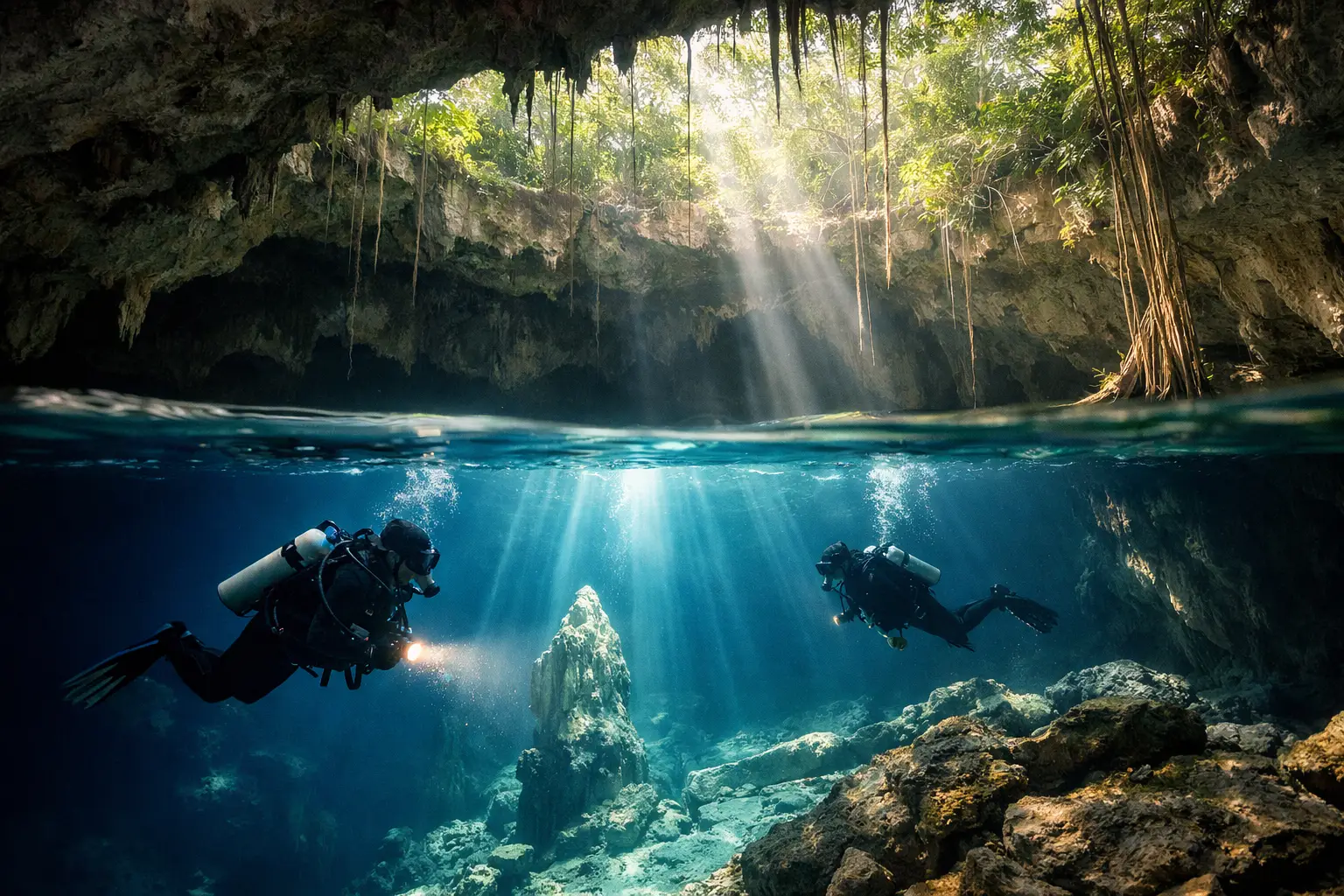
One minute you are standing in the jungle, heat on your skin and birds overhead. A few steps later, you drop below the surface into clear freshwater, where light cuts through the cavern in silver beams and every breath sounds louder than your thoughts. That is cenote diving, and for many divers visiting Tulum, it becomes the experience they talk about long after the trip is over.
What makes it so unforgettable is not just the visibility or the rock formations. It is the feeling of entering a hidden world that has been shaped over thousands of years. Cenotes are part of the Yucatan Peninsula’s underground river system, and diving them is unlike reef diving, boat diving, or drift diving. The pace is calmer, the environment is more intimate, and the details matter more.
Why cenote diving feels different
The first surprise for many divers is how still everything feels. In the ocean, there is usually surge, current, changing visibility, and marine life moving all around you. In a cenote, the water can feel almost motionless. That stillness changes how you dive. You notice your buoyancy more. You hear every exhale. You pay attention to the line, the overhead formations, and the way sunlight reaches into the cavern.
There is also the visual contrast. Some cenotes are bright and open near the entrances, with natural light creating dramatic effects across limestone columns and tree roots. Others feel moodier, with darker passages, haloclines, and layers where fresh and salt water meet in a shimmering blur. You are not there to chase fish or cover a lot of distance. You are there to move with precision and take in a landscape that feels ancient.
That is why cenote diving often appeals to both adventurous travelers and experienced divers. Beginners with the right certification can love the sense of wonder, while more advanced divers appreciate the control, awareness, and discipline the environment demands.
What to expect on a cenote diving day
A well-run cenote dive day starts long before you enter the water. You will usually review your certification level, experience, air consumption, and comfort in the water. That is not paperwork for the sake of paperwork. Cenote environments are beautiful, but they are also overhead environments, which means planning matters.
Your guide will brief the site, explain the route, review communication, and go over specific rules for the cavern zone. These rules are designed to keep the experience safe and respectful. You stay within the light zone, follow the permanent line, dive with an appropriate guide-to-diver ratio, and use proper equipment for the environment.
Once in the water, most divers are struck by the clarity. Visibility can be extraordinary, but that does not mean the dive is easy by default. Good trim and buoyancy are essential, especially in areas with delicate formations or silty bottoms. A diver who is relaxed in open water but tends to flutter-kick the bottom may need to slow down and focus more here.
Temperature is another surprise. Cenote water is typically cooler than the ocean around Tulum, which is refreshing in the heat but can feel chilly over multiple dives. Exposure protection matters more than people expect.
Who cenote diving is best for
Cenote diving is not only for technical divers, and that misconception keeps some people from trying one of the best experiences in the Riviera Maya. Many cavern dives are suitable for certified Open Water divers when guided properly and paired with sites that match their comfort and skill level.
That said, not every diver enjoys the same kind of challenge. If you love wide blue water, big marine life, and relaxed finning, cenotes may feel more focused and controlled than your usual style. If you enjoy precision, unusual geology, and a strong sense of place, you may fall in love with them immediately.
For newer certified divers, the best experience often comes from honest self-assessment. Are you comfortable with mask skills, equalization, and basic buoyancy? Can you stay calm while following a guide through a more structured route? If the answer is yes, cenotes can be an incredible next step.
For advanced divers, cenotes are often where curiosity grows into training goals. One guided cavern experience can lead to stronger buoyancy habits, interest in overhead procedures, and eventually cave or technical education. That progression should never be rushed, but it is a natural path for many divers who feel inspired by the environment.
Safety in cenote diving is part of the experience
The best cenote dives feel effortless because the planning behind them is not. Strong safety standards are not separate from the adventure. They are what make the adventure possible.
A professional briefing, the right tanks and lights, proper group management, and a guide who knows the site deeply all make a real difference. So does choosing an operator that matches site selection to the diver, rather than sending everyone to the same cenote regardless of experience. That kind of judgment is where quality shows.
There is also a difference between cavern diving and cave diving, and it matters. Recreational cenote diving takes place in the cavern zone, where natural light is always visible. Cave diving goes beyond that and requires specialized training, procedures, and equipment. If a diver does not understand that distinction, the briefing has not done its job.
Good operators are clear about these limits. They do not oversell. They do not blur the line between accessible adventure and technical diving. That clarity builds trust, especially for travelers who want the thrill of something extraordinary without compromising safety.
How to prepare for cenote diving in Tulum
A little preparation can change the experience from good to exceptional. The first step is choosing the right dive for your current level, not the most dramatic photo you saw online. Some cenotes are gentler introductions, while others are better once you have more control and confidence.
Arrive rested and hydrated. The jungle heat can be intense, and diving overhead environments is not the place to start the day depleted. Eat lightly, listen carefully to the briefing, and ask questions if anything feels unclear. Confident divers ask questions all the time.
If your buoyancy is rusty, refresh before your cenote day or mention it honestly to your guide. There is no shame in needing a tune-up. In fact, self-awareness usually leads to a better dive. A controlled frog kick, stable trim, and calm breathing will help you enjoy the formations and light effects instead of worrying about your position in the water.
Gear also matters. A properly fitting wetsuit can make a major difference in comfort. Streamlined equipment helps avoid accidental contact. Many divers prefer to use the center’s setup for cenotes because it is configured with the environment in mind.
The emotional side of cenote diving
Some dives are exciting because they are fast or full of action. Cenotes work differently. They stay with you because they feel intimate. There is a quiet intensity to moving through clear water under a ceiling of stone, watching sunbeams break around stalactites that formed long before any diver arrived.
That emotional impact is part of why people return. One cenote never really feels like enough. Each site has its own character. Some are open and radiant. Others feel mysterious and cathedral-like. The common thread is that they make you slow down and become fully present.
For travelers who come to Tulum looking for more than a checklist activity, that matters. Cenote diving is not just another excursion squeezed between beach clubs and dinner plans. Done well, it becomes one of those rare travel experiences that feels both thrilling and grounding at the same time.
Choosing the right team for cenote diving
This is one experience where the cheapest option is rarely the smartest one. The quality of the guide, the clarity of the briefing, the condition of the equipment, and the pace of the day all shape how much you enjoy the dive.
Look for a team that treats cenotes with respect and divers with care. That means strong standards, small groups when possible, and instructors who can adapt the day to different experience levels. It also means a welcoming attitude. Adventure should feel exciting, not intimidating.
For divers training or traveling in Tulum, Infinity2Diving brings that combination of professionalism, warmth, and high-level instruction that helps people feel capable from the first briefing to the final surface. In a setting this unique, that kind of support matters.
If cenote diving is on your list, give it your full attention when you do it. Slow down, breathe well, and let the place show you what makes it unforgettable.