
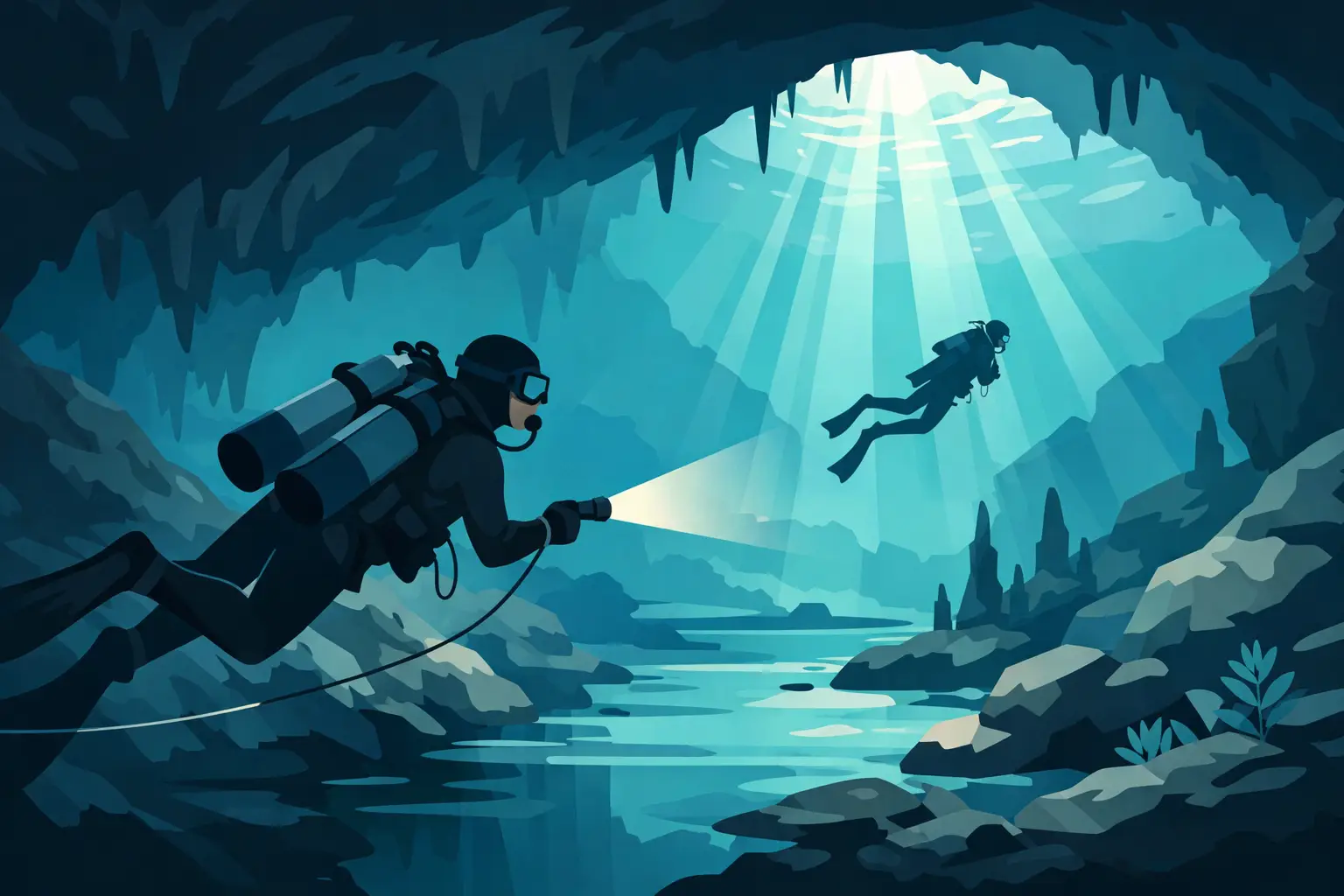
The first time you hover at a cenote entrance in Tulum, the shift is immediate. Sunlight cuts through clear freshwater, the cavern opens into darkness, and every instinct tells you this is not the same as an ocean dive. That is exactly why cave diving training Tulum attracts serious divers from around the world – not for a casual thrill, but for disciplined, high-level education in one of the most unique training environments on the planet.
Tulum is more than a beautiful destination. It sits beside one of the world’s most famous cave systems, where training is shaped by overhead environment protocols, precision buoyancy, line awareness, gas management, and calm decision-making. For divers who want to move beyond open water and develop truly refined skills, this is a place where standards matter.
Why cave diving training in Tulum stands out
Not every destination can offer year-round access to clear water, stable conditions, and a cave environment that demands respect from the first minute. Tulum can. The cenotes of the Riviera Maya give students a controlled but serious setting to build cave-specific skills without fighting ocean surge, boat traffic, or low visibility caused by weather.
That does not mean training here is easier. If anything, the environment makes mistakes more visible. Poor trim, rushed propulsion, sloppy communication, and weak situational awareness are exposed quickly in a cave. That is part of what makes training in Tulum so valuable. You are not just collecting a certification. You are learning to move through an overhead environment with intention.
There is also a practical advantage. Many divers who come to Tulum already want cenote experience, technical progression, or a longer educational path. That creates a strong training culture. Instead of being treated like a tourist checking off a bucket-list activity, serious students can work with instructors who understand progression, standards, and long-term development.
Who is cave diving training Tulum right for?
Cave training is not the next step for every certified diver, and that is a good thing. The right student is usually someone who already enjoys skill development, appreciates structure, and wants to understand the why behind every procedure.
In most cases, you need a solid foundation before starting. That often includes advanced recreational experience, strong buoyancy control, comfort in confined but non-panic-inducing spaces, and a genuine willingness to be coached. Depending on the course level, prerequisites may also include nitrox training, deep experience, sidemount familiarity, or prior cavern and intro-level overhead certifications.
The biggest requirement, though, is mindset. Cave training rewards divers who are patient and humble. If you want to be challenged, corrected, and pushed toward cleaner, safer technique, you are in the right place. If you are looking for speed over standards, cave training usually becomes frustrating very quickly.
The usual training path from cavern to full cave
Most divers do not begin with full cave certification, and they should not. Training is built in stages because each level adds complexity and responsibility.
Cavern training
Cavern is the entry point into overhead environment diving. Here, divers learn the foundational rules that separate open water habits from overhead protocols. You will work on guideline use, light communication, emergency procedures, gas planning, propulsion techniques, and position control while staying within the light zone.
This level is where many students realize how much precision matters. Even experienced recreational divers often need to refine their trim, finning, and awareness before advancing.
Intro to cave
At the next level, training moves farther from ambient light and deeper into cave procedures. The focus becomes tighter and more disciplined. You are expected to manage navigation, maintain contact with the team, protect visibility, and respond properly to failures or simulated stress.
This is often the level where students either become fully committed to cave progression or decide that cavern is enough for now. Both outcomes are fine. Good training is not about pushing everyone to the finish line. It is about matching skill, confidence, and judgment to the environment.
Full cave training
Full cave is where the system opens up, but only because your standards are expected to rise with it. Complex navigation, jumps, gaps, advanced team procedures, and deeper problem-solving become part of the course. The goal is not bravado. The goal is competent, conservative decision-making in an environment that leaves little room for improvisation.
A strong full cave course should feel demanding. If it feels casual, that is a red flag.
What a quality cave course should actually teach
A lot of divers ask about duration, gear, or certification cards first. Those matter, but they are not the heart of the training. The real question is whether the course changes how you think underwater.
A quality program teaches control before complexity. That means stable trim, non-silting propulsion, precise buoyancy, and clean team positioning come before ambitious penetration plans. It also teaches divers to slow down. In cave diving, rushed decisions are often the beginning of avoidable problems.
You should also expect repeated work on emergency drills. Lost line procedures, light failures, gas-sharing exits, mask issues, and communication protocols need to become calm and methodical. The point is not to create fear. It is to remove surprise.
Just as important, a good instructor will explain where your limits are and why they exist. Strong cave education is never about ego. It is about discipline, consistency, and respect for the environment.
Gear matters, but configuration matters more
Students often arrive focused on whether they need backmount or sidemount, what reels to buy, or whether they should invest in technical gear before the course starts. The answer depends on the program and your long-term goals.
In Tulum, sidemount is especially common because it suits many cenote passages well and is widely used in regional cave diving. That said, backmount remains a valid training path in the right context. What matters most is not choosing the trendiest setup. It is choosing a configuration your instructor can standardize, evaluate, and help you use properly.
A clean harness, accessible valves, dependable lights, proper exposure protection, and redundant systems all matter. But fancy equipment does not compensate for weak technique. In cave training, simple and well-configured beats expensive and cluttered almost every time.
Safety in cave diving is built long before the dive
People sometimes talk about cave diving as if the danger starts at the cavern line. In reality, safety starts with screening, honest prerequisites, site selection, briefing quality, and whether an instructor is willing to say, not yet.
That is one reason training center choice matters so much in Tulum. You want an operation that treats cave education as education, not entertainment. Small ratios, clear standards, realistic timelines, and all-inclusive planning make a difference because they reduce distractions and keep the focus where it belongs – on learning well.
The best instructors are not trying to impress you with how far they can take you. They are trying to build a diver who can make sound decisions when nobody is there to make them for you.
For students looking for a premium training environment, Infinity2Diving reflects that mindset with structured instruction, serious safety standards, and the advantage of training in Tulum with a team that understands both progression and personalized support.
How long does training take?
It depends on your current skills, the level you are entering, and how quickly you absorb feedback. Some divers move through a course efficiently because their buoyancy, trim, and awareness are already polished. Others need extra days, and that is not a failure. It is often the smartest investment they can make.
This is where honesty matters. Cave diving is not a race. If you need more time to stabilize your propulsion or improve stress management, more time is exactly what you should take. A certification earned too early helps nobody.
Why Tulum appeals to divers with bigger goals
For some students, cave training is a standalone achievement. For others, it is part of a bigger path that includes technical diving, professional development, or a deeper relationship with exploration-focused diving. Tulum is well suited to that second group because the area naturally attracts people who want more than a vacation story.
You can arrive as a recreational diver curious about cenotes and leave with a new standard for how you approach every dive. That is one of the most valuable parts of overhead training. Even before full cave, many students improve their buoyancy, gas discipline, awareness, and confidence across all environments.
That kind of growth lasts longer than the trip.
Choosing the right time to start
If you are excited by the idea of cave diving but unsure whether now is the right moment, ask yourself a few simple questions. Are your foundational skills consistent under pressure? Do you enjoy being coached in detail? Are you willing to repeat drills until they are clean, not just passable? If the answer is yes, Tulum can be an extraordinary place to begin.
And if the answer is not yet, that is still progress. The best cave divers are not the ones who hurry in. They are the ones who prepare well, train with intention, and treat every new level of access as something earned.
The caves around Tulum are unforgettable, but the real transformation comes from becoming the kind of diver who is ready for them.