
The first time you hold a regulator and hear your own breathing underwater, the equipment stops feeling like a confusing pile of gear and starts feeling like your passport to another world. So, what gear is included in scuba courses? For most beginner programs, the essential life-support and training equipment is supplied. But what is included can vary by course, destination, dive center, and whether you are booking a truly all-inclusive package.
A clear answer matters. You should be focused on learning buoyancy, communicating with your buddy, and enjoying your first reef or cenote adventure – not wondering whether you need to buy a tank, rent fins, or bring a wetsuit from home.
What Gear Is Included in Scuba Courses?
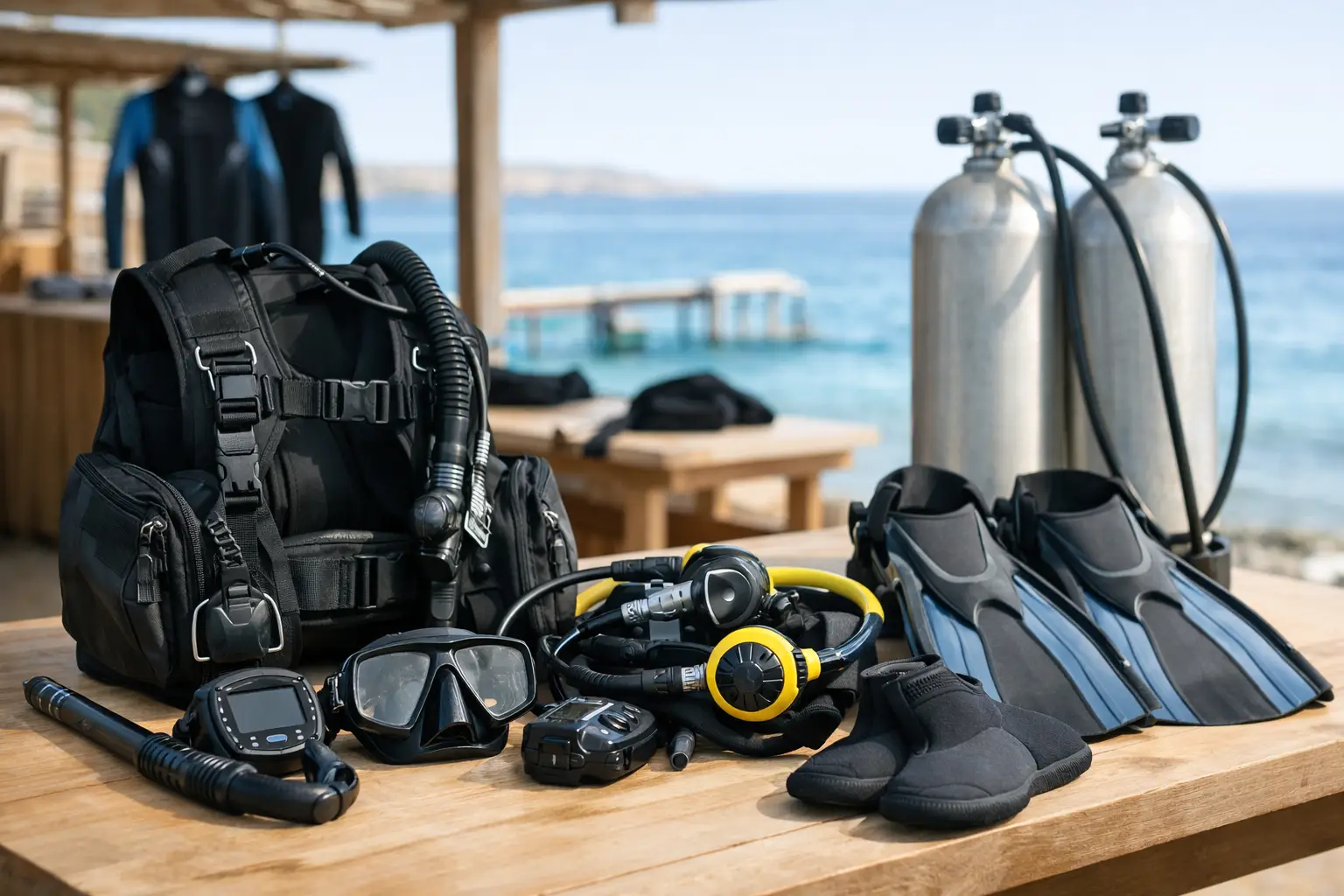
In a typical entry-level scuba course, such as the PADI Open Water Diver course, your dive center generally provides the core equipment needed for confined-water training and certification dives. This usually includes a mask, snorkel, fins, buoyancy control device (BCD), regulator with alternate air source, pressure gauge or dive computer, scuba tank, and weight system.
You will also usually receive exposure protection appropriate for local conditions, such as a wetsuit or shorty, plus safety essentials such as a surface marker buoy when it is needed for the dive plan. These items are not extras. They are the tools your instructor uses to teach you safe, comfortable, repeatable diving habits from day one.
At a professional center, rental gear should be properly maintained, correctly sized, and checked before every dive. Your instructor or dive team should help you find a mask seal that works, adjust your BCD, set up your regulator, and choose the right amount of weight. New divers often assume gear is one-size-fits-all. It is not. Good fit has a direct effect on comfort, confidence, and buoyancy control.
The basic equipment, explained
Your mask creates the air space that lets you see clearly underwater. A snorkel is used at the surface when conditions call for it, helping you conserve air before and after a dive. Fins turn efficient leg movement into forward motion without exhausting you.
Your BCD is the jacket or wing that holds your tank and lets you add or release air to control buoyancy. The regulator delivers air from the tank at a breathable pressure, while the alternate air source is there for buddy emergencies. Your gauge or computer lets you monitor air supply, depth, and time.
Tanks carry compressed breathing gas, and the weight system helps offset the natural buoyancy of your body and exposure suit. A wetsuit helps maintain body temperature and provides a layer of protection from sun, stings, and accidental contact with the environment. Every item has a purpose, which is why courses teach you not only how to use gear, but how to inspect and care for it.
What May Not Be Included in Your Course Price
This is where comparing course prices becomes more than a quick online search. Some schools advertise a low base rate, then add equipment rental, marine park fees, certification processing, transportation, or dive-site entry after you book. Others include these elements from the start.
Course materials and certification fees may be included, but they are not automatic everywhere. PADI eLearning or manuals, digital logbooks, and the final certification application are often listed separately by budget operators. The same is true for transportation, meals, photos, and accommodations.
Personal items are another gray area. A dive center may provide a mask and fins, but some divers prefer to own these from the beginning because fit is so personal. You may also need to bring a swimsuit, towel, reef-safe sunscreen for surface time, reusable water bottle, and dry clothes. If you wear prescription glasses, ask in advance about prescription-mask options rather than assuming your glasses can be worn underwater.
Before committing, request a written breakdown of what your package covers. A trustworthy answer should be simple and specific: equipment, academic materials, pool or confined-water sessions, open-water dives, certification fees, transportation, and any local fees. Clarity is part of safety, and it prevents a surprise expense from distracting you from an experience you have been dreaming about.
Course Level Changes the Equipment Included
Beginner courses are designed so you can arrive with curiosity and leave with real skills. Your instructor will normally supply the complete basic kit. As you move into Advanced Open Water, specialty courses, or professional training, equipment needs become more specialized.
For example, an enriched air nitrox course may require an oxygen-compatible analyzer and procedures for checking tank contents. A night-diving specialty requires a primary light and a backup light. Wreck, deep, technical, and cave training can introduce reels, redundant air systems, cutting devices, compasses, buoyancy configurations, sidemount setups, exposure systems, and highly specific safety equipment.
At these levels, some equipment may still be included for training, while other pieces may be expected as a personal investment. That is not simply an added cost. Career-track divers and serious enthusiasts benefit from learning in the same configuration they will use regularly. Still, no one should pressure a new diver into buying advanced gear before they understand their needs and have the training to use it well.
Why Tulum conditions can affect the answer
Warm Caribbean reef diving and freshwater cenote diving can call for different choices. The ocean around Tulum is often warm enough for lighter exposure protection, depending on the season and your personal comfort. Cenotes can feel noticeably cooler, and their overhead environment demands careful planning, excellent buoyancy, and training appropriate to the site.
A quality dive center will select suitable equipment and exposure protection for the day’s conditions, then explain why. This is especially valuable for travelers who do not want to fly with a full gear bag. Renting well-maintained equipment locally can be more convenient, while still giving you the chance to learn what style of mask, fin, BCD, or wetsuit you may eventually want to own.
Should You Buy Your Own Scuba Gear Before a Course?
For most first-time students, buying everything before the course is unnecessary. Rental equipment lets you test different styles and find out what actually feels right in the water. A BCD that looks perfect online may sit awkwardly on your torso. Fins that feel comfortable on land may rub after an hour in the water. Experience is a better guide than marketing.
If you want to make an early investment, start with personal comfort items: a well-fitting mask, snorkel, and fins. Some divers add a wetsuit once they know the water temperatures they enjoy most. These are pieces you will use often, and fit makes a meaningful difference.
Wait to buy a regulator, BCD, computer, or technical configuration until you have more dives and clearer goals. Are you planning relaxed tropical vacations, cold-water travel, frequent cenote diving, or a path toward Divemaster? Your answer should shape your gear choices. An experienced instructor can help you avoid spending money twice.
Questions to Ask Before You Book
Ask whether all required scuba equipment is included for every training session and certification dive. Confirm whether course materials, certification fees, tank fills, weights, transportation, entrance fees, and exposure protection are covered too. If you are taking a multi-day course, ask whether gear is stored securely between days and whether there is a backup option if something does not fit correctly.
It is also smart to ask about equipment maintenance, sizing availability, and who will be teaching you. The best course is not the one that hands you the most equipment. It is the one where knowledgeable professionals show you how each piece supports safe, confident diving and make you feel welcome asking every question.
At Infinity2Diving, the goal is never to rush you through a checklist. It is to help you build the skills and confidence to experience the Riviera Maya with purpose, from your first controlled breaths underwater to the adventures that follow. Choose a course with transparent inclusions, gear you trust, and an instructor who makes the underwater world feel exciting rather than intimidating. Your first descent should begin with anticipation, not uncertainty.