
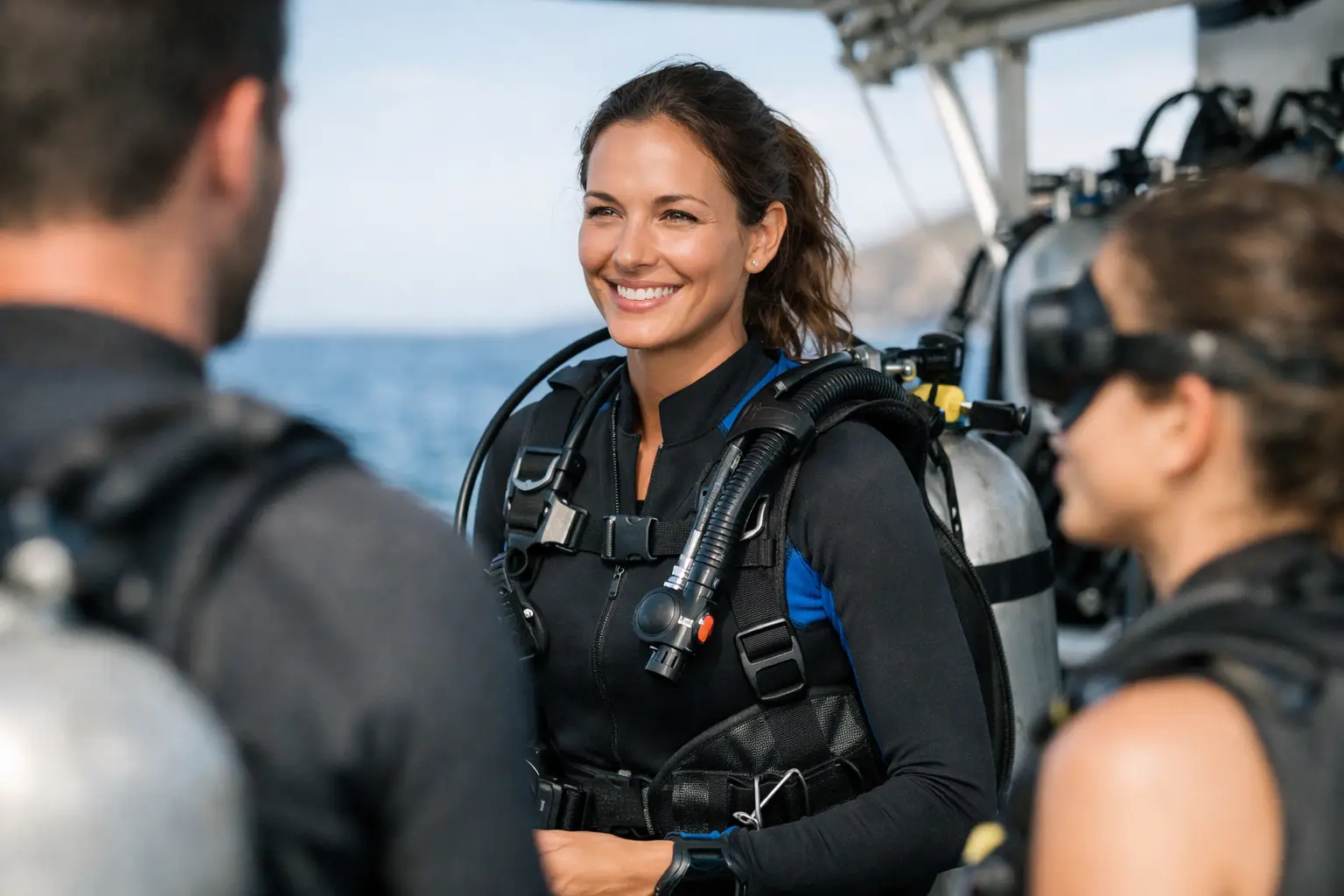
A diver’s first breath underwater is a moment of trust. They trust the person checking their equipment, reading the conditions, explaining the plan, and staying calm if something changes. Women’s leadership in the dive industry matters because it expands who gets to build that trust – as instructors, boat captains, dive center owners, conservation advocates, and mentors shaping the next generation of divers.
For travelers coming to Tulum, the difference is easy to feel. A truly welcoming dive center does more than take people to beautiful sites. It creates an environment where beginners can ask questions without hesitation, experienced divers can keep growing, and future professionals can see a career path that feels possible.
Women Leadership in the Dive Industry Builds Stronger Teams
Leadership is not about replacing one kind of authority with another. The dive industry needs skilled, prepared, decisive professionals of every gender. But when leadership teams include more women, the industry gains wider perspectives on communication, training, guest care, risk management, and workplace culture.
That matters in a setting where people arrive with very different confidence levels. One guest may be a certified diver returning after years away from the water. Another may be preparing for a first Discover Scuba Diving experience. A third may be pursuing Divemaster training with the goal of changing careers. Great leaders recognize that the same briefing will not reach every person in the same way.
Women leaders often help normalize a teaching style that is both exacting and encouraging. Standards do not become softer. Safety protocols do not become optional. Instead, the learning environment becomes clearer: questions are welcome, skills are practiced properly, and confidence is earned through preparation rather than pressure.
This is especially valuable in professional training. A Divemaster or Instructor candidate is not simply learning to demonstrate skills. They are learning how to guide people, manage groups, communicate across cultures, make sound decisions, and represent the dive community. Seeing women lead those responsibilities at a high level helps candidates understand that professionalism has many faces.
Representation Changes Who Feels They Belong
Scuba diving has long carried the image of a male-dominated adventure sport. That image is shifting, but representation still matters at every stage of the journey. When women see other women teaching courses, running boats, leading technical programs, or owning dive operations, the question changes from “Can I do this?” to “What will I do next?”
For some guests, this visibility can remove a barrier before it is ever spoken aloud. A woman who feels intimidated by her first ocean dive may feel more comfortable asking for extra time during a skills session. A young traveler considering a long-term dive career may be more likely to pursue it after meeting a female instructor who has already built one. These moments are personal, but their impact reaches far beyond a single trip.
Representation also benefits men. Better diversity in leadership creates more thoughtful teams, stronger communication, and a culture where expertise is respected regardless of who delivers it. The goal is not to divide divers into categories. It is to ensure that talent, dedication, and good judgment are recognized wherever they appear.
Safety Has a Human Side
Safety in diving begins with standards, training, equipment maintenance, weather awareness, and appropriate site selection. Those foundations are non-negotiable. Yet safety also depends on human factors: whether a diver feels able to say they are anxious, whether an instructor notices uncertainty, and whether a team communicates clearly before entering the water.
Strong female leadership can reinforce this human side of safety. It encourages dive professionals to listen closely, ask better questions, and create room for honest answers. If someone is not ready, the right response is not to rush them toward the water. It is to identify what they need, whether that is more practice, a different plan, or the confidence to try another day.
This approach is particularly important in the Riviera Maya, where the variety of diving is extraordinary. Calm reef dives, drift conditions, deep walls, wrecks, and cenotes each require different preparation. No guide or instructor should promise that every site is right for every diver. Responsible leadership means matching the experience to the individual, not forcing the individual to fit the itinerary.
Mentorship Creates Careers, Not Just Certifications
A certification card is a milestone. Mentorship is what helps a diver turn that milestone into direction.
For career-track divers, the path from Open Water Diver to Divemaster, Instructor, Staff Instructor, or MSDT can feel exciting and intimidating at once. Courses provide the required knowledge and evaluations, but a great mentor helps students understand the reality behind the title. Professional diving can involve early starts, equipment logistics, guest service, environmental responsibility, physical stamina, and continuous learning. It is rewarding work, but it is real work.
Women leaders are especially powerful mentors because they can speak openly about navigating the industry while setting high professional expectations. They can model how to lead a briefing with authority, how to manage a difficult situation with composure, and how to build a career without shrinking their ambition.
At Infinity2Diving, female-led operations are part of a broader commitment to career development, expert instruction, and a dive community where people are supported as they grow. That support should never mean lowering the bar. It means showing students how to reach it.
What Good Mentorship Looks Like
Good mentorship is specific. It offers useful feedback after a confined-water session, explains why a skill needs refinement, and gives students opportunities to improve. It also makes space for bigger conversations about career goals, leadership style, and the kind of dive professional a candidate wants to become.
The best mentors do not create copies of themselves. They help divers develop sound judgment, self-reliance, and a leadership presence that is authentic to them.
Leadership Supports Conservation With Action
The health of the ocean is inseparable from the future of diving. Reefs, cenotes, coastlines, and marine life are not just scenic backdrops for a vacation. They are living systems that require care from every person who enters the water.
Women are leading conservation work throughout diving, from marine science and coral restoration to community education and sustainable tourism practices. Their leadership is a reminder that protecting the underwater world is not a side project for dive centers. It belongs in daily decisions: choosing responsible practices, respecting wildlife, reducing waste, teaching buoyancy control, and helping guests understand the impact of their actions.
A diver who learns to hover calmly above a reef is protecting more than their own experience. They are learning respect for the environment that makes the experience possible. Instructors and guides have enormous influence here, especially when they pair knowledge with genuine passion.
The Work Still Ahead
Progress does not mean the work is finished. Women in diving can still encounter unequal assumptions about physical capability, authority, technical competence, or career commitment. Some may feel pressure to prove themselves repeatedly in ways their peers do not. Others may lack access to mentors, professional networks, or leadership opportunities.
The industry can respond with practical action. Dive centers can hire and promote based on skill and potential, create clear pathways for professional development, maintain fair standards, and make harassment or discrimination unacceptable. Students and guests can also play a role by choosing operations that value qualified, diverse teams and by respecting every professional’s expertise.
For aspiring female dive professionals, the message is simple: your ambition belongs here. Build your skills carefully. Seek mentors who challenge and support you. Learn the standards deeply, practice until your performance is dependable, and keep showing up.
The underwater world asks us to be present, capable, and connected to something larger than ourselves. When more women lead in diving, more people can see themselves in that calling – and the entire community becomes stronger for it.