
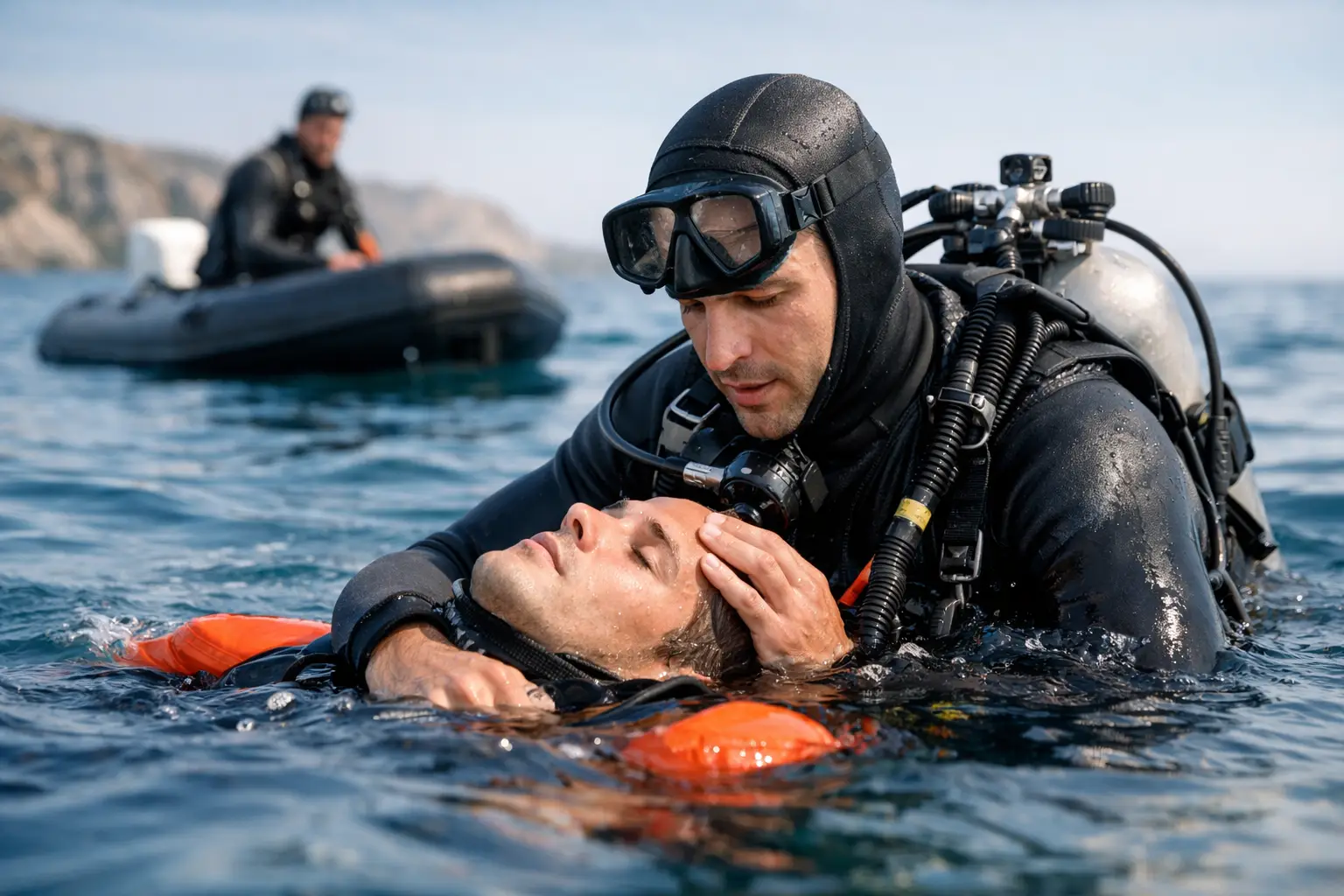
A diver who notices a buddy breathing too fast, spots a problem before it escalates, and responds with a clear head can change the entire outcome of a dive. That is what makes Rescue Diver training so powerful. If you are wondering how to become a rescue diver, the path is not about becoming fearless or carrying every responsibility alone. It is about building the awareness, practical skills, and calm decision-making that make diving safer and more rewarding for everyone.
For many divers, this is the course where scuba shifts from something you do to a capability you carry. You will still be there for the reef, the cenotes, the wrecks, and that unforgettable weightless feeling. But you will also see more, anticipate more, and understand how to help when a dive does not go to plan.
What a Rescue Diver Course Actually Teaches
Rescue training is active, demanding, and deeply practical. Rather than focusing only on your own buoyancy, air, and route, you learn to assess the people around you and manage realistic diving emergencies. A great course creates pressure in a controlled setting, then gives you a repeatable way to respond.
You will practice recognizing diver stress, assisting a tired or panicked diver, responding to an unresponsive diver, conducting search patterns, surfacing an injured diver safely, providing emergency oxygen, and coordinating care at the surface. You will also work through emergency action planning, because good rescue decisions begin long before anyone enters the water.
The goal is not to turn recreational divers into emergency medical professionals. It is to give you the skills to prevent small issues from becoming major incidents, provide immediate assistance, and work effectively with your buddy, dive team, boat crew, and local emergency services.
How to Become a Rescue Diver: The PADI Prerequisites
The standard route is straightforward, although the best order depends on your current certification level and schedule. To begin a PADI Rescue Diver course, you generally need to be at least 12 years old and hold an Adventure Diver certification or higher. You must also have completed the Underwater Navigation Adventure Dive, which is normally included in the PADI Advanced Open Water Diver course.
You also need current CPR and first aid training. PADI Emergency First Response Primary and Secondary Care, or another qualifying course completed within the previous 24 months, meets this requirement. Many divers choose to pair their emergency first response training with Rescue Diver because the skills support each other so naturally.
A medical questionnaire is part of the process, too. Be honest with it. Certain medical conditions or medications may require a physician’s approval before you dive. This is not unnecessary paperwork. It is an important part of a safety-first training culture.
If you are newly Advanced Open Water certified, you may be ready to enroll, but readiness is more than checking a box. Divers get more from Rescue training when basic buoyancy, mask clearing, regulator recovery, and situational awareness feel familiar. If you have not dived recently, a refresher before the course can make the experience more enjoyable and help you focus on rescue skills rather than fundamentals.
The Training Journey, Step by Step
Most Rescue Diver programs combine knowledge development, confined-water skill practice, and open-water scenarios. Your exact schedule can vary based on weather, student experience, and the training environment, but the progression has a clear purpose.
Start with prevention and preparation
The first rescue skill is often noticing that something is wrong. You will learn how to recognize physical and emotional signs of stress, evaluate environmental conditions, plan for likely problems, and communicate clearly with a buddy. A diver struggling with their gear, losing track of the group, or using more air than expected may need support well before a true emergency develops.
This part of the course changes how you think underwater. Instead of asking only, “Am I okay?” you begin asking, “Is my buddy okay? Is this plan still appropriate for the conditions?” That awareness is the foundation of confident diving.
Practice skills until they become usable
In a controlled setting, your instructor will introduce individual techniques. You may practice approaches to a distressed diver, releases and exits, towing methods, search patterns, and surface management. Some skills feel awkward at first. That is normal. Rescue skills involve teamwork, equipment, communication, and physical effort, often at the same time.
Strong instructors do not rush this phase. They explain why a technique works, demonstrate it carefully, and let you practice enough to develop good habits. The objective is not a flawless performance on the first attempt. It is learning to pause, assess, communicate, and act decisively.
Put the pieces together in open water
Open-water scenarios are where the course becomes memorable. You may be given a situation with limited information and asked to organize a response. Perhaps a diver is missing, a buddy is unresponsive at the surface, or a group needs help managing an emergency while maintaining safety for everyone else.
These scenarios can be physically challenging, especially in warm conditions or current. They are also where divers often discover that they are more capable than they thought. You will learn that a rescue is rarely one dramatic action. It is a sequence of small, purposeful decisions: call for help, establish buoyancy, check responsiveness, manage the scene, and keep communicating.
Rescue Diver Is Not About Being the Hero
The most reliable rescue divers do not charge into a situation looking for a dramatic save. They slow down, protect themselves first, and use the resources around them. A panicked diver can accidentally endanger a rescuer. A complex emergency may require several people, emergency oxygen, a boat captain, and medical support on shore.
This course teaches a vital truth: asking for help is a strength. You may be the first person to recognize an issue, but you should not assume you have to solve every part of it alone. Effective rescue diving is leadership through teamwork.
That perspective also makes the course relevant beyond emergencies. You will become a more thoughtful buddy, a stronger trip planner, and a calmer presence in changing conditions. Those qualities matter on every dive, whether you are exploring a shallow reef or preparing for more advanced training.
Choosing the Right Place to Train
Where you train influences the experience. Look for a PADI dive center with instructors who make safety personal, not performative. Rescue Diver training should include clear briefings, well-maintained emergency equipment, realistic but well-supervised scenarios, and feedback that helps you improve without feeling intimidated.
It also helps to train in an environment that gives you variety. Tulum offers both open-water conditions and unique freshwater settings, which can make a multi-day course feel like a genuine diving adventure rather than a classroom obligation. At Infinity2Diving, the focus is on building capable divers through personalized instruction, supportive teamwork, and high standards that carry forward into every future certification.
Do not choose a course solely because it promises the fastest completion. A compact schedule can work well for experienced, comfortable divers who have current first aid training and solid foundational skills. If you are less experienced, have been out of the water for a while, or want more time to absorb each scenario, give yourself room. Confidence grows through repetition, reflection, and good coaching.
What to Do Before Your Course
Arrive rested, hydrated, and ready to participate. Review your core scuba skills and make sure your mask, fins, exposure protection, and other personal gear fit correctly. Rescue practice can involve repeated surface work, so protection from sun and heat matters just as much as being comfortable underwater.
Refresh your swimming fitness as well. You do not need to be an elite athlete, but you should be comfortable moving through the water and managing your energy. Rescue skills can be demanding, particularly when towing another diver or handling equipment at the surface. Good fitness gives you more capacity to think clearly when the work becomes physical.
Most of all, bring curiosity. Ask why an instructor chooses one response over another. Discuss the local emergency plan. Learn where oxygen is stored and how communication procedures work. These details are not side notes. They are the practical knowledge that helps turn training into real-world readiness.
Your Next Level of Diving Starts Here
Rescue Diver certification is often described as the most challenging recreational PADI course, and that is fair. It asks more of you mentally and physically than earlier training. Yet it is also one of the most meaningful achievements in diving because its value extends beyond your own adventure.
You leave with sharper awareness, stronger problem-solving skills, and a new respect for preparation. Then, on a future dive, you may notice a small concern early, offer the right support, and keep the day safe and extraordinary for someone else. That quiet confidence is where the real transformation begins.