
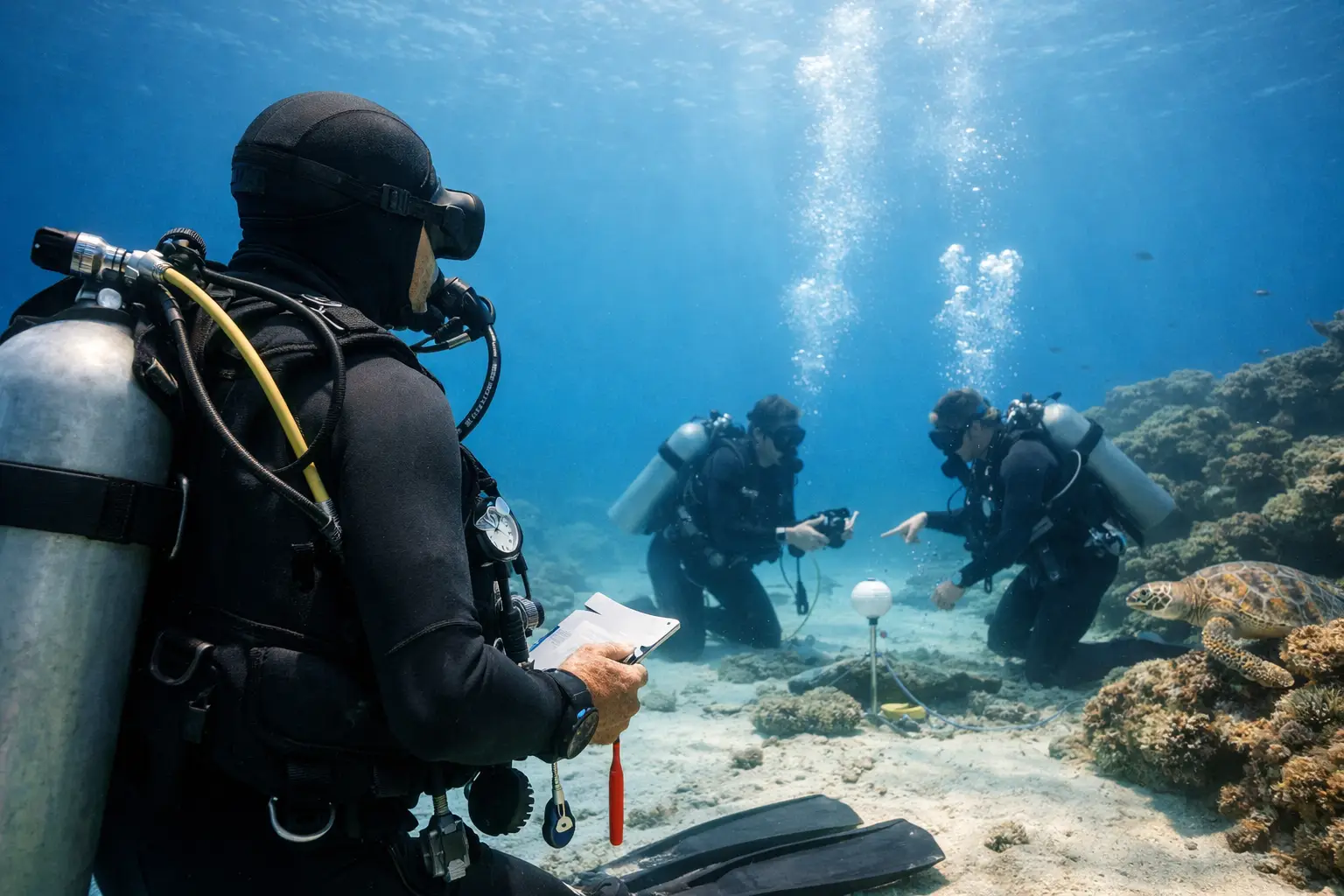
A Divemaster rating proves you can lead, assist, and take responsibility for the details that make a dive day run well. The best PADI specialties for divemasters add something more personal: the ability to become the professional divers request by name, whether that means leading deeper reef dives, supporting wreck enthusiasts, or helping guests notice the life hiding in plain sight.
There is no single specialty checklist that makes every Divemaster more employable. Your strongest choices depend on where you want to work, the diving you genuinely love, and the kind of mentor you want to become. A tropical resort Divemaster, a liveaboard guide, and a future cenote or technical-diving professional need different tools. Choose with intention, not simply to collect cards.
Start with the specialties your future dive center needs
Before signing up for your next course, picture a normal workday in the place you hope to guide. What conditions will you brief? What questions will guests ask? Which dives will the instructor team need support with most often?
At a busy Caribbean dive center, Enriched Air Diver and Deep Diver are usually more useful day to day than a specialty you may only use once a season. In a destination known for wrecks, wreck knowledge can make you a far more confident guide and assistant. In Tulum, divers often arrive excited by both reefs and freshwater environments, so buoyancy control, environmental awareness, and a clear understanding of your training limits matter enormously.
A specialty should deepen your judgment, not just add a line to your resume. The best professional candidates can explain why a dive plan suits the conditions, spot when a guest is overloaded, and make calm, conservative decisions before a small issue becomes a bigger one.
The best PADI specialties for Divemasters
Enriched Air Diver: the most practical first choice
For many aspiring professionals, PADI Enriched Air Diver is the smartest specialty to take early. Nitrox is widely used on repetitive dive days, particularly at warm-water resorts and on liveaboards. Understanding oxygen exposure, maximum operating depths, analyzer procedures, and cylinder labeling helps you support divers safely and speak their language during briefings.
This specialty does not mean every dive should be on enriched air. Air remains the right gas for plenty of profiles, and a Divemaster must never blur the line between convenience and proper planning. But when guests are making several dives over consecutive days, Nitrox knowledge is a practical asset that centers value.
Deep Diver: build judgment beyond the reef crest
Deeper dives demand more than comfort with a larger number on a computer. They require thoughtful gas management, awareness of narcosis, stronger buoyancy control, and a reliable response to changing conditions. PADI Deep Diver training gives you structured experience with the planning and discipline that deeper recreational diving requires.
It is especially valuable if you see yourself guiding wall dives, deeper reef sites, or certain wrecks. It also strengthens the habits that make a Divemaster dependable at any depth: checking the plan, monitoring the group, and leaving room for the unexpected.
Deep Diver is not a shortcut into technical diving, nor is it a reason to push limits. Its real value is learning to treat depth with respect while still enjoying the remarkable sites it can reveal.
Wreck Diver: a strong choice for destination professionals
Wrecks create memorable dives, but they also create complications: lines, sharp edges, limited visibility, overhead environments, and guests who are distracted by the story of the ship. PADI Wreck Diver training helps you understand responsible wreck-diving procedures, including mapping, lines, and the considerations around penetration training where appropriate.
For a Divemaster, this can translate into better site briefings and more attentive group management. You will be better prepared to position yourself, identify potential hazards, and help guests stay within their training and comfort levels.
The trade-off is simple: if your future destination has no wreck diving, this may not be your first priority. Choose it because you expect to use it or because wrecks are truly where your curiosity comes alive.
Search and Recovery Diver: calm problem-solving when it counts
Search and Recovery Diver is one of the most underrated specialties for future leaders. Lost masks, cameras, lights, and small pieces of equipment are common enough. More importantly, the course develops methodical search patterns, lift-bag skills, knot work, and communication habits that sharpen your overall watermanship.
It can be particularly useful for Divemasters who want to work with active training programs, boat operations, or more advanced recreational groups. You may not perform a formal search every week, but the planning skills are highly transferable.
This specialty is about controlled problem-solving, not heroic recovery missions. A professional knows when a retrieval is safe and realistic, and when the right call is to leave an item where it is.
Sidemount Diver: versatile skills, with a learning curve
PADI Sidemount Diver can be an excellent investment for Divemasters interested in equipment versatility, streamlined trim, and future technical or overhead-environment training. Carrying cylinders at your sides changes how you manage gear and can offer practical benefits in certain diving environments.
It is a particularly relevant path for divers drawn to the Riviera Maya’s freshwater systems. Still, sidemount should not be treated as a fashion accessory or a substitute for appropriate cavern or cave training. The configuration is a tool. Its value comes from learning to use it with discipline, refinement, and excellent buoyancy.
If you are happy guiding standard open-water dives and have limited time or budget, take Nitrox and Deep Diver first. If your career vision includes progressive skills development, sidemount can be a meaningful next step.
Underwater Naturalist or Fish Identification: become the guide guests remember
Technical confidence earns trust. The ability to make a dive more meaningful earns loyalty. PADI Underwater Naturalist and Fish Identification specialties help Divemasters turn a pleasant reef dive into a memorable encounter with the underwater world.
Guests may forget the exact depth of a dive, but they remember the guide who showed them a cleaning station, explained a parrotfish’s role on the reef, or helped them recognize the behavior of a curious sea turtle without crowding it. These specialties are powerful for professionals working with newer divers, photographers, snorkelers, and families.
They also reinforce a conservation-minded approach. A great guide does not chase marine life to create a photo opportunity. They teach visitors how to observe respectfully and leave the reef healthier than they found it.
AWARE Specialty: lead with conservation, not slogans
The PADI AWARE Specialty is a natural fit for Divemasters who want environmental responsibility to be part of their professional identity. It explores the pressures facing aquatic ecosystems and the actions divers can take to protect them.
On its own, it may not open as many operational doors as Enriched Air or Deep Diver. Paired with practical guiding skills, though, it helps you lead with purpose. You can make better choices about buoyancy, wildlife interactions, waste, anchoring impacts, and the way conservation is discussed with guests.
For a career professional, that credibility matters. Travelers increasingly want experiences that feel exciting without feeling extractive.
Build a specialty pathway instead of chasing every card
A focused sequence usually serves future Divemasters better than taking unrelated specialties as quickly as possible. Start with Enriched Air Diver and Deep Diver if you expect to work in mainstream recreational tourism. Add Wreck Diver if wrecks are part of your intended destination. Choose Search and Recovery to strengthen practical problem-solving, then add naturalist, fish identification, or AWARE training to become a more engaging and responsible guide.
Sidemount belongs in that pathway when it supports your longer-term goals. The same is true of cavern-focused development in destinations where it is offered: pursue it through the right progression, with instructors who know the local environment, and never treat overhead training casually. Cenotes are extraordinary, but they reward precision, patience, and respect for limits.
Your budget also deserves an honest look. More certifications do not replace logged experience. Spend time practicing buoyancy near the bottom without touching it, deploying an SMB cleanly, navigating in low visibility, assisting on courses, and observing how experienced professionals manage groups. Those habits show up in every dive, while a card only tells part of the story.
Turn specialty training into professional confidence
As a PADI Divemaster candidate, ask to connect each specialty to real responsibilities. After a Deep Diver course, review deeper-site briefings. After Fish Identification, practice building a short, accurate marine-life talk. After Search and Recovery, keep refining knot work until it feels automatic rather than rushed.
At Infinity2Diving, professional development can be shaped around the diving you want to do next, whether your dream is guiding travelers through bright Caribbean reefs or continuing toward a full dive career. The right training plan should challenge you, support you, and leave you more capable in the water than when you started.
Choose specialties that make you safer, more useful to your team, and more generous with the experience you create for others. That is how a Divemaster becomes more than a qualified guide: they become the steady presence that lets every diver feel ready for the adventure ahead.