
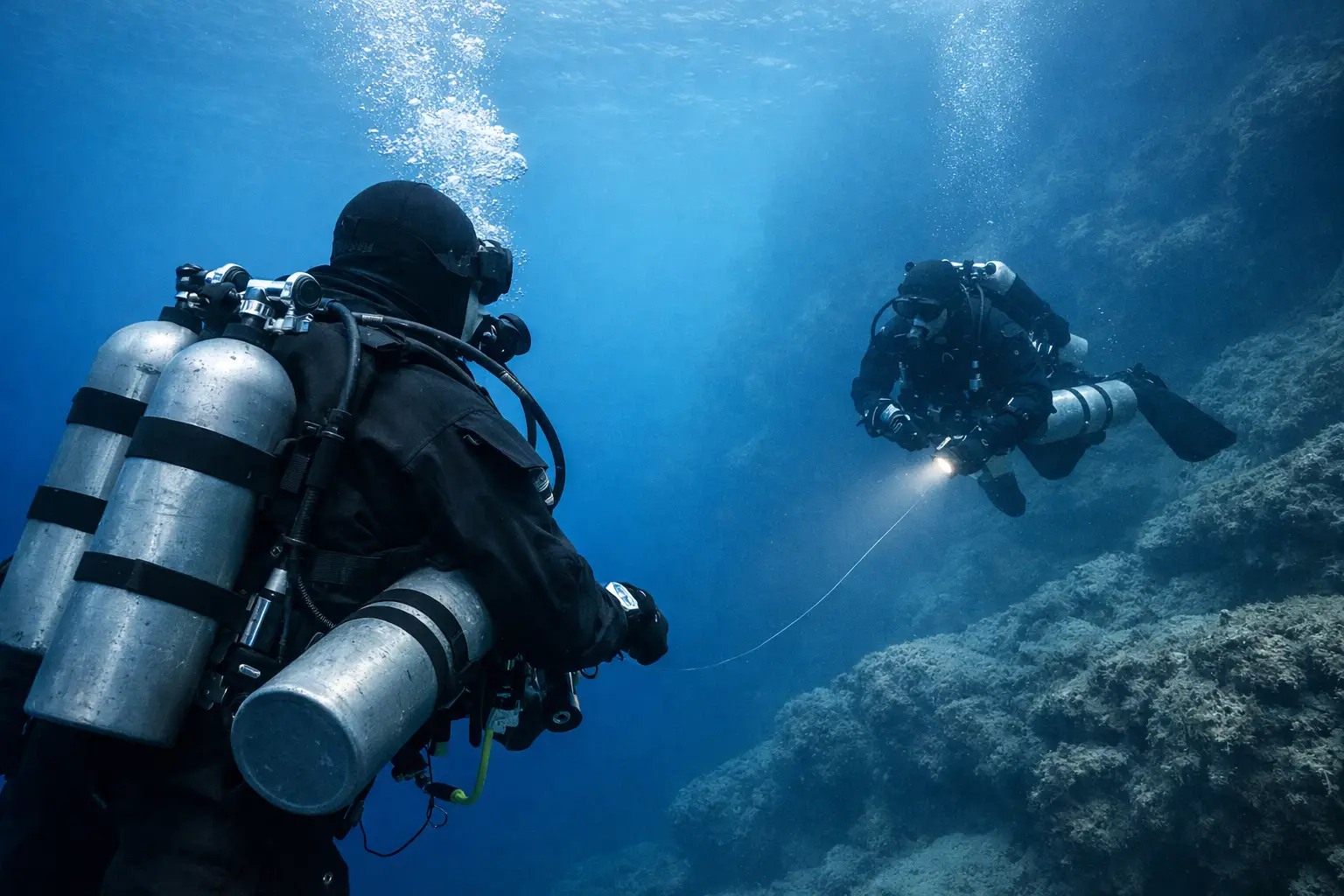
The first time you hold a stage cylinder, plan a decompression schedule, or see a cave guideline disappear into clear cenote water, technical diving can feel like the next great chapter. But a guide to technical dive progression should start with a truth that protects every diver: technical training is not a race toward deeper water. It is a deliberate path toward greater capability, stronger judgment, and more options when a dive does not go exactly as planned.
For motivated divers visiting Tulum or building a long-term dive career, that path can be transformational. The Riviera Maya offers dramatic reef walls, wrecks, and cenotes that make advanced training feel wonderfully real. Still, the environment does not hand out skill. Each step must be earned through repetition, honest self-assessment, and instruction that puts safety ahead of milestones.
What Technical Diving Really Changes
Recreational diving is built around direct ascents, no-decompression limits, and a relatively simple equipment configuration. Technical diving expands the plan. You may carry redundant gas, use accelerated decompression gases, spend more time underwater, and manage an ascent that cannot be shortened without consequences.
That does not mean every technical dive is extreme. A planned decompression dive in open water may be the right next step for an experienced recreational diver. A deep wreck or cave dive, by contrast, introduces additional layers of risk and requires a much longer runway. The common thread is self-sufficiency within a trained team, not bravado.
Technical divers learn to think in systems. Gas supply, buoyancy, propulsion, team communication, equipment placement, thermal protection, emergency procedures, and environmental conditions must work together. When one part of the system changes, the plan changes too.
A Guide to Technical Dive Progression: Build the Base First
Your certifications matter, but your everyday diving habits matter just as much. Before entering decompression or overhead training, aim to become genuinely comfortable in the water rather than merely qualified on paper. You should be able to hold position without sculling, ascend at a controlled rate, deploy a surface marker buoy cleanly, and maintain awareness of a buddy while managing your own task.
Strong buoyancy and trim are not about looking polished in photographs. They reduce silting, protect fragile reef and cave environments, conserve gas, and free up attention for problem-solving. In a cenote, poor finning can erase visibility for the entire team. On a decompression stop, unstable depth control can turn a simple obligation into a stressful one.
Experience also needs to be relevant. A diver with many relaxed vacation dives may still need time in current, low visibility, cooler water, or more demanding conditions before moving on. There is no universal dive-count threshold that guarantees readiness. The better question is whether you can perform core skills calmly and consistently while conditions are imperfect.
Start With Better Fundamentals, Not More Gear
Many divers buy twinsets, sidemount systems, reels, and computers before they have chosen the training path that fits their goals. Equipment can be exciting, but it is not a shortcut. A configuration should support the course and environment you are training for.
A skills-focused workshop, advanced buoyancy course, or sidemount introduction can be a smart bridge between recreational and technical diving. Sidemount is especially useful in the Riviera Maya, where its streamlined profile and independent cylinders suit many cenote environments. Yet sidemount alone is not technical training, and owning technical equipment does not make a diver ready for decompression or penetration.
Work with an instructor who can explain why a piece of equipment is positioned a certain way, not simply tell you where to clip it. Consistency is the goal. In an out-of-gas drill or valve issue, your hands should find what they need without a search.
Choose a Path Based on the Diving You Want to Do
Technical progression is not one straight ladder. Your destination matters. A diver whose dream is extended reef exploration may focus on nitrox, decompression procedures, and open-water technical training. A diver drawn to wreck penetration needs line management, overhead protocols, and a very different risk mindset. A diver interested in caves must develop cave-specific skills in defined stages, with strict limits at every level.
For most divers, the practical sequence looks something like this: strengthen recreational fundamentals, gain experience with enriched air where appropriate, learn a standardized technical configuration, complete entry-level decompression training, then add complexity only when the prior level feels routine. That complexity may include deeper depth ranges, additional gases, twin cylinders, sidemount decompression procedures, or overhead environments.
Cave training deserves particular respect in Tulum. Cenotes are breathtaking, but the beauty can disguise the reality of an overhead environment. A cave ceiling removes the option of a direct ascent. Navigation, gas management, team positioning, light discipline, and emergency response must be precise. Cavern, introductory cave, and full cave courses each have distinct limits. Do not treat them as interchangeable labels or assume open-water technical experience automatically transfers.
The Skills That Decide Whether You Are Ready
Technical courses test more than a checklist. They reveal how you respond when your attention is divided. Can you keep stable depth while deploying a buoy? Can you share gas while swimming in trim? Can you communicate a problem without rushing? Can you stop a drill when conditions or stress make continuing a poor decision?
Gas planning is another major shift. Recreational divers often monitor remaining pressure and turn conservatively. Technical divers calculate usable gas before entering the water, account for contingencies, and plan reserves that allow the team to manage a failure. In overhead training, gas rules become even more conservative because an exit may take time and effort.
You will also learn that decompression is not a punishment for staying too long. It is a planned obligation. Good technical divers track their schedule, protect their stop depth, manage comfort and exposure, and carry enough gas to complete the plan if a teammate loses a cylinder or a regulator fails.
The goal is not to become fearless. A healthy respect for depth, ceilings, and decompression is part of competent decision-making. If a skill feels rushed or a dive plan exceeds your comfort, the right call may be to pause, practice, or turn the dive. That judgment is a strength.
Train With Time Between Courses
One of the best investments in your progression is time spent practicing after each course. A back-to-back schedule can work for a diver with excellent readiness, favorable conditions, and a focused training plan. More often, a gap between courses helps new procedures settle into muscle memory.
Use that time for intentional dives. Practice a controlled ascent, buoyancy at a shallow stop, propulsion techniques, gas switches under supervision, or equipment checks with a trained buddy. Keep a simple log of what felt easy, what felt rushed, and what you want to improve. The notes will make your next conversation with an instructor more productive.
This is also when you learn whether the path truly fits you. Some divers discover that recreational guiding, reef photography, or advanced sidemount exploration gives them everything they want. Others feel more focused than ever when they plan a decompression dive or work through a line drill. Both outcomes are valuable. Technical diving should expand your enjoyment, not replace it with pressure.
Find Instruction That Makes You Think
The right instructor should be highly experienced in the type of diving you want to pursue, but experience alone is not enough. Look for a teacher who welcomes questions, sets clear course prerequisites, explains limits without ego, and is willing to say, “Not yet.” That phrase can be one of the strongest signs of professional care.
At Infinity2Diving, progression is approached as a personal plan rather than a conveyor belt of cards. Training in the Riviera Maya can pair serious skill development with extraordinary diving, but the standard remains the same: prepare carefully, train deliberately, and earn the next environment.
Ask potential instructors how they structure practice, how they assess readiness, what equipment is required, and what happens if a student needs more time. Technical training is demanding, so all-inclusive pricing and a clear itinerary can be helpful, but they should never create pressure to finish before you are ready.
Keep the Environment in the Plan
Technical divers often gain access to places few people see. That access carries responsibility. Maintain excellent buoyancy around coral, avoid contact with cave formations, secure hoses and accessories, and use propulsion that protects visibility and habitat. A perfect drill means little if it damages the place that made the dive possible.
Conservation and technical excellence are closely connected. The better your trim, awareness, and planning, the lighter your impact becomes. In cenotes, that care helps preserve a rare freshwater ecosystem and the experience for the divers behind you.
Your next certification should feel less like a finish line and more like a promise to keep practicing. Choose the dive that inspires you, build the skills it demands, and give yourself enough time to become the calm, capable teammate that remarkable underwater adventures require.