
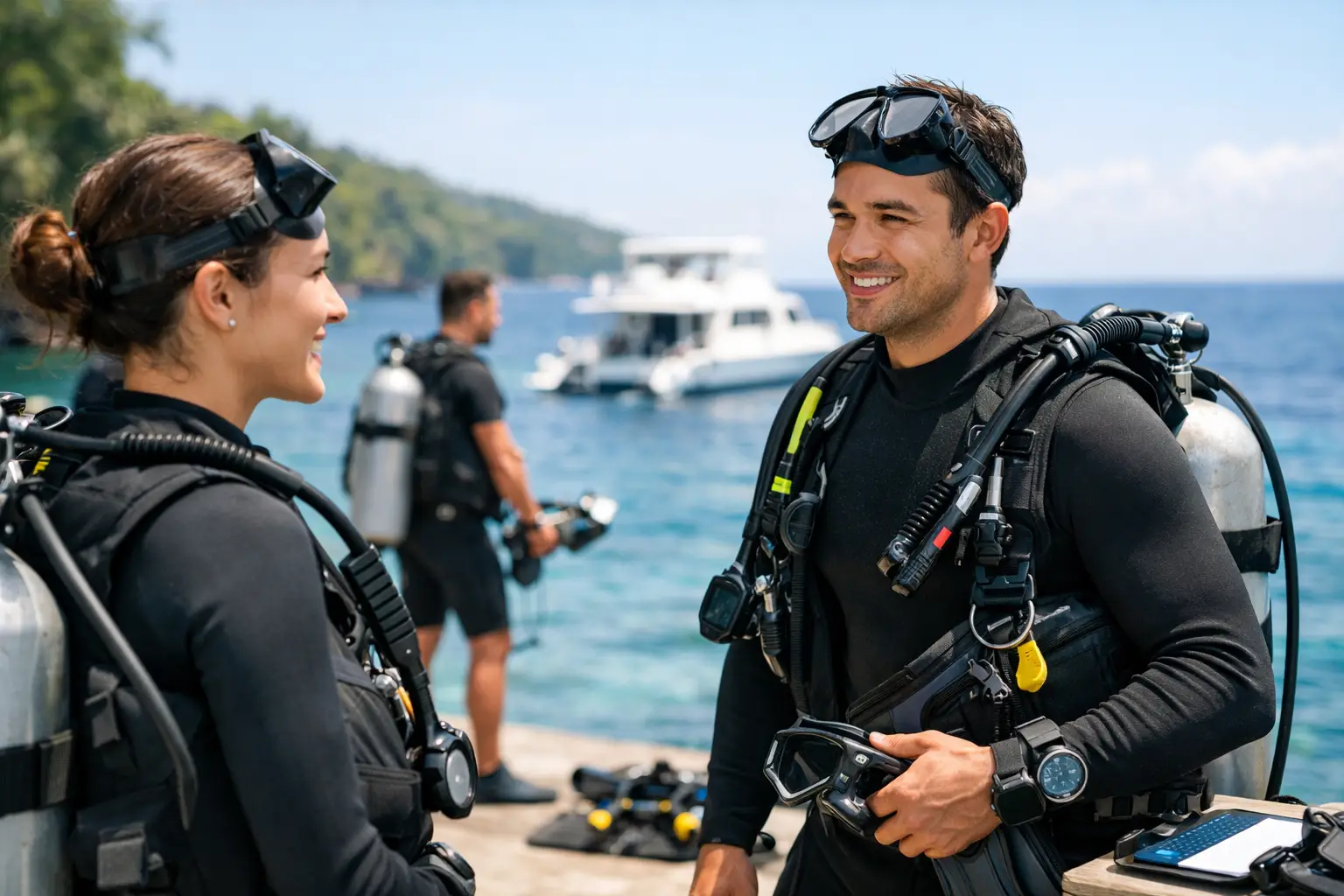
A great dive can change how you see the ocean. A great training path can change what you do with your life. Professional scuba pathways give that ambition a clear structure, whether you are arriving in Tulum with a brand-new certification or already have years of logged dives and a goal of teaching others.
The transition from recreational diver to dive professional is not simply about collecting cards. It is about developing calm judgment, stronger water skills, leadership habits, and the ability to make other people feel safe enough to enjoy an extraordinary underwater experience. For many divers, that journey begins on a reef or in a cenote and becomes the start of a global career.
What Professional Scuba Pathways Really Build
A professional-level certification is a credential, but the real value is the person you become while earning it. You learn to read conditions before entering the water, anticipate what a nervous student may need, solve small problems before they become major ones, and protect the environment that makes diving possible.
That matters because a dive leader is responsible for far more than showing people where the turtles are. Guests notice the difference between someone who is merely qualified and someone who is present, prepared, and genuinely invested in their experience. The best professionals bring both technical competence and a welcoming energy to every briefing, surface interval, and descent.
Tulum is an exceptional place to develop those qualities. The Riviera Maya offers reef, wreck, and cenote environments within one destination, creating meaningful variety in your training. You can build experience guiding ocean dives, refine buoyancy in clear freshwater, and learn why planning, conservation, and sound decision-making must remain consistent across every setting.
Start With a Strong Recreational Foundation
There is no benefit to rushing past the fundamentals. Before beginning a professional track, divers should be comfortable with buoyancy, mask skills, navigation, emergency procedures, and maintaining awareness of their buddy, environment, and gas supply. Confidence is useful. Consistent skills under changing conditions are better.
For most future professionals, the path begins with Open Water Diver certification, followed by Advanced Open Water and Rescue Diver. Each step has a different purpose. Open Water teaches the core system that makes independent recreational diving possible. Advanced training expands experience through adventure dives such as deep diving, navigation, drift, or buoyancy-focused work. Rescue Diver is where many people realize they are ready for a bigger role, because the course shifts attention from your own dive to the needs of the people around you.
Emergency First Response training is also a key part of the professional route. The skills may be taught on land, but the confidence to respond thoughtfully in an emergency supports everything you do around the water. Requirements can vary by course and may change over time, so it is wise to confirm prerequisites, medical documentation, and recent CPR qualifications before setting a training schedule.
Build Experience With Purpose
Logged dives are not just a number on an application. They are your record of exposure to different conditions, planning styles, and personal lessons. A diver who has completed many easy dives may still need time before feeling ready to lead in current, assist students, or organize a complex day on the water.
Choose experiences that make you more versatile. Practice precise hovering instead of touching the bottom. Learn to deploy an SMB with control. Improve your trim, navigation, and communication. Join guided dives where you can observe how professionals conduct briefings, manage group pace, and support divers with different comfort levels.
Specialty courses can add valuable range, particularly when they match the kind of work you hope to do. Enriched Air Diver is useful in many resort settings. Deep Diver, Wreck Diver, Drift Diver, and Peak Performance Buoyancy can sharpen practical skills. If your long-term goal includes cave or technical diving, treat that route as a separate, progressive discipline with its own training standards, equipment demands, and mindset. Never view advanced environments as a shortcut to a more exciting title.
The Divemaster Step: Where Leadership Becomes Real
PADI Divemaster is typically the first professional certification and one of the most transformative stages in a diver’s development. You are no longer training only to dive well. You are learning to supervise activities, assist instructors, guide certified divers, conduct certain programs, and model professional standards.
A quality Divemaster program should be immersive. Expect workshops that improve your demonstrations, mapping projects that strengthen environmental awareness, practical assessments, and real opportunities to assist with courses and guided dives. The experience of helping a student settle their breathing before a first ocean descent can teach as much as a skills circuit. So can watching a briefing delivered by an experienced instructor who makes complex information easy to understand.
The trade-off is commitment. A fast program may suit an experienced diver with strong skills and a limited travel window. A longer internship-style format gives you more repetitions, more mentorship, and a clearer view of daily life in a dive center. Neither choice is automatically right. It depends on your current experience, budget, schedule, and whether you want a certification or a career foundation.
At Infinity2Diving, professional candidates can train in an environment built around both destination diving and career development. That combination matters: you are gaining credentials in a place that also asks you to understand real guests, real conditions, and the responsibility behind every memorable underwater day.
From Divemaster to PADI Instructor
Becoming an instructor is a powerful next step because you gain the ability to introduce people to the underwater world. It also raises the standard. An instructor must organize learning, assess performance fairly, manage risk, communicate clearly, and adapt when a student needs more time or a different explanation.
The Instructor Development Course, often called the IDC, prepares candidates for that responsibility. It develops teaching presentations, confined-water coaching, open-water teaching skills, dive theory, and professional knowledge. Candidates then complete an Instructor Examination, where they demonstrate that they can meet PADI standards under formal evaluation.
Teaching is not about sounding perfect or reciting a manual. The instructor who earns lasting trust is the one who sees the whole student. They celebrate the first successful mask clear, correct a buoyancy issue without embarrassment, and know when weather, stress, or fatigue calls for a change of plan. This is where mentorship is especially valuable. Look for a Career Development Center and course directors who provide direct feedback, structured practice, and high expectations delivered with support.
Continue With Staff Instructor and MSDT Growth
Your first instructor certification is a beginning, not a finish line. As you teach, you may pursue specialties that fit your destination and interests, build student certification experience, and work toward Master Scuba Diver Trainer recognition. An MSDT path is ideal for instructors who want to become more versatile educators and offer a broader selection of training.
For those drawn to mentoring future professionals, the PADI IDC Staff Instructor route creates another level of responsibility. Staff Instructors assist with instructor development and help shape the next generation of dive leaders. It is a rewarding direction for experienced instructors who enjoy coaching, standards, and the behind-the-scenes work that makes quality training possible.
Career choices also extend beyond a single dive center. Some professionals thrive in tropical resort operations, while others prefer liveaboards, conservation projects, technical facilities, cold-water communities, or seasonal work that supports travel. The credential is internationally recognized, but the career you build should reflect your strengths and the kind of life you want around it.
Choose Your Timeline Honestly
The most effective professional scuba pathways are personal, not performative. If you are still discovering whether you enjoy diving, give yourself room to explore. Take guided cenote and reef dives, ask questions, and focus on becoming a relaxed, capable recreational diver first. If you already feel called to lead, create a training plan that includes enough time for mentorship, practice, rest, and reflection.
Budget for more than course fees. Professional development may involve equipment, insurance, medical evaluations, materials, lodging, meals, and the living costs of spending weeks or months in a training destination. All-inclusive programs can make planning clearer, but always understand exactly what is included and what you will need to arrange independently.
Most of all, choose a center where you feel challenged and welcomed. The right team will not promise an effortless transformation. They will give you honest feedback, celebrate your progress, protect safety standards, and remind you why you started: to share an ocean that still has the power to make people pause, breathe, and feel completely alive.
Your next certification can be more than a line in a logbook. Give yourself the time, guidance, and experiences to become the professional diver that new students and future dive buddies will be grateful to meet.