
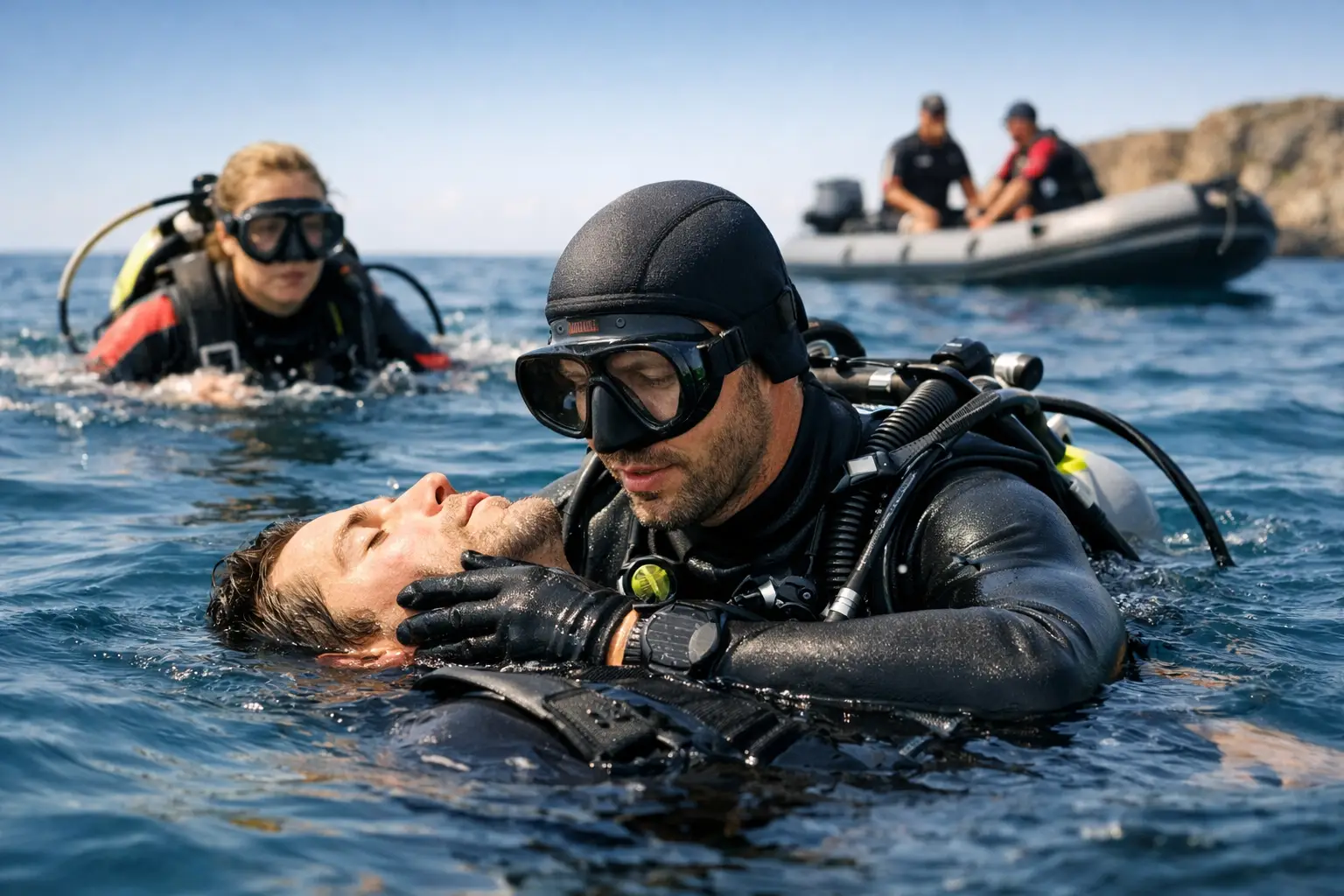
A calm diver who notices a problem early can change the outcome of an entire dive. That is the real purpose of this guide to PADI Rescue Diver training: not to make you anxious about emergencies, but to help you become the buddy everyone feels safer diving beside. For divers visiting Tulum, it is also a powerful next step between enjoying remarkable cenotes and reefs and taking real responsibility for the people around you.
What the PADI Rescue Diver Course Is Really About
The PADI Rescue Diver course teaches you to recognize stress, prevent manageable issues from becoming serious, and respond effectively when help is needed. You will practice assisting tired divers, responding to panicked divers, searching for a missing diver, bringing an unresponsive diver to the surface, providing care, and managing emergency scenarios on shore or from a boat.
The certification is often described as challenging, and that is fair. It asks more of you than earlier recreational courses. You are no longer focused only on your own buoyancy, air supply, route, and comfort. You learn to stay aware of the group, read changing conditions, communicate clearly, and act with purpose when the pressure rises.
But Rescue Diver is not about playing hero. Great rescue divers avoid drama whenever possible. They spot a diver who is overexerting before panic begins. They question an unfamiliar current before entering the water. They organize oxygen, communications, and roles without creating confusion. Prevention is the most valuable rescue skill you will learn.
Who Can Take PADI Rescue Diver Training?
To enroll, you generally need to be at least 12 years old, hold an Adventure Diver certification or higher, and have completed the Underwater Navigation Adventure Dive. Most divers arrive with an Advanced Open Water Diver certification, which naturally meets that requirement.
You also need current Emergency First Response Primary and Secondary Care training, or an equivalent CPR and first aid qualification completed within the previous 24 months. If your first aid training has expired, it can usually be refreshed alongside your rescue course. This is not a paperwork detail. Surface care, CPR awareness, and emergency action planning are central to what makes a rescue response effective.
Experience helps, but you do not need hundreds of logged dives. What matters more is comfort with fundamental scuba skills. You should be able to hold good buoyancy, manage your equipment without rushing, maintain buddy contact, and handle mask or regulator issues calmly. If you have been out of the water for a while, a refresher before the course is a smart investment in confidence.
Is Rescue Diver Right After Advanced Open Water?
For many divers, yes. Advanced Open Water builds exposure to different environments and introduces skills such as navigation and deeper diving. Rescue takes that foundation and gives it a purpose beyond your own dive.
Still, timing depends on how you feel underwater. A diver with 25 relaxed, attentive dives may be more ready than someone with 80 dives completed years ago. If your buoyancy is inconsistent or basic procedures still feel stressful, spend time rebuilding those skills first. Rescue training is demanding in the best way when you can devote your attention to the scenario rather than fight your gear.
What You Will Practice During the Course
The course blends knowledge development, confined-water skill practice, and open-water rescue scenarios. You begin by learning how diver stress develops, how to recognize behavioral and environmental warning signs, and how to build an emergency assistance plan for a specific dive site.
In the water, the skills become physical. You may practice approaching a distressed diver without putting yourself at risk, helping a responsive diver at the surface, towing them efficiently, removing equipment, and exiting safely. You will also rehearse finding a missing diver using search patterns and responding to an unresponsive diver from depth through shore-side care.
Some exercises are tiring. Towing a diver while maintaining their airway, navigating back to an exit point, and communicating with your team can raise your heart rate quickly. That is intentional. The course gives you a controlled place to practice clear thinking when the task is no longer effortless.
Open-water scenarios bring the pieces together. Your instructor may give you limited information, ask you to assess the scene, assign tasks, locate a diver, and manage the response. There is rarely one magical response. You learn to assess, prioritize, communicate, and adapt to what is actually happening.
Why Tulum Is a Meaningful Place to Build Rescue Skills
Tulum offers a compelling setting for divers who want training with real environmental variety. Caribbean reef dives can introduce currents, boat procedures, changing surface conditions, and group-diving awareness. Cenote diving adds a different kind of discipline: careful planning, precise buoyancy, light awareness, and respect for unique freshwater environments.
Rescue Diver training is not cave training, and students do not enter overhead environments as part of a standard rescue course. That distinction matters. Responsible training respects both certification limits and local conditions. What Tulum does offer is an exceptional place to sharpen observation, control, and decision-making alongside instructors who know the area well.
At a professional dive center, the experience should feel organized from the start: well-maintained equipment, clear briefings, small enough groups for meaningful coaching, emergency equipment ready at the site, and instructors who explain the why behind every step. Infinity2Diving brings that safety-led approach to training while keeping the atmosphere encouraging and personal.
How to Prepare Before Your Course
Arrive rested, hydrated, and ready to participate actively. Rescue training is more physical than many recreational courses, especially in warm weather. Avoid scheduling it immediately after a long flight or after several days of late nights, and give yourself enough time before flying after your final dives.
Review your basic skills before the first day. Practice your buoyancy, refresh your hand signals, and make sure you can deploy your surface marker buoy if you have been trained to use one. Check that your mask fits properly and that you are comfortable with your exposure protection. Small gear distractions can steal focus from the lessons that matter most.
It also helps to arrive with the right mindset. You will make mistakes during practice. Nearly everyone does. A tow may feel awkward, a search pattern may need correcting, or your first attempt at organizing a scenario may be less efficient than you hoped. That is not failure. It is exactly why you are training with an instructor before you ever need these skills in a real situation.
The Fitness Question
You do not need to be an elite athlete, but you should be medically fit to scuba dive and capable of moderate exertion in the water. Let your instructor know in advance about any injury, mobility concern, or medical condition that could affect your comfort. There are often ways to adapt training, but honest planning must come first.
What Changes After You Earn the Certification
Most new Rescue Divers say the biggest shift is not a single technical skill. It is awareness. You start checking in more thoughtfully with buddies, paying closer attention during briefings, and noticing when a diver is cold, rushed, overloaded, or unusually quiet.
That awareness can make your dives more relaxed, not less. You understand how to prepare, what to carry, and how to respond within your training. You are better equipped to be a dependable buddy on a reef excursion, a liveaboard trip, or a future dive adventure far from home.
Rescue Diver is also the required stepping stone toward PADI Divemaster. If a professional path is calling you, this course gives you an honest preview of the responsibility behind leadership. You learn that guiding others is not just about knowing the site or pointing out marine life. It is about preparation, judgment, empathy, and steady standards.
A Course That Builds More Than a Certification
The best Rescue Diver course will leave you tired, proud, and noticeably more capable. You should finish with practical procedures in your muscle memory, but also with better judgment about when to slow down, ask questions, call a dive, or offer help.
Bring your curiosity, your respect for the ocean, and your willingness to learn from every scenario. The next time a buddy looks to you for reassurance before descending into blue water, you will understand why Rescue Diver training matters.