
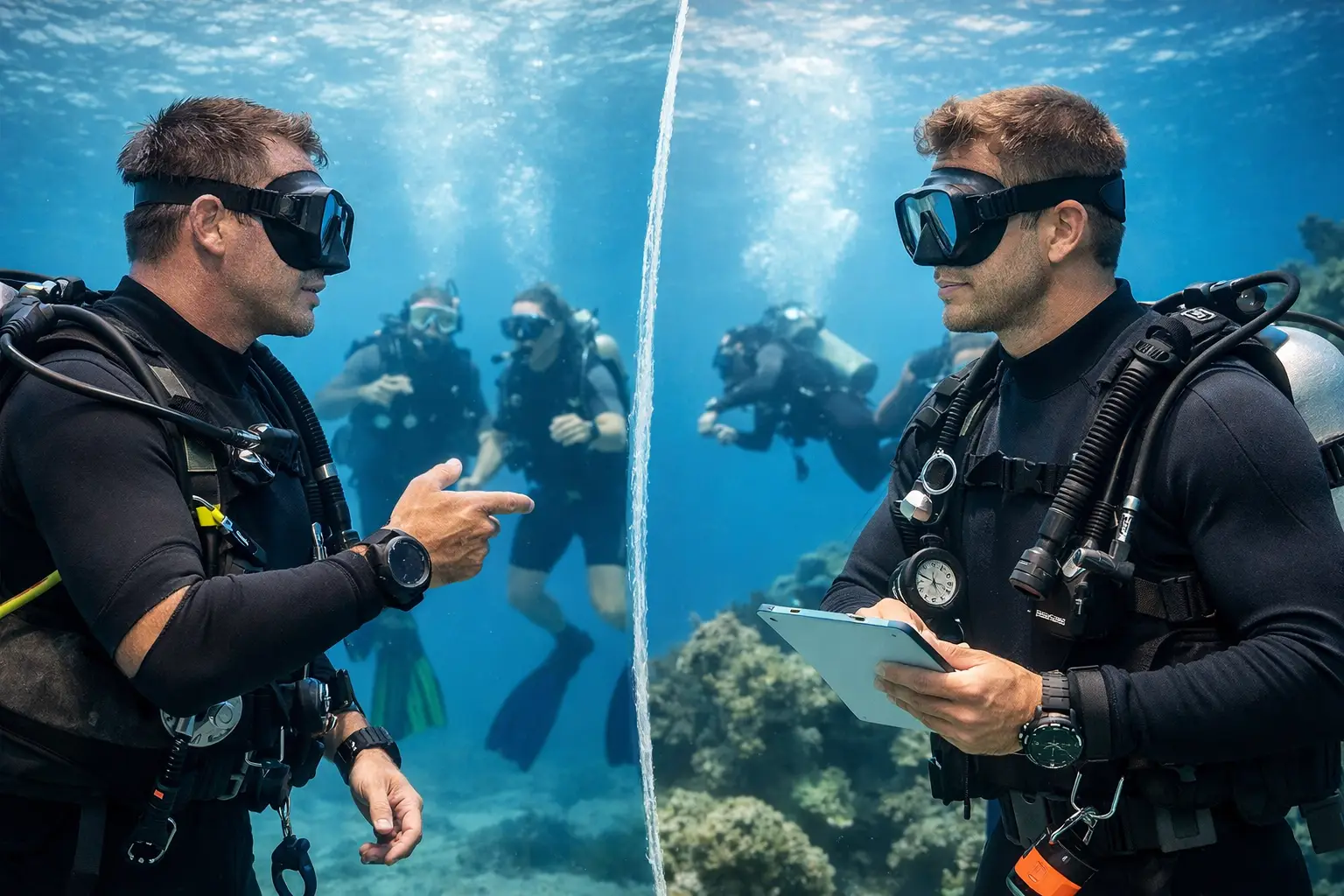
You can love diving, log plenty of dives, and still hit a big question when you start thinking about going pro: padi instructor vs divemaster – which one actually matches the life you want underwater? That decision matters more than most divers expect, because these two roles don’t just represent different certifications. They lead to different daily routines, different responsibilities, and different kinds of career momentum.
Some divers imagine Divemaster as the first serious professional step and Instructor as the obvious next move. Sometimes that’s true. Sometimes it’s not. If your goal is to work in diving, travel, build confidence, or turn your time underwater into a real career, the better choice depends on how you want to teach, lead, and grow.
PADI Instructor vs Divemaster: the core difference
At a glance, the easiest way to understand padi instructor vs divemaster is this: a Divemaster leads certified divers, assists with training, and supports dive operations. A PADI Instructor teaches certification courses independently and is qualified to issue certifications within their teaching level.
That difference sounds simple, but it changes everything.
A Divemaster is a professional leader in the water. You guide dives, help students feel calm, solve problems early, and support instructors during training. You become the person divers trust when conditions shift, nerves show up, or logistics need to run smoothly. It is a leadership role, but not a full teaching credential.
A PADI Instructor takes on the responsibility of education from start to finish. You teach academics, confined water skills, and open water performance requirements. You evaluate students, adapt your teaching style, and help people earn their certifications. That means more autonomy, more accountability, and usually more career options.
What a Divemaster actually does
A lot of divers choose Divemaster because they want to step into the professional world without jumping straight into full teaching. That makes sense. The Divemaster course is where many people stop being “experienced recreational divers” and start learning how a real dive operation works.
On a typical day, a Divemaster may lead certified fun dives, supervise groups, assist students during training, help manage equipment, brief divers, check conditions, and keep the whole experience organized and safe. It’s hands-on, people-focused, and deeply operational.
This role is a great fit if you love the rhythm of dive center life. You’re in the water often, you’re working closely with guests, and you’re building professional awareness every day. You also learn how to read people, not just conditions. That matters. A nervous newly certified diver and a confident diver with poor habits both need leadership, but not the same kind.
What Divemaster does not usually give you is full teaching freedom. You can assist and supervise in specific ways, but you are not the one independently running core certification courses as a PADI Instructor.
What a PADI Instructor actually does
If Divemaster is where you learn to lead, Instructor is where you learn to teach with authority.
A PADI Instructor is trained to take students from curiosity to certification. That means far more than demonstrating a mask clear or explaining pressure changes. Good instructors know how to coach people through fear, build competence step by step, and create divers who are safe long after the vacation ends.
The work can be incredibly rewarding because you’re often part of major life moments. First breaths underwater. First time in the ocean. First cenote dive after building confidence. First professional-level goal. You are not just guiding dives – you are shaping divers.
It also requires a different energy. Instructors spend more time explaining, evaluating, documenting, correcting, and adapting. If you enjoy mentoring, communication, and helping people progress, this role can feel more meaningful than simply leading already certified divers.
Training commitment and prerequisites
Another big factor in padi instructor vs divemaster is the level of commitment required.
Divemaster is the first professional rating in the PADI system. It asks you to raise your water skills, rescue mindset, stamina, professionalism, and situational awareness. For many divers, it feels like a major leap because the course pushes you beyond personal comfort and into responsibility for others.
Becoming an Instructor takes that foundation and builds on it. You first need the right prerequisites, including Divemaster certification or equivalent leadership-level status, then you complete an Instructor Development Course and pass the Instructor Examination. The process is more demanding because the standard is higher. You are moving from support role to teaching professional.
That extra effort is worth it for the right person, but it should be a deliberate choice. If you are still developing confidence, want more in-water leadership experience, or are not ready to teach full courses, Divemaster can be the smarter immediate step. If you already know you want a long-term professional pathway, Instructor training may be the stronger investment.
Career opportunities and earning potential
Let’s be honest – passion matters, but so does work opportunity.
Divemasters can find roles at dive centers, resorts, liveaboards, and destination operations around the world. They are valuable team members because they help keep trips safe, smooth, and enjoyable. In busy travel destinations, strong Divemasters are often essential to the guest experience.
But Instructor generally opens more doors. Because instructors can teach certification courses, they are often more employable across a wider range of operations. They can generate direct training revenue, teach entry-level and continuing education programs, and build a more independent professional identity.
Pay varies by country, season, and employer, so there is no honest one-size-fits-all answer. Still, instructors often have higher earning potential than Divemasters because they can take on broader responsibilities and teach more programs. That said, earnings in diving are also shaped by sales ability, customer experience, language skills, destination, work ethic, and whether you continue developing into specialties or staff-level roles.
If your dream is simply to spend a season in paradise, guide dives, and build experience, Divemaster might be enough. If your goal is a more durable dive career, Instructor usually creates a stronger platform.
Lifestyle fit matters more than ego
This is where people sometimes make the wrong choice.
Some divers hear “Instructor” and assume it is automatically better. It isn’t better for everyone. It’s broader, yes. It’s more advanced, yes. But the right path depends on how you want your days to feel.
If you love leading certified divers, being in the water as much as possible, supporting a team, and mastering operational flow, Divemaster can be deeply satisfying. Some professionals stay in that space because they genuinely prefer it.
If you enjoy coaching, public speaking, student progression, and carrying the responsibility of formal teaching, Instructor will likely suit you better. It involves more structure and more accountability, but also more authority and often more long-term mobility.
There is also the question of timing. Not every diver needs to rush. A strong Divemaster who gains real-world experience often becomes a far better Instructor later. The opposite can happen too – divers who race toward Instructor before they are comfortable leading people in the water can struggle, even if they pass the required evaluations.
Who should choose Divemaster first?
Divemaster is often the best move if you want to test professional diving before committing to the full teaching track. It gives you a serious view of the industry, not just the fantasy version of it.
It also fits divers who want to improve confidence, rescue awareness, leadership, and dive management while staying close to the guest experience. If you’re excited by group dynamics, logistics, guiding, and helping people have unforgettable dives, this role can be the perfect match.
For travelers spending time in a place like Tulum, Divemaster training can also be a powerful way to combine destination diving with personal transformation. You’re not just collecting dives. You’re learning how to lead in reefs, open water environments, and high-standard operations where safety and customer care both matter.
Who should move toward Instructor?
If you already know you want diving to be a career, not just a chapter, Instructor deserves serious attention.
This path is ideal for divers who enjoy responsibility, education, and direct impact. You need patience, communication skills, and the ability to stay calm while other people are nervous, excited, distracted, or overwhelmed. You also need to care about standards. Great instructors don’t just help students pass. They help them become capable divers.
At a training-focused center like Infinity2Diving, the Instructor path can be especially powerful because you’re not only learning to teach. You’re learning in an environment built around professional development, structured progression, and high-level standards. That kind of training culture can shape the kind of instructor you become.
The best choice in padi instructor vs divemaster
If you want the honest answer to padi instructor vs divemaster, here it is: choose Divemaster if you want to lead dives, gain professional experience, and build your confidence before stepping into full teaching. Choose Instructor if you’re ready to teach, certify, and build a larger career in diving.
Neither choice is small. Both ask you to take responsibility for other people underwater. Both can change the way you see diving forever. The right one is the one that fits not only your current certification level, but also your temperament, goals, and the kind of professional you want to become.
The underwater world has room for skilled leaders and exceptional teachers. If you choose your path with honesty, the next step won’t just give you a new title – it will give your diving a real direction.