
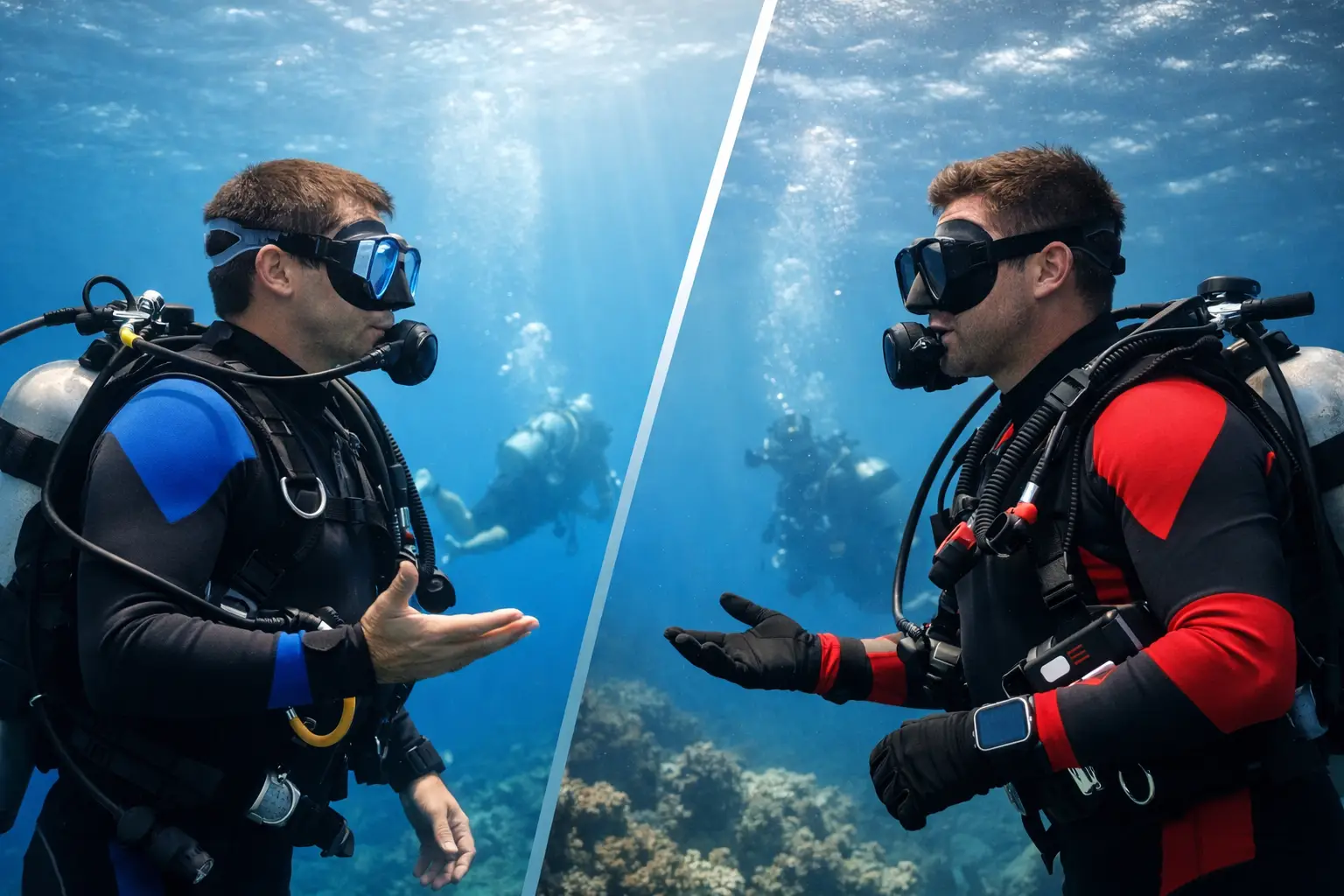
You’re standing in a dive shop on vacation, ready to finally get certified, and then someone asks the question that stops everything: padi vs ssi certification – which one should you choose? It sounds like a big decision because it is, but not for the reasons most people think. The right answer usually comes down to how you want to learn, where you plan to dive, and whether this is a one-time bucket-list experience or the start of a much bigger underwater journey.
For most new divers, both agencies can get you safely certified and ready for open water diving. The differences are real, but they are often more practical than dramatic. If you understand those differences before you book, you can choose with confidence instead of getting stuck in forum debates that make it sound more complicated than it needs to be.
PADI vs SSI certification at a glance
PADI and SSI are two of the biggest names in recreational scuba training. Both teach core dive skills, both issue internationally recognized certifications, and both can take a complete beginner from first breaths underwater to advanced and professional levels.
That matters because your first certification is not just about passing a course. It shapes your early dive experience, your confidence in the water, and sometimes the training path you follow next. A strong instructor and a well-run dive center often matter more than the logo on the certification card, but the agency still influences course structure, learning materials, and long-term progression.
If you want the shortest answer, here it is: neither agency is automatically better for everyone. PADI tends to feel more standardized and widely familiar around the world. SSI often appeals to divers who want a little more flexibility in how training is delivered through an SSI center. The best choice depends on your goals.
Recognition and portability
One of the biggest concerns beginners have is whether their certification will be accepted worldwide. With PADI and SSI, the answer is yes. Both are globally recognized and both allow you to dive with operators in major destinations across the Caribbean, Mexico, Southeast Asia, Europe, and beyond.
PADI has the edge in name recognition. It is the agency many non-divers have heard of first, and it has a huge global footprint. If you are the kind of traveler who wants the comfort of choosing a certification that is instantly familiar almost everywhere, that can be reassuring.
SSI is also widely accepted and respected. In real-world travel, an SSI Open Water Diver can book dives and continue training in the same way a PADI Open Water Diver can. Most dive professionals will not treat one as less valid than the other.
So if your main question is, “Will I be able to dive internationally?” both pass that test.
Course structure and learning style
This is where padi vs ssi certification becomes more personal.
PADI is known for a highly standardized system. The course flow, performance requirements, and materials are consistent across the network. That can be a major advantage if you like clear structure and you want to know exactly what to expect. It also helps if you think you may start your training in one place and finish it somewhere else.
SSI has a slightly different training model that is closely tied to SSI-affiliated dive centers. In practice, many divers find SSI courses feel flexible and digitally streamlined. The app-based learning experience is often a big selling point, especially for travelers who want easy access to materials on their phone or tablet.
Neither approach is inherently stronger. Some students thrive with tight structure. Others prefer a learning environment that feels a little more adaptable and integrated with a specific dive center’s teaching style.
Instructor quality matters more than the agency
This is the part people skip, and it is often the part that affects your experience the most.
A great instructor can make your first certification feel exciting, calm, and empowering. A rushed or inattentive instructor can make even a well-designed course feel stressful. Safety, communication, patience, and the ability to coach different personalities matter far more than internet arguments about agency branding.
That is especially true for beginners who are nervous, travelers learning in a new environment, or anyone taking a course as part of a dream trip. You want an instructor who watches the details, explains skills clearly, and helps you feel capable instead of overwhelmed.
If you are planning to learn in a destination like Tulum, the training environment matters too. Conditions, scheduling, equipment quality, and how much personal attention you receive all shape the experience. A premium training center with strong standards and experienced instructors can turn your course into the highlight of your trip.
Cost and what is actually included
Price comparisons between PADI and SSI can get messy because agency fees are only one part of the total cost. What really changes the final number is the dive center, the destination, and what is included in the package.
Some operators advertise a low course price and then add rental gear, certification fees, pool sessions, marine park fees, or digital materials later. Others bundle everything into one transparent rate. That is why a course that looks cheaper at first glance may not actually be the better value.
PADI courses are sometimes priced a bit higher in certain markets, partly because of brand positioning and materials. SSI courses can sometimes come in lower, but not always. The smarter question is not “Which agency is cheaper?” It is “What do I get for the price?”
If you are choosing between two schools, compare the instructor ratio, gear quality, number of open water dives, class size, learning materials, and whether support feels personal. Those details affect your confidence underwater long after the payment is forgotten.
Continuing education and pro pathways
If you think scuba might become more than a vacation memory, this is worth serious attention.
Both agencies offer continuing education from beginner to pro. You can move from Open Water into Advanced-level training, rescue skills, specialty courses, and professional development with either one. But PADI has a particularly strong presence in the professional world, especially for divers who want to build a long-term career that includes Divemaster and Instructor-level training.
That does not mean SSI professionals do not succeed. They do. But PADI’s scale, visibility, and professional infrastructure often make it especially attractive for divers who want the broadest career mobility. If your dream includes guiding dives, teaching courses, or working in major dive destinations, PADI is often the path people choose first.
For someone who wants a clear ladder from beginner training to leadership, that consistency can be a real advantage. It is one reason a lot of serious travelers and future pros choose to start with PADI from day one.
Which certification is better for beginners?
For a true beginner, the best agency is usually the one offered by the best instructor and dive center available to you.
If you are deciding between two equally strong operations, PADI can be a great fit if you want maximum global familiarity, a structured course format, and a training path that can easily grow into advanced or professional goals. SSI can be a great fit if you like digital convenience, want a flexible training experience, and have found an SSI center with an excellent reputation.
Beginners also need to be honest about confidence levels. If you are anxious in the water, choose the team that makes you feel most supported. If you are highly motivated and already thinking ahead to advanced diving, choose the path that matches your long-term plans.
The logo matters. The learning experience matters more.
PADI vs SSI certification for travel divers
If your main goal is to get certified during a trip and spend the rest of your vacation diving reefs, wrecks, or cenotes, either agency can work well. What matters most is efficiency without feeling rushed.
A destination course should fit the rhythm of your trip while still giving you enough time to absorb the skills properly. You want training that feels exciting, not compressed to the point where you are simply trying to pass. That balance is especially important in places where the diving itself is a huge part of the appeal.
For travelers in the Riviera Maya, many choose PADI because it blends recognized training with a straightforward path into future adventures. If you fall in love with diving after your certification, it is easy to continue with advanced training and specialty courses. At a high-level PADI center like Infinity2Diving, that progression can feel natural, whether you want one unforgettable certification trip or the first step toward a serious diving future.
So, which one should you choose?
Choose PADI if you want the most widely recognized name, a very consistent training framework, and a strong long-term route into advanced and professional diving. Choose SSI if you have found a standout SSI dive center, like the digital learning format, and want a certification that is also globally accepted.
If you are still torn, stop comparing agency logos and start comparing the people who will teach you. Ask about class size, gear, schedule, water conditions, and how they support nervous students. Ask how they approach safety and whether the course feels personalized or transactional.
Scuba certification is not just a card. It is the beginning of how you will experience the underwater world. Choose the team that makes you feel challenged, safe, and excited to keep going. That is usually the right answer.