
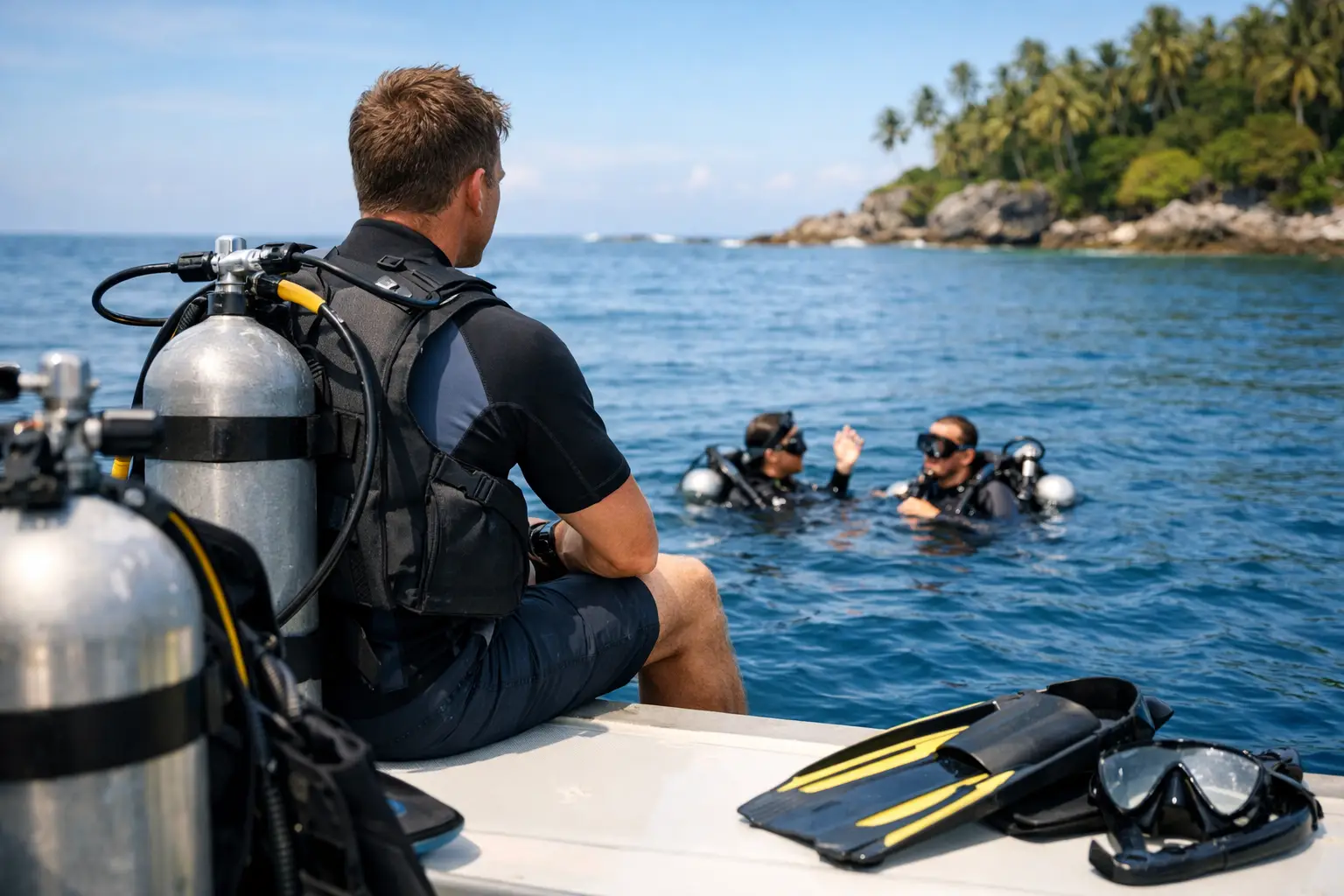
You can usually spot the moment when this idea stops being a vacation fantasy and starts feeling real. It happens after a few unforgettable dives, after the first time you help a newer diver feel calm underwater, or after one too many Mondays spent staring at a screen and wondering how your life got so dry. A career change to scuba instructor appeals to people for a reason – it offers adventure, purpose, travel, and a job built around human connection. But it is still a real career decision, not just a postcard.
If you’re thinking seriously about becoming a scuba instructor, the smartest move is to look past the highlight reel. Teaching diving can be one of the most rewarding paths in the industry, but it asks a lot from you too. The people who thrive are not just passionate about the ocean. They are patient, consistent, safety-focused, and ready to keep learning.
What a career change to scuba instructor really means
A lot of people imagine the job as endless boat days, warm water, and high-fives after certification dives. That part exists, and it is a big part of the appeal. You get to watch people do something they once thought was impossible. You work in places other people save up all year to visit. Your office might be a reef, a cenote, or a calm bay at sunrise.
But the real job is teaching. That means planning, setting standards, spotting problems early, managing stress in students, and making safety decisions that are not always popular in the moment. It also means carrying gear, working long days, adapting to weather, staying calm when clients are nervous, and keeping your own skills sharp.
For many career changers, that is actually the good news. If you are leaving a previous profession, you are probably bringing useful skills with you. Customer service, leadership, communication, organization, sales, coaching, and crisis management all matter in dive education. Some of the strongest instructors are not the ones who moved fastest through training. They are the ones who know how to lead people well.
Why people make the switch
The most common reason is simple: they want a life that feels more alive. They want their work to mean something tangible. Instead of pushing paper or chasing meetings, they want to help people gain confidence, explore the underwater world, and build skills they will remember for years.
There is also a lifestyle factor. A scuba career can open doors to living abroad, working in tourism, and building a community around travel and the ocean. For some, that freedom is the whole point. For others, the appeal is less about escape and more about alignment. They do not want a job that funds their real life on weekends. They want the work itself to feel like part of the life they chose.
That said, motivations matter. If your only reason is that you love diving on vacation, the career may disappoint you. Instructors do not just dive for themselves. They teach, supervise, solve problems, and support students at different ability levels. The job is deeply rewarding, but it is service-driven.
The training path is clear, but it takes commitment
One of the best things about pursuing a career change to scuba instructor is that the route is structured. You are not guessing your way in. Through the PADI system, divers typically progress from recreational certifications into Divemaster, then Instructor Development Course, then Instructor Examination.
That structure helps, but it should not be rushed. Becoming a professional diver is not about collecting cards as fast as possible. It is about building confidence, judgment, and real-world experience. The strongest candidates spend time refining skills, assisting with students, understanding dive theory, and learning how a dive operation actually runs.
If you are changing careers, think about training as both education and audition. You are not only earning credentials. You are proving to yourself that you enjoy the day-to-day reality of the job. A quality training environment matters here. You want instructors who are demanding in the right ways, supportive without being casual, and committed to high standards from the start.
At a professional training center in a place like Tulum, that path can become much more immersive. You are not learning in isolation. You are training where real divers vacation, where conditions vary, and where you can see what professional operations look like when safety, hospitality, and performance all matter at once.
The financial side deserves an honest look
This is where many articles get vague, and they should not. A career shift needs more than passion. It needs a plan.
Training costs money. Gear may cost money. Travel and accommodation may cost money depending on where you train. Once you start working, income can vary by location, season, employer, and your ability to teach, sell courses, and build repeat business. Entry-level professional dive work is rarely the fastest road to a high salary.
That does not mean it is a bad decision. It means you should approach it with open eyes. Some people transition fully and never look back. Some blend dive work with freelance or remote income. Some work seasonally in different destinations. Some move into higher-value specialties over time, such as continuing education, technical training support, or leadership roles within a dive center.
The better question is not only, “How much does an instructor make?” It is, “What kind of life do I want, and what income model supports it?” If your current career is financially strong but personally draining, you may be willing to trade some income for more meaning, mobility, and quality of life. If you have major financial obligations, your transition may need to be more gradual.
Not everyone who loves diving will love teaching it
This is probably the most important truth to sit with.
Teaching scuba is part mentorship, part risk management, and part hospitality. You need to enjoy working with people at very different comfort levels. You need to repeat yourself with patience. You need to notice the quiet student who is struggling before the problem becomes obvious. You need to stay positive when someone is anxious, frustrated, or moving slower than the rest of the group.
If that sounds energizing, you are on the right track. If it sounds exhausting, that is worth listening to.
There is a big difference between being a skilled diver and being an effective instructor. The first is about your own performance. The second is about helping others succeed safely. Great instructors are generous with their attention. They care about standards because standards protect people. They are calm under pressure and humble enough to keep improving.
Choosing where to train shapes the kind of instructor you become
Not all dive training environments produce the same results. If your goal is a serious career change, the cheapest or fastest option is not always the best option.
Look for a center that treats professional development as more than a transaction. Strong mentorship, real feedback, plenty of in-water practice, and exposure to operational standards make a major difference. So does the setting. Training in a destination with a mix of reef, ocean, and overhead-environment culture can expand your awareness and sharpen your adaptability.
This is one reason many career-minded divers train in Tulum. The region attracts a wide range of divers, from beginners to advanced explorers, and it demands professionalism. At Infinity2Diving, the appeal is not just the location. It is the chance to learn in a serious PADI career development environment that combines premium training, strong safety culture, and the kind of warm team dynamic that helps people grow.
Signs you’re ready for the change
You do not need to have every detail figured out before you begin. But a few signs usually point in the right direction.
You are ready if you love the learning process as much as the dives themselves. You are ready if feedback does not scare you. You are ready if you can picture yourself being patient on hard days, not just happy on easy ones. And you are especially ready if the idea of helping someone else discover the underwater world feels just as exciting as exploring it yourself.
It also helps if you are willing to start from the bottom in a new field. Career changers sometimes bring valuable maturity, but they still need to earn trust in the dive industry. Humility goes a long way.
What happens after you become an instructor
Certification is the beginning, not the finish line. Once you are teaching, your path can branch in several directions. Some instructors focus on recreational courses and guiding. Others build toward specialties, leadership roles, or long-term professional development. Some eventually become Course Directors, technical instructors, or business owners. Others use scuba instruction as a way to build a global lifestyle with seasons in different destinations.
The point is not that one route is best. The point is that this career can evolve with you. What starts as a bold change can grow into a profession with depth, community, and room to keep expanding.
If this idea keeps returning to you, pay attention to that. A career change to scuba instructor is not the easy route, but for the right person, it can be the one that finally feels honest. Start with clear eyes, train somewhere that will challenge you, and give yourself the chance to build a life that feels as big as the ocean you want to work in.