
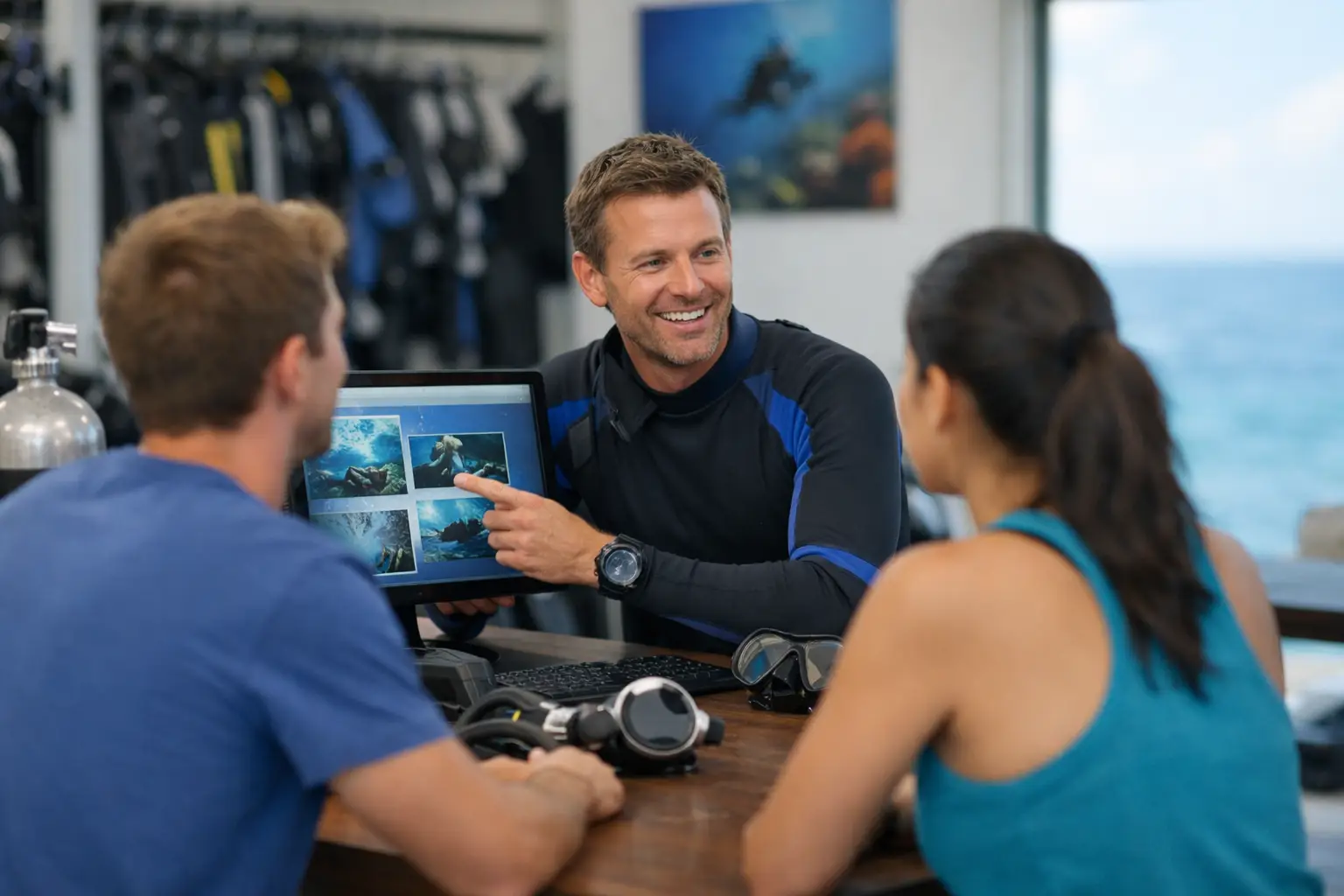
You can feel the difference the moment training gets serious. A fun vacation dive is one thing. Deciding you want to lead certified divers, assist students, or teach underwater for a living is something else entirely. That is where a PADI career development center matters – not as a fancy label, but as a real step between being a good diver and becoming a capable dive professional.
For many divers, the jump into professional training starts with excitement and a lot of questions. Where do you train? How do you know the instruction is strong enough? What kind of support do you get once the course standards, workshops, evaluations, and real-world expectations start piling up? Choosing the right training environment shapes not only how you pass, but how prepared you feel afterward.
What is a PADI career development center?
A PADI Career Development Center is a dive business recognized for delivering professional-level PADI training at a high standard. That usually means more than running a Divemaster course here and an Instructor Development Course there. It means the center is structured to support divers who want a true pathway into the industry, with the facilities, leadership, course volume, and educational focus to train future pros properly.
That distinction matters because professional diving is not just about collecting certifications. It is about learning how to supervise safely, solve problems calmly, communicate clearly, and represent the sport well. A center built around career development is set up to teach those habits from the start.
The best ones also create a progression that makes sense. Instead of treating each course like a separate sale, they help divers move from advanced recreational training into Divemaster, then toward Instructor-level goals if that is the right fit. That kind of continuity saves time, builds confidence, and gives students a clearer view of what the work actually involves.
Why the training environment matters
A lot of divers assume standards are standards, so every course must be more or less the same. On paper, PADI standards provide consistency. In practice, the quality of instruction, mentorship, water time, feedback, and daily culture can vary a lot.
That is especially true once you move into professional training. At the Divemaster and Instructor levels, you are no longer just learning for yourself. You are learning how to look after other people underwater and how to teach in a way that builds trust. The environment around you starts to matter as much as the course outline.
A strong center gives you repetition without making training feel mechanical. You practice briefings, rescue scenarios, skill demonstrations, problem-solving, and student control until they become natural. You also get corrected with honesty. That can feel intense, but it is exactly what future professionals need.
There is also a difference between passing an evaluation and becoming employable. Some divers want the fastest route to a credential. Others want the kind of preparation that helps them step into real dive center operations with confidence. The second path usually takes more effort, but it pays off when you begin guiding certified divers, supporting courses, or interviewing for work.
Who should train at a PADI career development center?
Not every diver walking into one is planning to become a full-time instructor next month. Some are on a clear career track. Others simply want to keep doors open while traveling, changing careers, or testing whether the professional side of diving fits their life.
If you are considering Divemaster, an Instructor Development Course, Staff Instructor training, or a longer mentorship-style package, a career-focused center is usually the right place. It is also a smart choice if you are traveling to a destination specifically to combine world-class diving with serious education.
That mix is a big part of the appeal in places like Tulum. You are not stuck in a classroom-only routine. You can train in a destination people dream about, while developing skills in varied environments that demand control, awareness, and adaptability. For the right student, that is motivating in a way a purely local pool-based program may not be.
Still, there is a trade-off. Destination training can be immersive and exciting, but it also asks for focus. If your main goal is a relaxed vacation with one or two casual dives, professional-level training may feel too structured. If your goal is growth, that structure becomes a huge advantage.
What to expect from the professional pathway
Most divers begin the journey after gaining solid recreational experience. Advanced-level training, rescue skills, and confidence in different conditions create the base. From there, Divemaster is often the first professional rating.
Divemaster training teaches much more than map-making and leading dives. Done well, it builds leadership habits. You learn how to anticipate issues before they become problems, manage groups with different experience levels, assist instructors effectively, and model good diving behavior every time you hit the water.
After that, divers who want to teach move into the Instructor Development Course. This is where the pace picks up. You are expected to know the standards, organize teaching presentations, demonstrate skills at demonstration quality, and perform under assessment. It is rewarding, but it is not casual.
A PADI career development center should prepare you for that pressure without turning the process into a factory line. Good coaching is direct, detailed, and personal. You need to know what you are doing well, where you are losing points, and how to improve fast.
Some centers also support longer-term growth through Staff Instructor and MSDT-style development. That matters if you want more than an entry-level teaching credential. Building teaching range, specialty experience, and real instructional confidence can make a major difference in your career options.
Beyond certification: mentorship, culture, and confidence
The strongest professional programs are not built on checklists alone. They are built on mentorship.
That means instructors who are present, not distant. It means feedback that goes beyond “you passed.” It means being trained by people who care how you present yourself to students, how you react under stress, and how you contribute to the team. In diving, those details matter.
Culture matters too. A supportive, welcoming team can make hard training feel energizing rather than intimidating. That is particularly important for travelers arriving alone, career changers stepping into a new identity, and women looking for leadership models in an industry that has not always felt equally represented.
A center with a strong internal culture often produces better pros because students absorb more than skills. They learn how to treat guests, how to communicate across cultures, and how to balance high standards with warmth. Those qualities are easy to spot in great dive professionals and hard to fake later.
Why location can strengthen career training
A destination is never a substitute for quality instruction. But the right location can add real value.
Training in Tulum, for example, gives divers access to exceptional water-based experiences while they develop professionally. Reef diving, local marine life, and the broader Riviera Maya diving scene help students build familiarity with varied operations and guest expectations. For divers pursuing a long-term future in the industry, that exposure can be incredibly useful.
There is also the emotional side of it. Professional training is demanding. Doing it in a place that keeps you inspired makes a difference. When your off-days still feel connected to the ocean, the process becomes bigger than a course. It starts to feel like a life direction.
That is one reason Infinity2Diving stands out for serious students. As the only PADI 5 Star Career Development Center in Tulum, it brings together destination diving, professional-level instruction, safety-focused training, and a team culture that feels personal rather than transactional.
How to choose the right center for your goals
The smartest question is not “Which center can certify me fastest?” It is “Which center can prepare me best for what comes next?” That answer depends on your goals.
If you want a seasonal dive job, ask about real-world guiding practice, guest interaction, and local diving volume. If you want to teach, look closely at Instructor Development Course support, coaching style, and how much individual feedback you will get. If you are still deciding whether diving should become a career, ask how the training is structured and whether there is room to grow at your own pace.
Pay attention to how a center talks about safety, not just adventure. The two should always go together. Look at whether pricing is clear, whether training expectations are explained honestly, and whether the team seems invested in student development rather than quick turnover.
It also helps to be honest with yourself. Professional diving can be deeply rewarding, but it is still work. It asks for patience, discipline, physical stamina, and strong people skills. The right center will encourage your ambition while also giving you a realistic picture of the profession.
A diving career starts long before your first paycheck. It starts when you choose to train in a place that treats your future like it matters.