
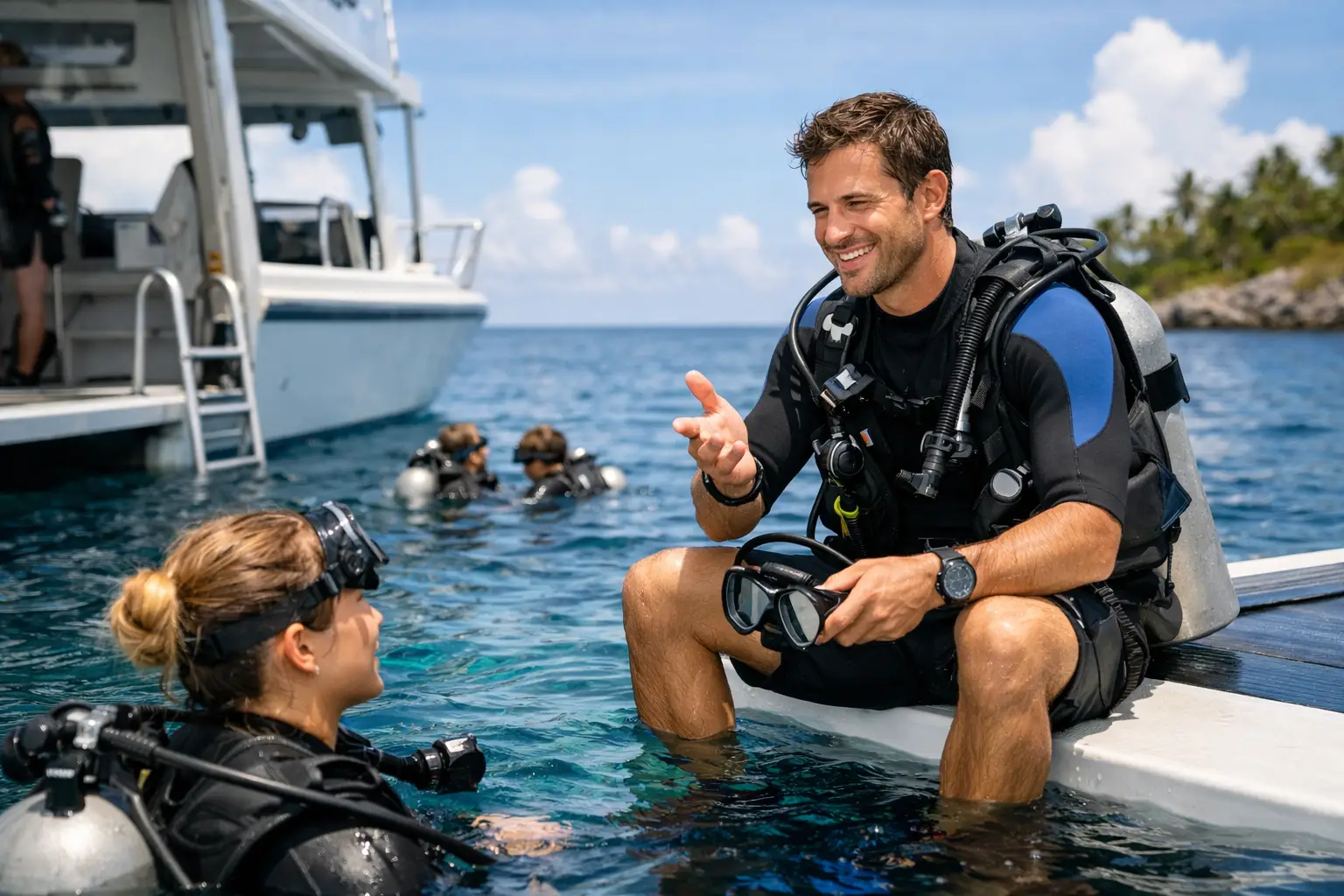
You know the moment. You finish a dive, peel off your gear, and instead of thinking about your next vacation, you start wondering what it would look like if this was your work. If you are asking how to transition into dive instructor, you are probably not chasing a random fantasy. You are feeling the pull toward a different kind of life – one built around the ocean, teaching, travel, and real responsibility.
That pull matters, but it is not enough on its own. Becoming a dive instructor is exciting, rewarding, and deeply personal. It is also demanding. You are not just getting better at diving. You are becoming the person other divers trust when conditions shift, nerves kick in, or a student needs calm, clear guidance underwater.
What changing careers into scuba instruction really means
A lot of divers imagine the instructor path as a permanent beach sunrise with tanks in the background. Some days, sure. But the real job is leadership, consistency, and service. You are managing logistics, setting the tone for safety, spotting problems early, and teaching people with different learning styles, fitness levels, and confidence levels.
That is why the transition works best for people who love both diving and people. If you are happiest when helping someone improve, celebrating a student who finally clears a mask without stress, or explaining a skill three different ways until it clicks, you are already thinking like a pro.
There is also a lifestyle shift. Entry-level dive work can be physically intense and financially uneven depending on where you work, the season, and your role. The upside is obvious – meaningful work, incredible dive environments, and a career that can grow into specialties, staff instruction, technical training, or destination-based leadership. The trade-off is that you need to approach it as a professional pathway, not just a romantic escape plan.
How to transition into dive instructor step by step
The cleanest route is structured, and that is a good thing. A professional path gives you time to build experience, judgment, and teaching presence.
Start by being honest about your why
Before you sign up for anything, get clear on what you want from this career. Do you want a seasonal job in tropical destinations? A long-term profession with advanced teaching credentials? A gap-year adventure that might become more? Your answer shapes the pace you take, the location you train in, and the kind of dive center you should choose.
If your motivation is only travel, the harder parts of professional training may wear you down quickly. If your motivation includes teaching, personal growth, mentorship, and a real respect for safety, you are building on stronger ground.
Build your recreational foundation first
No one should rush into professional training before they are truly comfortable as a diver. You need more than certifications on paper. You need water confidence, buoyancy control, situational awareness, and the ability to stay calm while multitasking.
For most divers, that means progressing through Open Water, Advanced Open Water, Rescue Diver, and Emergency First Response or equivalent CPR and first aid training. Rescue is often the turning point. It shifts your mindset from managing yourself to taking care of others, and that is exactly the shift a future instructor needs.
Become a Divemaster before aiming for instructor
If you want to know how to transition into dive instructor in a way that sets you up for success, the answer almost always includes taking Divemaster seriously. This is where you stop being a customer and start thinking like part of a professional team.
A strong Divemaster program teaches more than dive theory and stamina. It shows you how a dive operation works day to day. You learn to guide, brief, assist students, organize equipment, read group dynamics, and support instructors in real conditions. That experience is gold. It gives you the professional habits that make instructor training far smoother.
Not all Divemaster experiences are equal, though. Some are little more than a box-checking exercise. Others are immersive, mentored, and built to prepare you for the next level. If your end goal is teaching, choose a program that includes real coaching, not just logged hours.
Choose the right environment for instructor training
Where you train matters more than many people expect. A high-volume, safety-led training center with a clear professional development pathway can compress your learning curve in the best possible way. You want exposure to real students, varied conditions, high standards, and instructors who will give honest feedback.
Tulum is one of those places where training can become transformational. Reef dives, cenotes, and a strong international dive culture create a serious learning environment, not just a scenic one. At a center like Infinity2Diving, the value is not only the certification path. It is the combination of professional standards, destination experience, and the kind of mentorship that helps divers grow into confident leaders.
Prepare for the Instructor Development Course with intention
The Instructor Development Course, or IDC, is where many candidates realize this path is as much about communication as it is about diving. You will be evaluated on academic presentations, confined water teaching, open water teaching, standards knowledge, and demonstration-quality skills.
The candidates who thrive are usually not the ones with the flashiest logbooks. They are the ones who arrive prepared, coachable, and humble enough to refine the basics. If your mask clear is messy or your buoyancy wobbles during skill demos, fix that before IDC. If public speaking makes you nervous, practice now. Teaching underwater starts with being able to explain clearly on land.
Treat the Instructor Examination like a professional benchmark
The Instructor Examination is not there to trick you. It is there to confirm that you can teach safely and consistently to an international standard. That is a big deal. Your students deserve that standard.
Go into the exam understanding that nerves are normal. Preparation is what steadies you. If your training environment has pushed you to perform under observation, repeat skills until they are automatic, and think like a problem-solver, the exam becomes a checkpoint rather than a wall.
The biggest challenges when you transition into dive instructor
Most career changes look simpler from the outside. This one is no different.
The first challenge is physical and mental stamina. Long days on boats, repetitive lifting, sun exposure, and constant people-facing energy add up. Loving the ocean does not automatically mean loving the pace of dive operations. During your training, pay attention to how you handle routine, not just adventure.
The second challenge is money. Professional scuba is rewarding, but your first instructor role may not look like a corporate salary. Some locations offer stronger earning potential than others, especially if you can teach specialties, speak multiple languages, or work in a premium training environment. If you are making a full career shift, plan financially before you leap.
The third challenge is identity. Many transitioning professionals come from jobs where they already feel competent and established. Going back into training, being corrected, and rebuilding confidence in a new field can feel uncomfortable. That discomfort is part of the process. Good pros are built through repetition, feedback, and patience.
What makes someone successful as a dive instructor
Strong divers are not always strong instructors. The best instructors combine technical control with empathy, awareness, and presence.
Students remember how you made them feel. Safe. Seen. Capable. Calm. That means your attitude matters as much as your skill level. Can you stay patient with a nervous beginner? Can you adjust your teaching style for someone who learns slowly? Can you keep standards high without making people feel small? Those are career-making qualities.
Professional growth matters too. Once you qualify, keep going. Specialties, MSDT-level development, conservation awareness, local environment knowledge, and mentorship experience all increase your value. The instructors who build lasting careers rarely stop at the minimum.
Is this transition right for you?
If you want an easy job, probably not. If you want a meaningful one, it might be exactly right.
This path suits people who want their work to feel alive. People who care about the underwater world, respect training, and get genuine satisfaction from helping others do something they once thought was impossible. It also suits people who understand that adventure becomes a career only when you bring discipline to it.
There is no perfect age to start. Some divers move into instruction in their twenties and build a global lifestyle around it. Others transition later after years in another profession and bring maturity, communication skills, and leadership that make them exceptional teachers. The timeline depends on your current certification level, experience, budget, and how intensively you train.
What matters most is choosing a path that is structured, supportive, and honest about the standard required. Dream big, absolutely. Then train in a way that earns that dream.
If this shift keeps calling you, listen closely. The ocean does not need more people pretending to be professionals. It needs more instructors who are prepared, grounded, and ready to guide others into a world that can change their lives.