
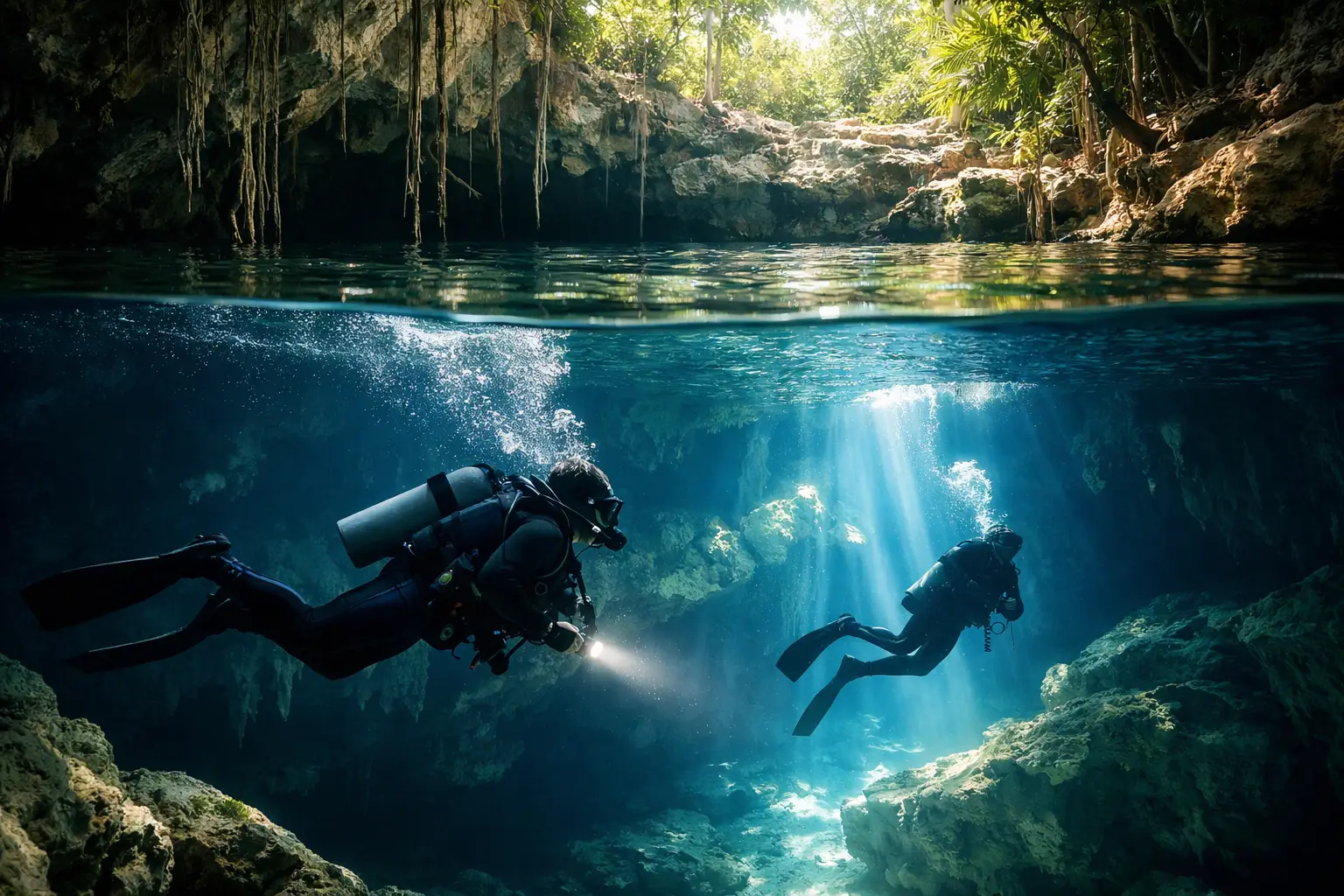
You remember your first time looking into a cenote. The water barely seems real – clear enough to see rock formations, tree roots, and shafts of light cutting through the cavern. For many travelers in Tulum, that moment leads to the same question: can a first-timer actually do this? This beginner guide to cenote scuba is here to answer that honestly, with the excitement these dives deserve and the safety context they require.
Cenote diving is one of the most memorable underwater experiences in Mexico, but it is not the same as an ocean boat dive or a resort discovery session. Cenotes are freshwater sinkholes connected to vast underground cave systems. Some are open and bright, while others include overhead environments, dramatic limestone formations, haloclines, and cathedral-like light effects that feel almost unreal. For a new diver, that sounds magical – and it is – but the right entry point depends on your certification level, comfort in the water, and the quality of the guide leading the experience.
What beginner guide to cenote scuba really means
The first thing to clear up is language. People often say “cenote scuba” when they mean any scuba experience in a cenote, but there are different types of dives. Certified recreational divers can join guided cavern dives in cenotes when conditions, training, and site rules allow. Cavern diving stays within the daylight zone and follows strict limits. Cave diving is a separate level of technical training and is never a beginner activity.
That distinction matters because a good dive center will never sell the fantasy without explaining the boundaries. If you are newly certified, you may absolutely be able to experience cenotes safely and confidently. If you are not certified yet, a cenote is usually not the place for a true first-ever scuba dive. In most cases, beginning with open water training or an easier introductory environment is the smarter path.
Are cenotes good for beginner divers?
Sometimes yes, sometimes no. That is the truth.
For a certified beginner with solid buoyancy basics, calm breathing, and a willingness to follow instructions closely, cenote cavern dives can be an excellent next step. Conditions are often gentler than the ocean in one important way – there are no waves, surge, or current in many popular sites. Visibility is usually exceptional, which helps new divers feel less disoriented.
But cenotes also ask more of you mentally. The spaces are enclosed compared with open water, the formations are fragile, and your buoyancy control matters from the first minute. Even when you stay in the cavern zone, the environment feels more technical. That can be inspiring for one diver and intimidating for another.
If you get anxious easily underwater, if your mask skills still feel shaky, or if you rushed through certification and have barely dived since, a reef refresher may be a better first move. There is no prize for forcing the “epic” dive too early. The best cenote experience happens when you arrive ready to enjoy it, not just endure it.
What a beginner cenote dive actually feels like
Most new divers expect darkness. What surprises them is the light.
In the cavern zone, you often descend into water so clear it feels like floating in air. Sunbeams enter through openings in the jungle canopy and create visible columns through the water. Stalactites and stalagmites frame the route. In some cenotes, tannic freshwater layers create warm amber tones near the surface, while deeper sections turn crisp blue. In others, a halocline makes the water shimmer as salt and fresh layers meet.
The emotional side is just as strong. Cenotes are quieter than the sea. There is no crashing surface noise, no schools of fish constantly moving around you, and no boat traffic overhead. That stillness is part of the appeal, but it also means you notice your own breathing more. For beginners, that can feel calming once you settle in. It can also feel intense if you are already tense. This is why briefing quality, guide ratio, and pre-dive confidence matter so much.
Certification, experience, and who should wait
If you are wondering whether you need a certification card, the answer for most cenote scuba experiences is yes. A guided cavern dive is generally for certified divers. Different operators may set additional requirements, such as a minimum number of logged dives or proof that you have been diving recently.
That is not gatekeeping. It is good risk management.
A diver with ten easy reef dives may be more prepared than someone with a brand-new certification and no real control in the water. On the other hand, a newly certified diver who learned thoroughly and feels relaxed underwater may do beautifully in a beginner-friendly cenote. It depends on skill, not just paperwork.
If you are not certified yet but cenotes are your dream, the best route is to start with training from an instructor who understands the local environment and can guide your progression properly. That way, your first cenote dive becomes a highlight built on real confidence, not a gamble.
Safety in a beginner guide to cenote scuba
Safety is where great cenote diving begins. The environment is too special – and too unforgiving of careless choices – for anything less.
A professional guide will brief the route, depth, hand signals, light use, gas planning, and cavern limits before you enter the water. They should also be clear about what you are not going to do. You are not penetrating cave zones. You are not touching formations. You are not improvising your distance from the group because the visibility looks endless.
Gear setup matters too. Most cenote divers use lights, even in bright caverns, because artificial light brings out texture and detail while adding safety and communication value. Exposure protection is also part of comfort. Cenote water can feel cool, especially on a second dive, and being cold reduces focus fast.
Just as important is choosing an operator that treats guiding as instruction, not just logistics. At a training-led center like Infinity2Diving, that mindset makes a difference. Beginners need more than transportation and tanks. They need calm leadership, clear standards, and a team that would rather say “not yet” than push someone into the wrong dive.
How to prepare before your first cenote dive
The best preparation is simple and practical. Dive recently before your cenote day if you can, especially if your certification course happened months ago. A reef or pool refresher can sharpen buoyancy, mask clearing, and general comfort underwater.
Focus on trim and finning. In cenotes, efficient movement is not about looking advanced. It protects the formations and helps you avoid stirring up sediment. You do not need perfect cave-style technique as a beginner, but you do need body awareness.
It also helps to manage expectations. Your first cenote dive is not about collecting content or proving bravery. It is about staying present enough to appreciate an environment unlike anything else in recreational diving. Eat lightly, hydrate well, sleep enough, and tell your guide honestly if you feel nervous. Good instructors would rather hear that before the dive than spot it after descent.
What to bring and what to leave behind
Bring the basics you would want for any well-run dive day: swimsuit, towel, dry clothes, reef-safe sun protection for before and after the dive, and any personal certification materials required by the operator. If you own a mask that fits you perfectly, bringing it can make a real difference in comfort.
Leave behind the idea that more gear always makes you safer. Rental equipment from a quality center is usually the better choice than traveling with mismatched or poorly maintained pieces. Cenote diving rewards streamlined setups. Less clutter means less task loading and more control.
For cameras, this is a classic it-depends situation. If this is your first cenote dive and your skills are still new, skip the camera. The memory will still be there, and your attention belongs on buoyancy, breathing, and the guide. If you are already comfortable underwater, ask in advance whether photography is appropriate for your level and the site plan.
Common mistakes first-time cenote divers make
The most common mistake is treating cenotes like a sightseeing activity instead of a dive environment. The beauty is immediate, so beginners sometimes stop monitoring depth, breathing rate, or position in the group because they are staring at the light rays. Wonder is part of the experience, but awareness has to stay with you.
The second mistake is overestimating confidence. Some travelers book a cenote dive because it is on the bucket list, then admit on arrival that they have not dived in three years. That does not always mean the day is ruined, but it may mean changing the plan.
The third is underestimating the value of instruction. A premium guided experience often costs more for a reason. In cenotes, briefing quality, conservative standards, site selection, and guide attention are not extras. They are the product.
Why cenote scuba stays with people
A reef can thrill you with life and movement. A cenote leaves a different mark. It feels ancient, still, and intensely personal. For beginners who enter the right way – trained, supported, and honest about their level – that first cavern dive often changes what scuba means to them. It stops being just a vacation activity and starts becoming a path.
If cenotes are calling you, listen to that excitement. Just pair it with preparation and the right professional guidance. The magic is real, and it is even better when you experience it with the confidence to enjoy every minute.