
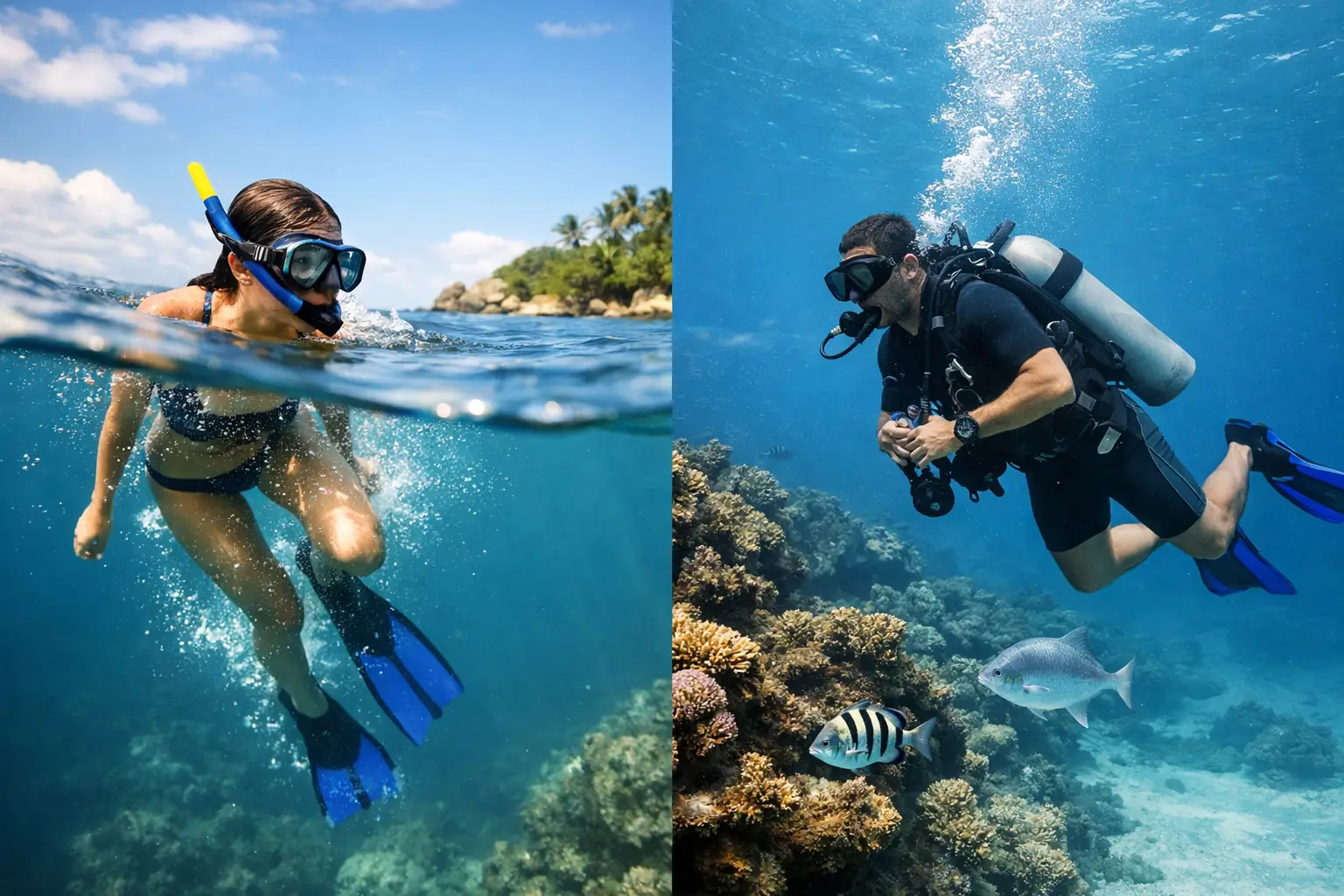
You can stand on the same beach in Tulum, look out at the same clear water, and have two completely different adventures waiting for you. That is the real story behind snorkeling vs scuba diving. Both let you enter the underwater world, but they ask for different levels of time, training, confidence, and curiosity.
For some travelers, snorkeling is exactly right – easy to access, light on logistics, and perfect for a relaxed day on the water. For others, scuba is the moment everything changes. Instead of watching the reef from the surface, you descend into it, move slowly through it, and start to understand why so many people come for one dive and leave planning their certification.
Snorkeling vs scuba diving at a glance
The simplest difference is depth. Snorkeling keeps you at the surface with a mask, snorkel, and usually fins. You float, breathe through the snorkel tube, and look down into the water below you. It is approachable, low-commitment, and often ideal for families, casual explorers, and travelers who want a beautiful marine experience without formal training.
Scuba diving uses a tank and regulator so you can breathe underwater while fully submerged. That changes everything. You are not just observing marine life from above. You are entering its environment, managing buoyancy, staying aware of depth and air supply, and experiencing the quiet, weightless feeling that makes diving unforgettable.
If snorkeling is a window, scuba is the doorway.
What the experience actually feels like
Snorkeling feels immediate. You put on the gear, swim out, and start looking. There is freedom in that simplicity. On a calm day with good visibility, even beginners can enjoy coral formations, tropical fish, sea grass, and sunlight moving across the reef.
Scuba feels more immersive and more focused. The first breaths underwater can be emotional in the best way. You hear your breathing, your movements slow down, and the ocean becomes bigger and more detailed. Instead of racing to see what is below you, you are part of the scene.
That does not make scuba automatically better. It makes it different. Some people love the ease and spontaneity of snorkeling. Others realize very quickly that they want more time underwater, more access to deeper sites, and more connection to the environment around them.
Who snorkeling is best for
Snorkeling is often the best choice if you want a low-barrier adventure. It works well for travelers who are short on time, unsure about being underwater, or simply looking for a beautiful add-on to a beach day or boat trip.
It is also a great fit if you are traveling with mixed experience levels. Not everyone in a group wants a certification course or a full dive briefing, and snorkeling can be a fun shared activity that still delivers plenty of marine life and memorable views.
If you are comfortable swimming but not ready to learn scuba skills, snorkeling gives you a way to connect with the ocean without feeling overwhelmed. In places with clear water, you can still see a surprising amount from the surface.
Who scuba diving is best for
Scuba is for people who want a deeper experience – literally and emotionally. If you are curious, adventurous, and willing to learn, scuba opens an entirely different side of the ocean. It is ideal for travelers who do not just want to look at marine life but want to move through its world with control and confidence.
It is also the better fit if you are drawn to places like reefs, wrecks, and cenotes where depth, structure, and underwater navigation shape the experience. In the Riviera Maya, for example, scuba gives you access to environments that simply cannot be appreciated from the surface.
You do not need to be an elite athlete to start. You do need to be comfortable in the water, willing to listen, and ready to follow safety-led instruction. That is why the quality of the dive center and instructors matters so much, especially for first-timers.
Training, skill, and confidence
One of the biggest differences in snorkeling vs scuba diving is the learning curve.
Snorkeling usually requires only a basic orientation. You need to know how to clear your snorkel, breathe calmly, use your fins, and stay aware of waves, current, and your surroundings. For many people, that is enough to get started on the same day.
Scuba requires more structure because the stakes are higher. Even a beginner experience includes a safety briefing, gear setup, underwater communication, and core skills such as regulator recovery, mask clearing, and buoyancy control. A certification course goes further, building the knowledge and habits that allow you to dive safely and confidently in different conditions.
This is where some travelers hesitate, but it is also where many discover the part they end up loving. Learning to dive is not just about equipment. It is about developing calm, awareness, and trust in yourself. That growth is part of the experience.
Cost and commitment
If budget is your main concern, snorkeling is usually more affordable. The gear is simpler, trips are often shorter, and there is no certification requirement. For travelers planning one ocean activity during a vacation, snorkeling can be a smart and satisfying choice.
Scuba costs more because it includes more. Tanks, regulators, BCDs, weights, instructor supervision, boat logistics, site access, and training all add value and complexity. If you decide to get certified, you are paying for professional education, not just a single outing.
That said, cost should be weighed against what you want from the experience. If you are already dreaming about seeing more, going deeper, or continuing your training after the trip, scuba may be the better investment. For many people, a first dive becomes the start of a long relationship with the ocean.
Safety is not the same conversation
Both activities can be safe when done responsibly, but the safety considerations are different.
Snorkeling risks are often underestimated because it looks easy. Surface conditions, fatigue, poor-fitting gear, sun exposure, and a false sense of security can turn a simple outing into a stressful one. Good supervision and realistic self-awareness matter.
Scuba has more technical risk, which is exactly why training and professional standards are so important. A well-run dive operation will prioritize proper briefings, conservative planning, equipment checks, and close instructor support. That structure is not there to make the experience intimidating. It is what makes the experience possible.
For beginners, the safest choice is not automatically the simpler activity. It is the one that matches your comfort level, physical ability, and willingness to follow guidance.
What you will see underwater
This depends heavily on location, but snorkeling and scuba do not offer the same perspective.
Snorkeling shines in shallow reefs, lagoons, and calm coastal areas where marine life is close to the surface. You may see colorful fish, rays, coral gardens, and sea turtles in the right conditions. The sunlight can make everything feel bright, playful, and vivid.
Scuba expands the range. You can visit deeper reef systems, swim alongside large schools of fish, hover near dramatic formations, and explore environments like wrecks and cenotes where depth and silence become part of the magic. In Tulum, that difference is especially meaningful. A cenote is not something you truly understand from photos. Descending into one is an entirely different level of experience.
Snorkeling vs scuba diving in Tulum
Tulum is one of those rare places where both activities make sense, but for different reasons. Snorkeling can be a beautiful way to enjoy the coastline, warm water, and easy access to marine life. It is fun, social, and often perfect for travelers building an itinerary with a little bit of everything.
Scuba is where Tulum becomes extraordinary. Reef dives bring color and movement. Cenote dives bring stillness, light effects, and geology that feels almost unreal. If you are choosing between the two and wondering what will stay with you longer, scuba usually leaves the bigger mark.
That is especially true when you are supported by a team that combines strong instruction with a welcoming atmosphere. At Infinity2Diving, that balance matters. Adventure should feel exciting, but it should also feel well guided, inclusive, and safe from the very first briefing.
So which one should you choose?
Choose snorkeling if you want easy access, lower cost, and a casual way to enjoy the ocean without much preparation. It is a great fit for a half-day adventure, mixed groups, or anyone testing their comfort in the water.
Choose scuba if you want immersion, skill-building, and a more powerful connection to the underwater world. It asks more from you, but it gives more back. Not just deeper views, but a real sense of achievement.
And if you are torn, that usually tells you something. It often means you are ready to try scuba, even if you are a little nervous. That nervousness is normal. With the right instructors, it turns into focus, then confidence, then the kind of joy that is hard to describe until you feel it for yourself.
The ocean does not ask everyone to experience it the same way. Start where you are, choose the adventure that fits, and leave room for the next one.