
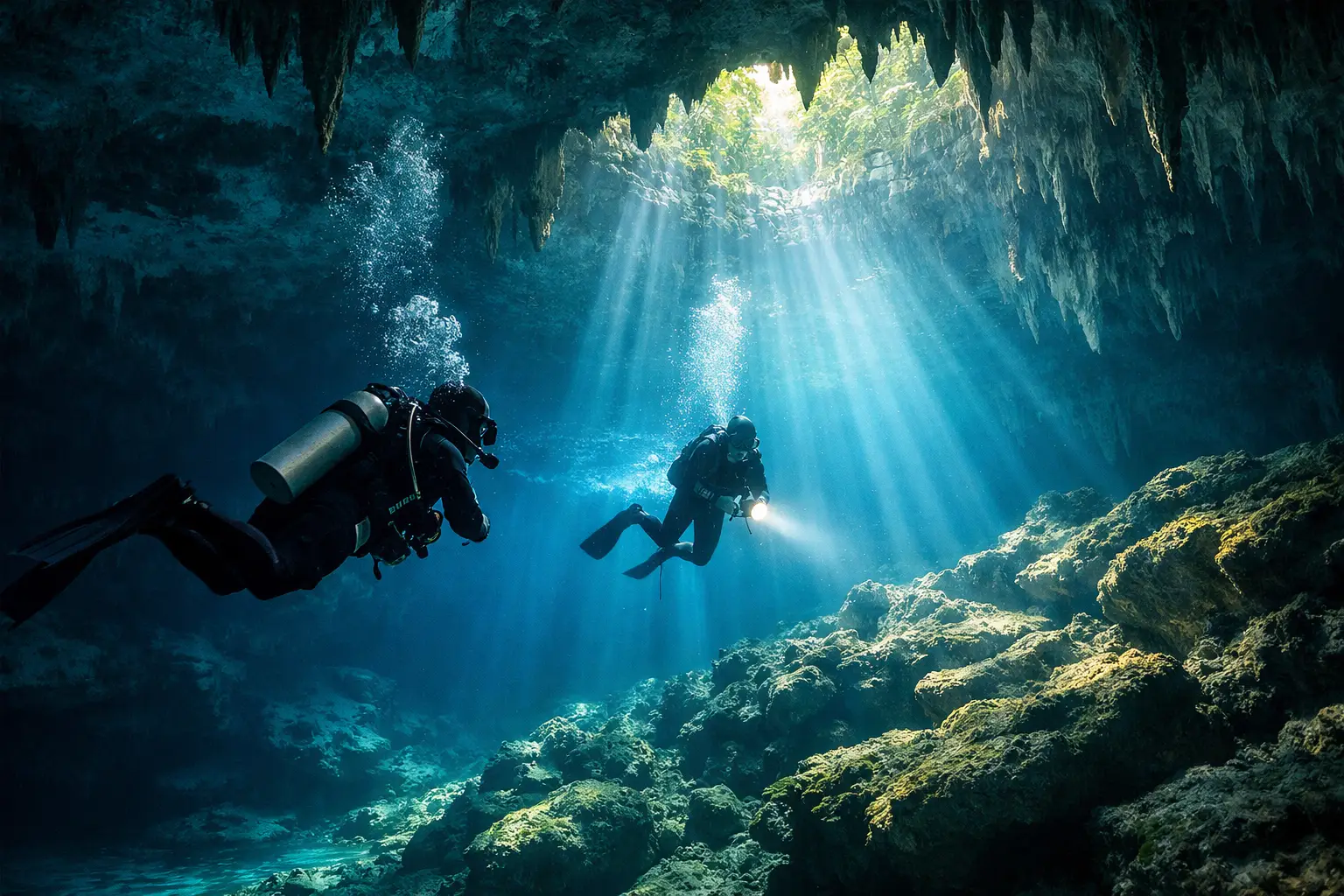
Some cenotes feel like flying through liquid light. Others feel darker, quieter, and more technical from the moment you descend. If you’re searching for the best cenotes for scuba diving, the real question is not just which sites are famous. It’s which cenotes match your experience level, the kind of dive you want, and how much challenge you actually enjoy underwater.
In the Riviera Maya, no two cenote dives feel the same. Visibility is often extraordinary, but the mood can shift from open, sunlit cavern zones to tighter passages, stronger visual effects, and more demanding navigation. That variety is exactly what makes cenote diving so addictive for certified divers visiting Tulum.
What makes the best cenotes for scuba diving?
A great cenote is not only about clear water. The best ones combine geology, light, comfort in the water, and a route that suits the diver. For some people, that means dramatic beams of sunlight and easy cavern lines. For others, it means a more advanced profile with haloclines, air domes, and deeper sections.
This is why there is no single best site for everyone. A newly certified Open Water diver may have an unforgettable dive in a wide, bright cenote with simple navigation, while an experienced diver may be chasing stronger visual contrast and more complex formations. The smart approach is to choose based on conditions and training, not social media popularity.
12 best cenotes for scuba diving near Tulum
Dos Ojos
Dos Ojos is one of the best-known cenotes in the region for good reason. The cavern system offers clear water, beautiful light effects, and a route that feels spacious enough for divers who are new to cenote environments. The formations are impressive without being intimidating, and the overall dive often feels polished and accessible.
It can also be busy, which is the trade-off. If you want iconic cenote scenery and a strong first impression, Dos Ojos delivers. If you want something quieter and more remote, there may be better choices.
Chac Mool
Chac Mool is famous for haloclines, light rays, and air domes. It gives divers a little more visual drama than some easier introductory sites, and the changing layers of fresh and salt water can create surreal, shifting effects that make the cavern feel almost unreal.
This is often a favorite for certified divers who want a classic cenote experience with variety packed into one dive day. Conditions and route choices matter, though, because visibility effects can change depending on diver traffic and recent water movement.
Kukulkan
Kukulkan is the kind of cenote that wins over photographers and first-time cenote divers alike. On sunny days, the light beams can be spectacular. The cavern area is open and visually welcoming, with striking contrasts between the limestone formations and blue water.
It is not the most demanding dive, and that is part of its appeal. If your priority is beauty, comfort, and that unforgettable suspended-in-light feeling, Kukulkan belongs high on the list.
The Pit
The Pit feels different before you even enter the water. It is deeper, darker, and more dramatic than many other cenotes, with a vertical descent that creates a strong sense of scale. The hydrogen sulfide cloud adds an eerie, unforgettable layer to the experience.
This is not usually the best pick for nervous or very new cenote divers. For confident, experienced divers, though, The Pit can be one of the most memorable dives in the Riviera Maya. It trades warmth and brightness for atmosphere and depth.
Angelita
Angelita is another cenote known for mood rather than easy charm. The famous cloud effect creates the illusion of an underwater river, complete with tree branches and a haunting landscape below. It feels less like a typical cavern dive and more like dropping into a dream.
Because of its depth and profile, Angelita is better suited to advanced divers. It is a site people talk about for years, but it is not the right fit for everyone. If you want a gentler first cenote, start elsewhere.
Tajma Ha
Tajma Ha offers balance. It has beautiful formations, good light play, and a route that feels adventurous without becoming overwhelming for most certified divers. It often works well for divers who want something more immersive than the easiest cenotes but not as intense as the deeper advanced sites.
This is the kind of place that rewards attention. Look closely and the details keep building, from stalactites to the shape of the cavern spaces.
Dreamgate
Dreamgate is stunning, but it comes with a clear caveat. The passages are more confined, the formations are delicate, and buoyancy control needs to be excellent. This is a cenote for divers who already have solid control in the water and understand how to move carefully in overhead environments.
For the right diver, Dreamgate can be one of the most beautiful cavern dives in the area. For a diver still working on trim and finning technique, it can feel like too much too soon.
Casa Cenote
Casa Cenote stands out because it feels more open and connected to the mangrove ecosystem. You get a different atmosphere here, with a softer, more natural transition between jungle and water. It is not as cathedral-like as some inland cenotes, but that contrast is exactly what some divers love.
It can be a strong option for those who want variety in their dive trip. If you have already done a few dark limestone caverns, Casa Cenote offers a fresh mood.
El Eden
El Eden combines open water feel with cavern features, making it attractive for divers who prefer a less enclosed environment. The site can feel brighter and less intense, with plenty of visual interest but a more relaxed personality than some deeper systems.
It may not have the same dramatic reputation as The Pit or Angelita, but not every great cenote has to feel extreme. Sometimes an easier, more comfortable dive is the better memory.
Sac Actun
Sac Actun is part of one of the most famous underground systems in the world. Diving here means entering a landscape shaped over immense time, where formations, passages, and crystal visibility can make the whole experience feel almost impossible.
Routes vary, which is why local guidance matters. A good plan turns a giant system into a personalized dive rather than an overwhelming one.
Carwash
Carwash is often overlooked by divers chasing only the most famous names, but it has its own charm. The vegetation, softer light, and occasional cloud effects create a different kind of beauty. It can feel more organic and less polished than the headline cenotes.
That makes it a great reminder that the best cenotes for scuba diving are not always the ones with the biggest reputation. Sometimes they are the ones that surprise you.
Zapote
Zapote is known for its deeper profile and unusual bell-shaped formations. It is a more specialized choice and often appeals to advanced divers looking for something distinct from the usual cavern highlights.
This is not a universal recommendation, but for the right diver it can be a standout. It is a good example of how cenote diving in Tulum can keep evolving as your skills grow.
How to choose the right cenote for your level
The smartest divers do not book based on photos alone. If you are newly certified, bright and spacious cenotes like Dos Ojos or Kukulkan are often a better introduction than darker, deeper sites. You will enjoy the beauty more when you are not overloaded by task management.
If you are an Advanced Open Water diver or you have strong buoyancy and overhead-environment comfort, places like Chac Mool, Tajma Ha, or even The Pit may be more rewarding. For highly experienced divers with the right mindset and control, more demanding cenotes can offer the kind of dive that shifts your whole idea of what freshwater diving can be.
A professional guide or instructor matters here. In Tulum, an experienced team can help match the site to your certification, air consumption, confidence, and goals for the day. That matters just as much as the cenote name on the schedule.
Best cenotes for scuba diving if this is your first cenote trip
If this is your first cenote experience, aim for comfort and quality, not maximum challenge. You want clear briefing, strong supervision, manageable routes, and enough mental space to enjoy the surroundings. Dos Ojos, Kukulkan, and El Eden often make more sense than advanced, moodier sites.
This is also where a premium dive center can change the day completely. Infinity2Diving, based in Tulum, works with divers across experience levels, from recreational travelers to serious students building their next certification. The best first cenote dive should feel exciting, safe, and confidence-building all at once.
When conditions change the experience
Cenotes are reliable compared with ocean diving, but conditions still matter. Sun angle affects light beams. Recent traffic can alter visual clarity in parts of the route. Your own timing matters too. Morning dives may offer a different atmosphere than later entries, especially in cenotes known for sunlight effects.
That is why the best dive plan stays flexible. The right site on the wrong day can disappoint, while a less famous cenote in ideal conditions can become the highlight of your trip.
The Riviera Maya has enough variety to keep divers coming back year after year, and that is the real magic of cenote diving. Start with the site that fits you now, not the one that sounds most extreme, and your next favorite cenote will usually reveal itself underwater.