
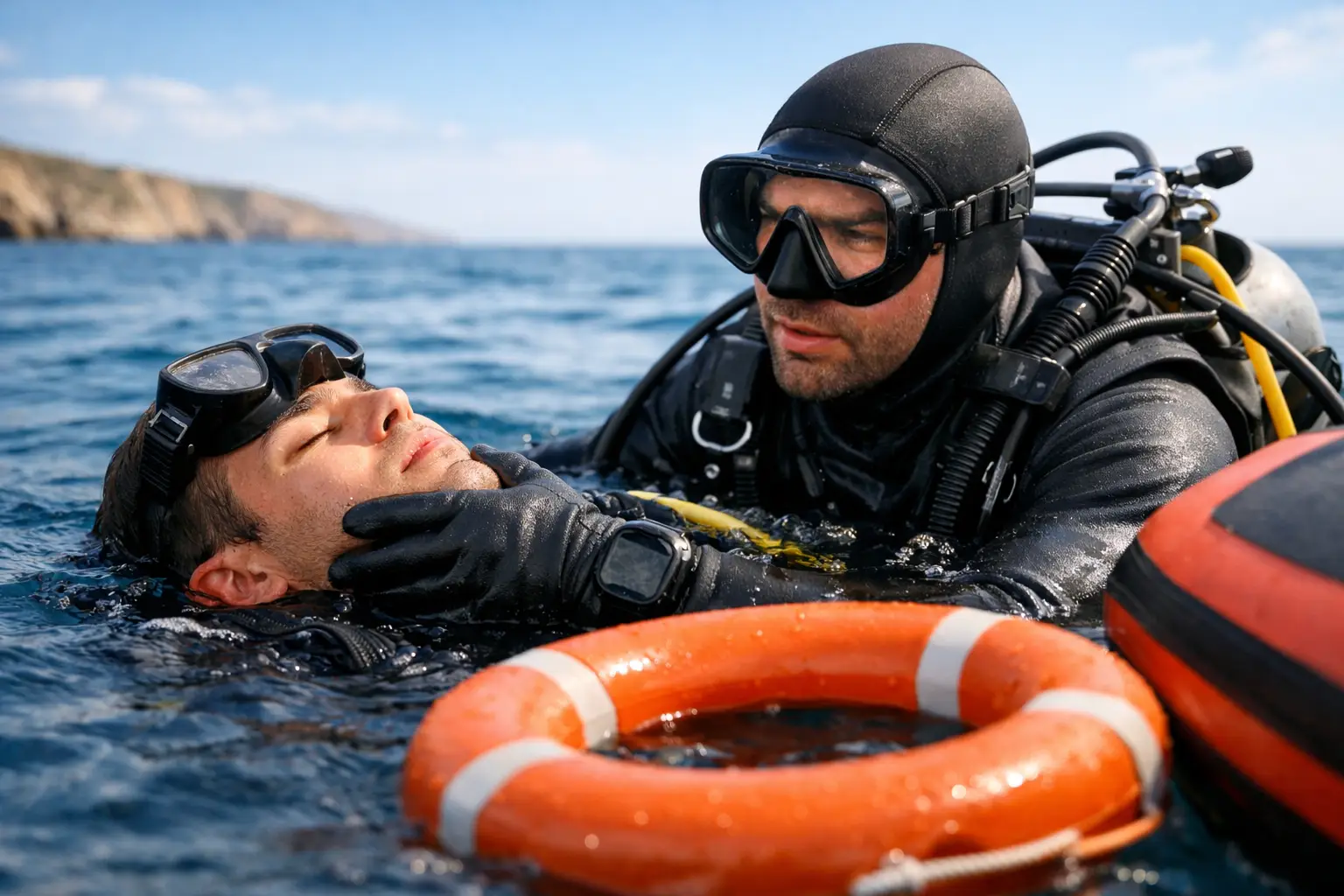
A lot of divers ask this question right after Advanced Open Water, usually with a mix of curiosity and hesitation: when should divers take rescue? The short answer is earlier than most people think. Not because you need to be a superhero underwater, but because Rescue Diver is often the course that changes how you see diving, your buddy, and yourself.
Some courses give you new places to go. Rescue gives you a new level of awareness. That shift matters whether you are planning reef dives on vacation, drifting through cenotes in the Riviera Maya, or working toward a professional path.
When should divers take rescue in their training path?
For most recreational divers, the best time to take Rescue Diver is after you feel comfortable with your basic skills and buoyancy, but before you fall into the trap of thinking rescue is only for dive pros. If you are already certified as an Advanced Open Water Diver, or you have enough recent diving to feel relaxed in the water, you are usually in a strong position to start.
That said, there is no single perfect dive number. One diver may be ready after 20 dives because they are calm, attentive, and consistent. Another may want more experience first because task loading still feels high. Readiness has more to do with comfort, judgment, and willingness to learn than with chasing a specific logbook total.
If you are a newer diver who still feels overloaded by mask clearing, navigation, or buoyancy, it can help to spend a little more time diving first. Rescue training works best when your core skills are steady enough that you can focus outward, not just on yourself.
Why Rescue Diver feels different from other courses
Rescue Diver has a reputation for being challenging, and that part is true. But it is also one of the most fun and rewarding courses in recreational diving. You stop thinking only about descent, air, and equalization, and begin noticing patterns: stress, positioning, surface behavior, changing conditions, and small signs that something is off.
That is what makes the course so valuable. It builds prevention first. The strongest rescue divers are not the ones who react dramatically. They are the ones who notice early, stay calm, and keep a small issue from becoming a real emergency.
This is also why many divers come out of Rescue feeling more confident, not more anxious. Before the course, emergencies can feel mysterious. After the course, they feel more manageable because you have practiced responses instead of just hoping nothing ever goes wrong.
Signs you are ready for Rescue Diver
If you are wondering whether now is the right time, look at how you feel during a normal dive day. Are you handling your equipment setup without stress? Can you maintain buoyancy without constant correction? Do you have enough bandwidth to actually pay attention to your buddy and surroundings?
You are likely ready if diving feels familiar rather than chaotic. You do not need to be perfect. You do need a foundation strong enough that adding problem-solving and rescue scenarios will stretch you in a good way instead of overwhelming you.
Another strong sign is mindset. If you care about becoming a better buddy, not just a more experienced diver, Rescue is probably the right next step. This course attracts divers who want more than stamps in a certification card. They want competence.
When should divers take rescue before Divemaster?
If you are even thinking about going pro, the answer gets simpler. Take Rescue Diver as soon as you reasonably can. It is a required step before Divemaster, but more importantly, it shapes the habits and awareness that professional training builds on.
Divers who take Rescue before they start thinking seriously about Divemaster often arrive better prepared. They have already learned to manage stress, assess scenes, assist tired divers, and think through problems methodically. That creates a much stronger platform for leadership training.
For travelers in a destination like Tulum, this can be especially smart. A dive trip can be more than a vacation. It can be the moment you realize you want to go further, from unforgettable dives to real training progression.
The best timing for traveling divers
Many people ask if they should take Rescue at home or during a dive trip. The honest answer is that both can work. If you train at home, you may have easier scheduling and more time to spread out the learning. If you train while traveling, you often get immersive focus, strong momentum, and the energy that comes from being fully in dive mode.
A destination course can be powerful because you are away from distractions. You wake up, dive, learn, debrief, and repeat. Skills tend to stick when you are living them over several days.
The trade-off is simple: Rescue is not a passive vacation activity. It is active, physical, and mentally engaging. If your ideal trip is total downtime, this may not be the right course for that particular week. But if you want a dive trip that leaves you stronger, more capable, and genuinely proud of what you achieved, Rescue is hard to beat.
What if you feel nervous about taking it?
That is normal, and honestly, a good sign. A little respect for the course usually means you understand that it matters. The mistake is assuming that nervousness means you are not ready.
Rescue training is designed to teach you, not expose you. You are not expected to show up already knowing how to solve every problem. You are expected to participate, practice, and grow. Good instruction makes a huge difference here. In the right learning environment, challenge becomes confidence very quickly.
Many divers who hesitate the longest are the ones who benefit most. They finish the course realizing they were far more capable than they thought.
What Rescue Diver actually improves
The biggest gain is not just rescue technique. It is awareness. You become more observant on the surface, more deliberate underwater, and more useful in a team. Your communication improves. Your judgment sharpens. Your stress management gets better because you have rehearsed problems instead of avoiding the topic.
You also tend to become a safer, easier buddy to dive with. That matters on every kind of dive, from relaxed reef mornings to more advanced environments where conditions, navigation, or overhead settings demand stronger discipline.
For many divers, Rescue is the point where confidence stops being performative and starts being real. You are not confident because a card says so. You are confident because you have dealt with scenarios, stayed present, and learned what calm action feels like.
Who should not rush into Rescue yet?
If your last few dives felt stressful, your buoyancy is inconsistent, or you are still working through basic comfort in the water, there is no shame in waiting a bit. A few more guided dives, a refresher, or additional coaching can make Rescue dramatically more effective.
This is one of those it-depends moments. Taking the course too early can make it feel harder than it needs to. Waiting forever can hold back your development. The sweet spot is when you are comfortable enough to learn beyond yourself, but still early enough that the course shapes your diving for years to come.
That is often why divers who train with experienced instructors in a structured setting progress so well. The timing is not guesswork. It is based on how you move, think, and respond in real dive conditions.
So, when should divers take rescue?
Take it when you are no longer just trying to get through dives and are ready to truly participate in them. Take it when you want more awareness, more control, and more ability to help others. Take it before professional training if that path is even remotely on your radar. And take it before confidence turns into complacency.
At Infinity2Diving, we see Rescue Diver as one of the most transformational courses a recreational diver can take. It is where adventure meets responsibility, and where many divers begin to understand what real competence feels like underwater.
If you have been asking yourself whether now is the right time, that question alone may be your answer. The divers who grow the most are usually the ones willing to step up just before they feel completely ready.