
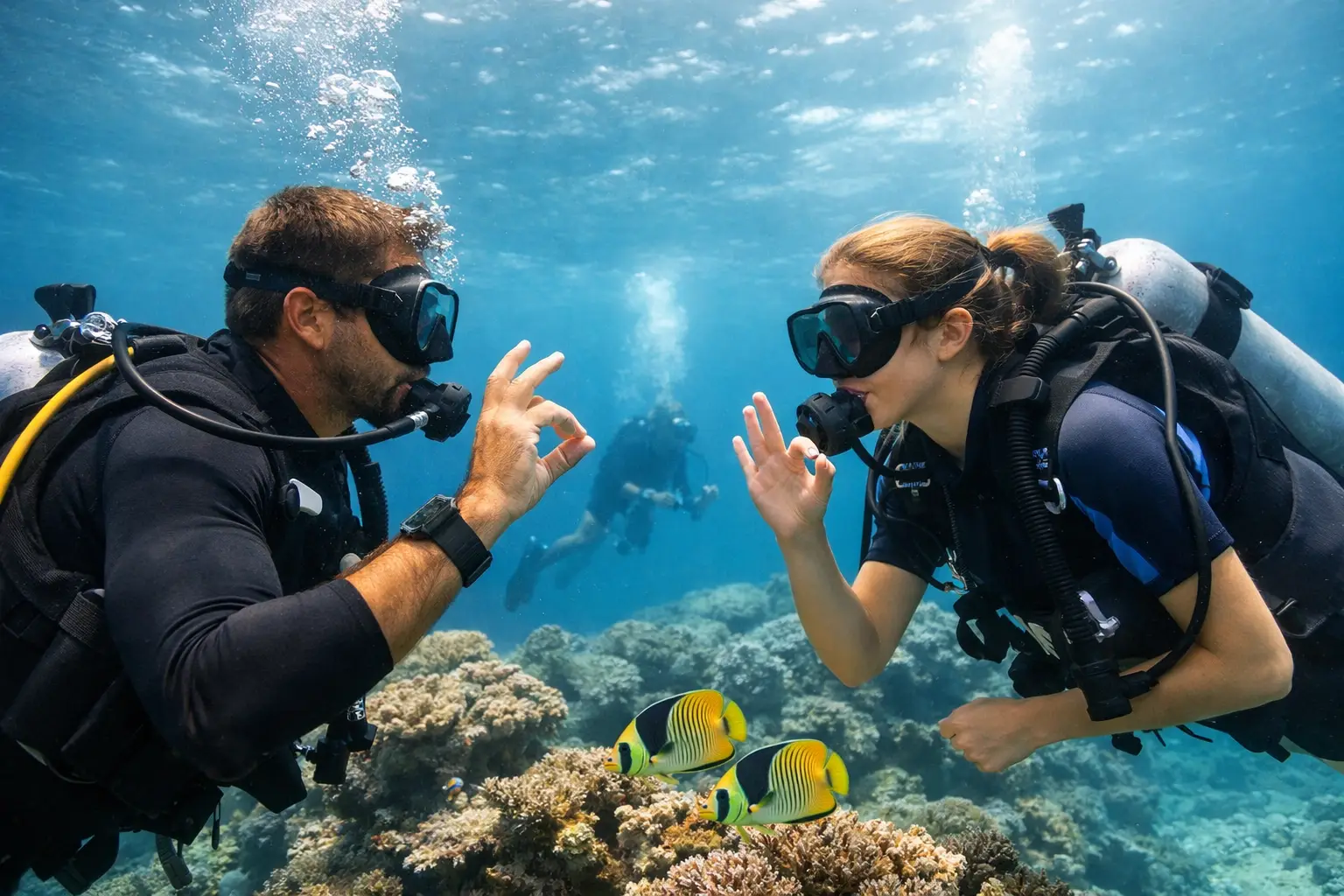
You’re standing on the boat or at the water’s edge, mask in hand, heart beating a little faster than usual, wondering if this is the day you finally breathe underwater. If you’ve been asking what is a discover scuba dive, the short answer is this: it’s a beginner scuba experience designed for people with no certification and little to no diving background.
It gives you a real taste of scuba under the direct supervision of a trained professional. You learn the basics, practice a few essential skills, and then head into the water for an actual dive in controlled conditions. It is not a full certification course, but it is a legitimate underwater experience and, for many travelers, the moment everything changes.
What is a discover scuba dive, exactly?
A Discover Scuba Dive is an introductory scuba program for first-timers. It exists to let curious beginners try diving safely without committing to a full Open Water Diver course right away.
Think of it as a guided first step, not a shortcut. You’ll get a briefing on how scuba equipment works, how to breathe comfortably, how to clear your mask or recover your regulator, and how to communicate underwater. Then, with your instructor close by, you’ll practice in shallow water before going on a supervised dive.
That structure matters. Scuba is exciting, but it is also skill-based. The point of a discover dive is not just to put a tank on your back and send you off. The point is to introduce you to the underwater world in a way that feels thrilling, controlled, and confidence-building.
Who a discover scuba dive is for
This experience is built for beginners. If you’ve never been scuba diving before, or if you’ve always wanted to try it but felt unsure about taking a full course, this is usually the right place to start.
It’s a great fit for travelers who want one unforgettable day in the water, couples looking for a shared adventure, and families with eligible older teens or adults who want to do something beyond the usual beach day. It also works well for people who are considering certification but want to test how they feel breathing underwater before signing up for a longer program.
That said, it’s not for absolutely everyone. You need to be reasonably comfortable in the water, willing to listen carefully, and able to stay calm while learning something new. You do not need to be an athlete, but you do need to respect the process.
What happens during the experience
Most discover scuba experiences follow a simple progression. First comes the briefing. Your instructor explains the equipment, the basic rules of breathing and equalizing, and the hand signals you’ll use underwater. This is where a good dive center makes a huge difference. Clear instruction and a calm teaching style can turn nerves into excitement very quickly.
Next comes the skills practice. In shallow water, you’ll get used to breathing through the regulator and moving with the gear on. You’ll practice a few simple but essential skills so you know what to do if water gets in your mask or if you need to reposition your regulator. None of this is about perfection. It’s about building familiarity before the real dive begins.
Once you’re comfortable, you go for the dive itself. Depth limits are conservative, and the instructor stays with you closely. You are not expected to navigate, lead, or make independent decisions underwater. Your job is to breathe slowly, relax, and enjoy the experience.
For many first-timers, the surprise is how quickly the strange part fades. The first breaths can feel unusual, but once your mind realizes you really can breathe normally underwater, the whole experience opens up.
What a discover scuba dive is not
This part matters because expectations shape the experience.
A discover scuba dive is not a certification. You won’t leave as a licensed diver able to rent gear and go dive on your own. If you want that, you need a full beginner certification course such as Open Water Diver.
It’s also not a free-for-all underwater tour. You will be under close supervision, and the pace is set by safety, not by ambition. That is exactly why it works so well for beginners.
And it’s not identical everywhere. The core concept is the same, but the location, water conditions, visibility, group size, and instructor quality can dramatically affect how enjoyable your first experience feels. Warm, calm water with patient instruction can make a first dive feel natural. Choppy conditions or rushed teaching can make it feel harder than it needs to.
Why so many people start here
There’s a reason discover dives have introduced so many people to scuba. They remove a lot of the friction. You don’t need to commit to several days of coursework. You don’t need to understand dive tables before seeing your first fish. And you don’t need prior experience.
What you do get is a real sense of whether scuba is for you. Some people finish their first discover dive smiling and satisfied, happy they tried it once. Others come up knowing immediately that they want more depth, more skills, and the full certification path. Both outcomes are a win.
For travelers in places like Tulum, that first experience can be especially powerful. Warm Caribbean water, marine life, and access to exceptional dive environments create the kind of memory that sticks. At a center like Infinity2Diving, the value is not just the location. It’s the combination of professional instruction, strong safety standards, and the kind of welcoming energy that helps beginners relax.
Common fears beginners have
Almost every first-time diver arrives with at least one concern. Usually it’s breathing, pressure in the ears, or the worry that panic might suddenly kick in underwater.
These concerns are normal. Good instructors expect them, plan for them, and teach in a way that lowers the pressure from the beginning. The breathing part is often the biggest mental hurdle, but it becomes manageable fast when you realize scuba breathing is steady and simple. Equalizing your ears can take a little practice, and some people need more time than others. That’s fine. Rushing is never the goal.
If you are someone who likes to feel in control, scuba may actually surprise you. A well-run discover dive is structured, calm, and closely supervised. You are never expected to figure it out alone.
How to know if it’s right for you
If you’re curious, comfortable in the water, and open to coaching, there’s a good chance you’ll enjoy it. The biggest green flag is not bravery. It’s willingness. You don’t need to show up fearless. You need to show up ready to listen and give yourself the chance to adapt.
A discover dive is especially worth considering if you’ve been circling the idea of scuba for years. Many people wait because they assume it’s too technical, too intense, or only for extreme adventurers. The reality is more welcoming than that. With the right instructor, scuba begins as a guided learning experience, not a test.
Still, there are trade-offs. If you already know you want to dive regularly, a discover program may feel like only the first chapter. In that case, going straight into a certification course could make more sense. On the other hand, if you’re short on time or simply want to try it before committing, a discover dive is the smarter choice.
What to expect after your first dive
Usually one of two things happens. You either feel proud that you did something bold and memorable, or you start thinking about your next dive before the gear is even off.
That second reaction is common for a reason. The underwater world has a way of shifting your perspective. Sound changes. Time feels different. Your attention narrows in the best possible way. You stop thinking about your phone, your schedule, and the noise on land. You just breathe and observe.
If that feeling grabs you, the next step is often a full certification course. That’s where you move from supervised introduction to becoming a trained diver with the skills to dive more independently. Your discover dive becomes the start of something bigger.
So, what is a discover scuba dive really?
It’s a first yes.
It’s the moment you stop imagining what the underwater world might feel like and experience it for yourself, with expert guidance and a safety-first structure that gives beginners room to succeed. It’s part adventure, part training, and part personal milestone.
If you’ve been waiting for the right way to begin, this is often it. Not because it promises perfection, but because it gives you a real, grounded, unforgettable introduction to scuba. Sometimes that’s all you need – one good breath underwater, one calm instructor by your side, and one chance to see whether the ocean feels like the start of something much bigger.