
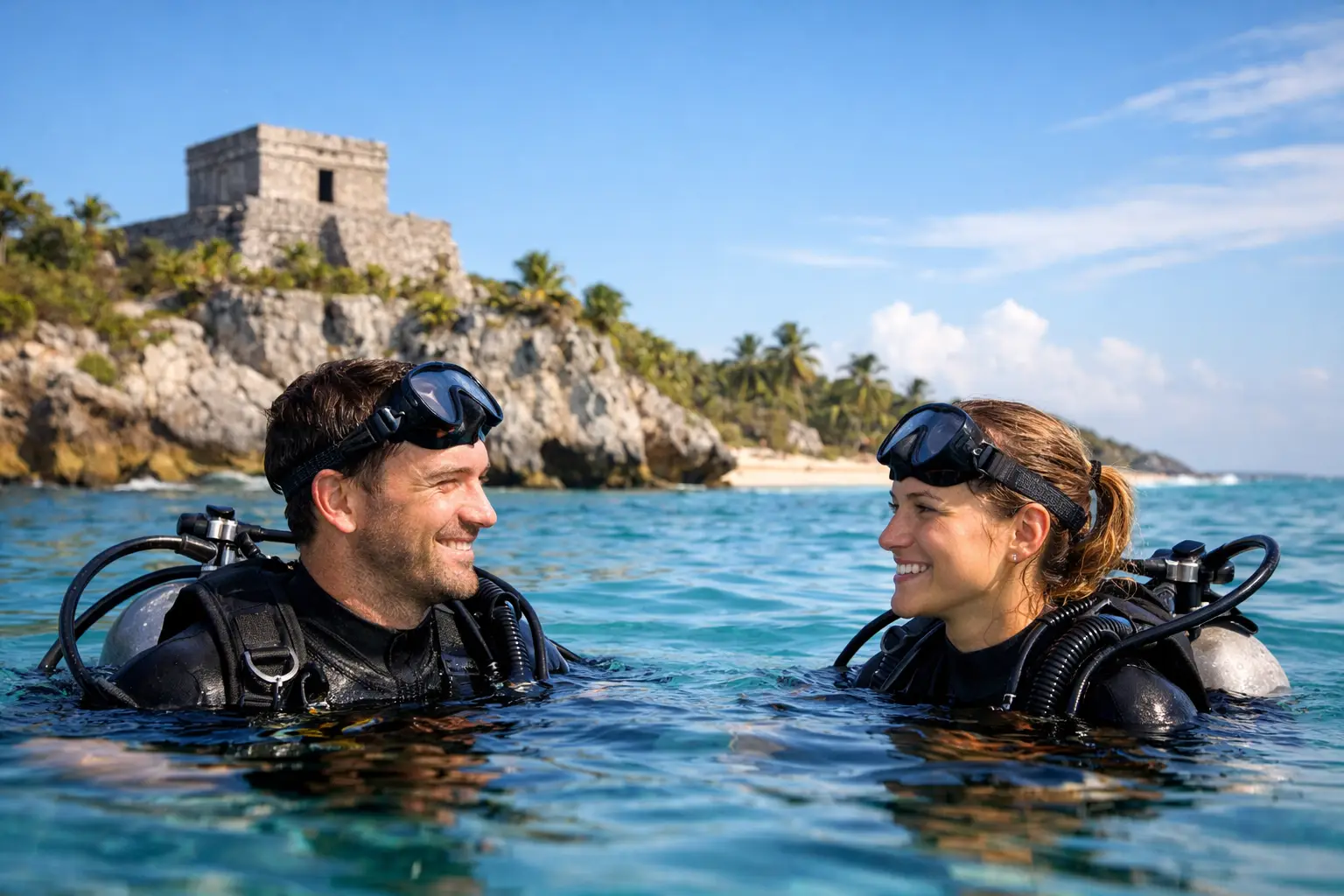
You can spend your Tulum trip looking at the water from the beach, or you can learn what it feels like to breathe underwater and move through an entirely different world. A padi open water certification is the point where scuba stops being a bucket-list idea and becomes a real skill you can carry anywhere.
For a lot of travelers, this course is more than a vacation activity. It is the first serious step into ocean adventure, personal confidence, and a global community of divers. It is also the certification that opens the door to reef dives, future advanced training, and unforgettable places that only divers get to experience properly.
What a PADI open water certification actually gives you
A PADI Open Water Diver certification is the world’s most recognized beginner scuba credential. Once you complete it, you are certified to dive with a buddy, rent gear in many destinations, and join guided dives within the limits of your training.
That matters because the course is not just about trying scuba once. It is about learning the fundamentals well enough that you can continue diving safely after your trip ends. You learn how equipment works, how to handle common situations underwater, how to manage buoyancy, and how to think like a diver rather than just follow along.
For new divers, that difference is huge. A discovery dive can give you a taste of scuba. A certification gives you independence, structure, and the confidence that comes from doing the skills yourself.
Who should take this course
If you are curious about scuba but want real training instead of a one-day sampler, this course is for you. It is designed for beginners, and you do not need previous experience in diving.
You do need to be reasonably comfortable in the water and ready to learn. Some students arrive excited but a little nervous, especially if they have never worn a mask underwater or breathed from a regulator before. That is normal. Good instruction makes all the difference, and the right learning environment can turn first-day nerves into genuine excitement fast.
This course also makes sense if you are planning future dive travel. If cenotes, reefs, wrecks, or island dive trips are on your list, getting certified early gives you far more options.
How the PADI open water certification works
The course is usually divided into three parts: knowledge development, confined water training, and open water dives.
Knowledge development
This is where you learn the theory behind diving. You cover pressure, buoyancy, equalization, dive planning, equipment basics, and safe diving practices. The goal is not to turn you into a scientist. It is to help you understand what your body and gear are doing so your decisions underwater make sense.
Many students complete this portion through eLearning before arrival. That can be a smart move on a trip to Tulum because it lets you spend more of your vacation actually training in the water instead of sitting in a classroom.
Confined water sessions
This is where scuba starts to feel real. In a pool or pool-like environment, you practice the core skills you will use on every dive. That includes mask clearing, regulator recovery, buoyancy control, and emergency procedures.
This part is where confidence is built. It is also where quality instruction matters most. A rushed session can leave beginners overwhelmed. A well-paced session, led by an experienced instructor who reads each student well, creates calm, competence, and trust.
Open water dives
These are the training dives where you apply your skills in real conditions. You demonstrate what you learned, get comfortable with descent and ascent procedures, practice buoyancy in a natural setting, and start experiencing the fun part of diving without losing the safety foundation.
By the end, you are not just finishing tasks for a checklist. You are becoming a diver.
How long it takes and what to expect
A padi open water certification usually takes three to four days, depending on scheduling, your learning pace, and whether you complete the academic portion ahead of time.
Some students want the fastest path possible. Others prefer a more relaxed pace. Neither option is automatically better. If you are on a tight travel schedule, efficiency matters. If you are a little anxious in the water or want more time to absorb each step, a less rushed schedule can lead to a stronger experience.
The best courses balance momentum with personal attention. You should feel challenged, but never pushed beyond what allows you to stay calm and focused.
Why Tulum is such a strong place to learn
Not every destination works equally well for beginner training. Tulum stands out because it combines warm water, world-famous dive environments, and the kind of trip people already dream about taking.
For entry-level divers, the Riviera Maya offers a rare mix of beauty and progression. You can start with foundational training and then continue into reef diving, deeper adventure dives, and eventually cenote experiences as your comfort and certification level grow.
That progression matters. Learning in a place where diving is not a one-time novelty but part of a larger underwater landscape helps new divers see what is possible. Your certification stops feeling like an isolated course and starts feeling like the first chapter of something much bigger.
Choosing the right dive center for your certification
This is where trade-offs matter. The cheapest course is not always the best value, especially in scuba. Training quality affects your safety, your confidence, and whether you actually enjoy diving enough to continue.
Look for a dive center with strong professional credentials, clear safety standards, and instructors who are patient with beginners. Group size matters too. Smaller groups often mean more personalized coaching, faster skill improvement, and a less stressful first experience.
Transparent pricing is another big factor. If a course looks inexpensive but leaves out gear, materials, certification fees, or transportation, the final total may not be such a bargain. Many travelers prefer all-inclusive pricing because it removes friction and lets them focus on the experience.
In Tulum, Infinity2Diving stands out for students who want premium instruction, warm service, and a serious training environment without losing the excitement of the destination. That combination is especially valuable when you are learning scuba for the first time.
What beginners usually worry about
Most new students do not worry about the fish. They worry about themselves. Will I panic? Will I be able to breathe normally? What if I cannot clear my mask? What if everyone else gets it faster than I do?
These concerns are common, and they are manageable. Scuba feels unfamiliar at first because it is unfamiliar. The solution is not bravado. It is patient coaching, repetition, and learning each skill step by step until it becomes natural.
If you are nervous, say so. A good instructor will not see that as a problem. They will see it as useful information. The goal is not to act fearless. The goal is to become competent.
What happens after you get certified
This is when the fun really expands. Once certified, you can join dives in destinations around the world, continue building experience, and move into more advanced training when you are ready.
For many divers, the next step is Advanced Open Water. That course helps you develop navigation, depth awareness, and broader experience in different types of diving. If you are drawn to the underwater landscapes of the Riviera Maya, continuing your training can eventually lead toward wreck, night, deep, and cavern or cave-related pathways with the right prerequisites and instruction.
And if your first course sparks something bigger, scuba can become more than a hobby. Plenty of travelers start with one vacation certification and later pursue Divemaster or Instructor-level training because they discover that the underwater world changes how they want to travel, work, and live.
Is it worth doing on vacation?
Yes, if you want your trip to give you something lasting. A padi open water certification is one of the few travel experiences that follows you home as a usable skill and internationally recognized credential.
That said, it depends on how you like to travel. If you want every day to be unstructured and spontaneous, a certification course may feel too scheduled. If you love active trips, meaningful milestones, and experiences that mix challenge with reward, it can be one of the best choices you make.
The strongest part of this course is not the card you earn at the end. It is the shift that happens when the water stops feeling like a barrier and starts feeling like a place you belong. If Tulum is already calling you, learning to dive there is a pretty unforgettable way to answer.