
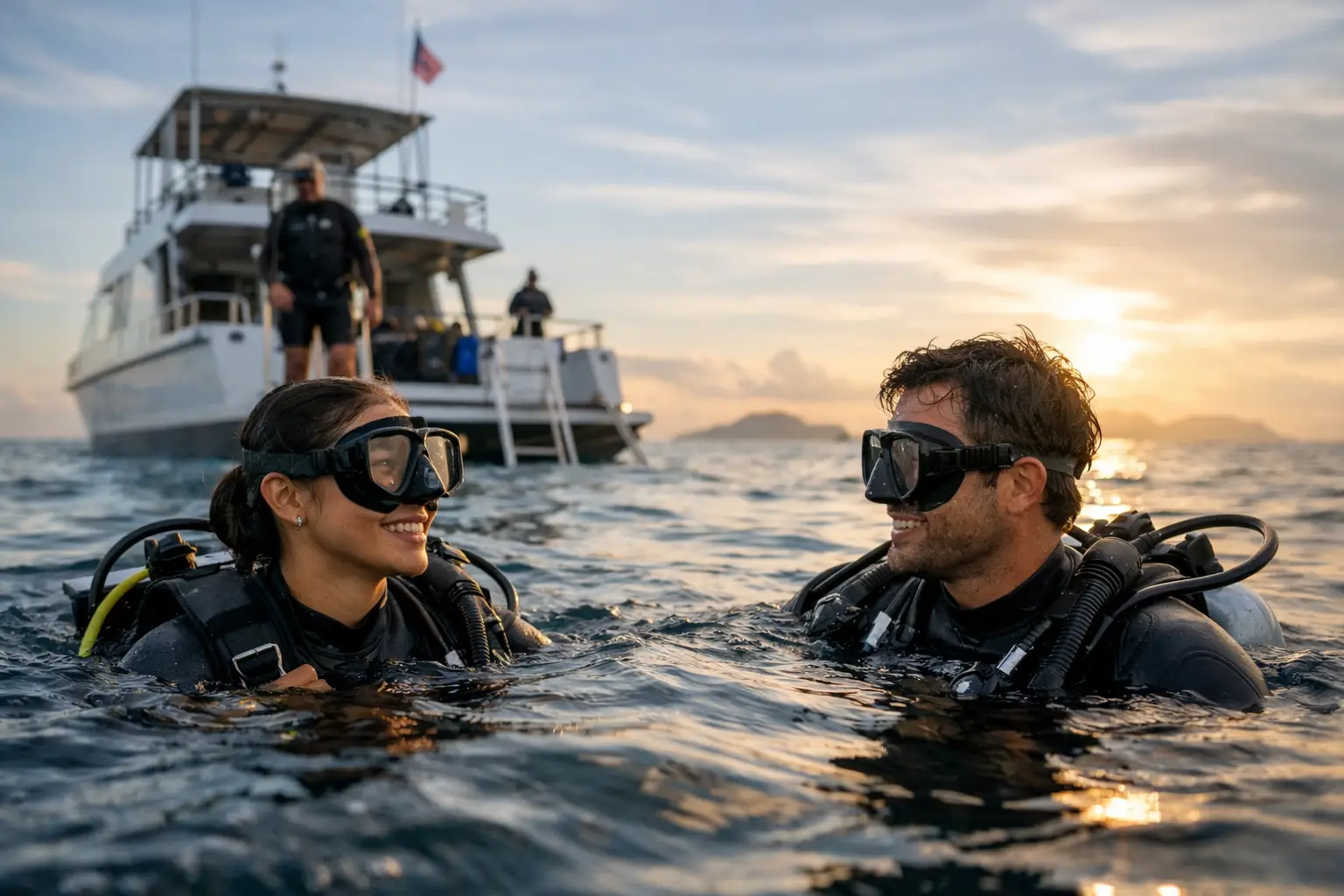
The first time you drop below 60 feet, watch your computer, control your breathing, and still have enough attention left to notice the reef around you, something shifts. You stop feeling like a brand-new diver who is just following the group. The advanced open water course is often the moment that happens.
For many certified divers visiting Tulum, this course sits in the sweet spot between vacation adventure and real skill-building. It is not a lecture-heavy marathon, and it is not reserved for elite divers either. It is designed to make you more capable, more aware, and more comfortable underwater through experience. That matters whether you want to explore reefs with more confidence, prepare for cenote dives, or simply feel less task-loaded every time you descend.
What the advanced open water course actually is
One reason divers hesitate is the name. “Advanced” sounds intimidating, but the course is better understood as a guided next step after Open Water. You do not need to be an expert. You need to be certified, ready to learn, and willing to challenge yourself in a controlled environment.
The course typically includes five adventure dives. Two are required – deep diving and underwater navigation – and the other three depend on conditions, your goals, and the dive center’s recommendations. Those elective dives might include peak performance buoyancy, drift, fish identification, night diving, boat diving, or search and recovery.
That setup is what makes the course so useful. Instead of learning in a classroom and hoping it clicks later, you build skills where they matter most – in the water, under real conditions, with an instructor coaching you as you go.
Why so many divers take the advanced open water course on vacation
A destination course can be far more effective than people expect. When you are diving several days in a row, your comfort level rises quickly. Skills stay fresh. Corrections from one dive carry into the next. And if you are training somewhere visually spectacular, the process feels less like checking a box and more like becoming the diver you imagined when you first got certified.
Tulum is especially appealing because it offers variety. Ocean dives can sharpen your awareness of current, surface conditions, and descent control. Local training also puts divers close to some of the most remarkable underwater environments in the world, which naturally raises the bar for buoyancy, trim, and situational awareness. You are not just collecting a card. You are building habits that make future dives safer and more enjoyable.
There is also a practical side. Many divers get Open Water certification shortly before a trip, then realize they want more range. They want to go a bit deeper, navigate more confidently, and stop feeling uncertain about every small change in conditions. This course addresses that gap well.
What you learn that makes a real difference
The biggest value of the course is not bragging rights. It is capacity. A good instructor helps you become calmer and more intentional underwater.
Deep diving builds judgment, not just depth
Deep dive training is about much more than reaching a number on your computer. You learn how pressure affects air consumption, focus, no-decompression limits, and task loading. At depth, little mistakes can snowball faster. The goal is to recognize that early and stay ahead of it.
For divers who have only stayed in shallower water, this can be eye-opening. You begin to understand why planning matters, why streamlined gear setup matters, and why a relaxed pace is not just nice to have.
Navigation helps you stop relying on luck
A lot of newly certified divers are surprised by how easy it is to lose direction underwater. Natural navigation, compass work, kick cycles, landmarks, headings – these sound simple until visibility changes or the reef starts looking the same in every direction.
Navigation training gives you structure. It helps you pay attention to where you are, not just what you are looking at. That changes your confidence quickly, especially if you plan to keep diving from boats, in new destinations, or in environments that demand stronger orientation skills.
Elective dives round out your control and awareness
If there is one elective that benefits nearly everyone, it is peak performance buoyancy. Better buoyancy improves air consumption, protects marine life, reduces stress, and makes every dive smoother. It is also one of the clearest signs of a diver progressing from beginner habits to real control.
Other electives add useful layers depending on your goals. Drift diving can teach efficiency and teamwork. Night diving sharpens communication and focus. Search and recovery introduces practical problem-solving. The right combination depends on what kind of diving you want to do next.
Who this course is really for
The short answer is simple: almost any certified Open Water diver who wants to keep improving. But there are a few common profiles.
Some divers take it right away because they are in momentum mode. They just got certified, they are excited, and they want to reinforce skills before too much time passes. That can work very well, especially with strong instruction.
Others wait until they have 10 to 20 dives and feel ready for more complexity. That can be a great approach too. You may absorb the lessons differently once you have experienced varying conditions and know where your weak spots are.
Then there are divers returning after a break. For them, the course can be a smart reset if paired with a refresher. Instead of jumping straight into challenging dives and hoping everything comes back, they rebuild confidence with supervision and purpose.
What matters most is not your total number of logged dives. It is your attitude. If you are coachable, honest about your comfort level, and genuinely interested in becoming a better diver, you are in the right place.
Is the advanced open water course hard?
It can feel demanding, but it should not feel chaotic. A well-run course stretches you without overwhelming you. You may be asked to multitask more than you did in Open Water. You may notice your buoyancy slips when you add navigation tasks or depth considerations. That is normal.
The point is not perfection. The point is progression.
This is where instruction quality matters. Premium training should feel structured, calm, and personalized. If one skill takes longer to click, your instructor should adapt. If conditions are not right for a certain dive, the plan should shift. Good dive education is not about rushing people through. It is about building competence that lasts past the certification photo.
Timing, cost, and what to expect
Most divers can complete the course over two days, though schedules vary. There is usually some knowledge development before or between dives, but the experience is centered on practical application in the water.
Cost depends on location, logistics, inclusions, and the quality of the operation. The cheapest option is not always the best value. Small groups, experienced instructors, reliable equipment, transportation, and thoughtful planning all shape the experience. So does the setting. A course taught in extraordinary dive environments often delivers more than a certification – it creates a trip you will remember for years.
If you are comparing options, ask what is included and how the training is structured. You want clarity on gear, transport, certification fees, dive sites, and instructor attention. An all-inclusive setup can remove friction and let you focus on diving instead of managing details.
What happens after certification
This is where the course often proves its value. You may not walk away feeling like a superhero, but you usually leave with something better – a stronger baseline.
You will likely be more comfortable around 100 feet within training limits, more capable with navigation, and more aware of your body position, breathing, and decision-making. That carries into every future dive, from relaxed reef trips to more advanced pathways.
For some divers, the course becomes a gateway. It opens the door to specialties, rescue training, and eventually professional development. For others, it simply makes recreational diving feel easier and more rewarding. Both outcomes are worthwhile.
At Infinity2Diving, that progression matters because great diving is not just about where you go next. It is about how prepared you are when you get there.
Is it worth it?
If you only want another certification card, probably not. If you want to feel more capable, expand your options, and enjoy diving with more confidence, yes – for most people, it is absolutely worth it.
The trade-off is simple. You invest time, focus, and money now in exchange for better dives later. Not every diver needs to rush into it, and not every vacation has room for a course schedule. But if you are already thinking about diving deeper, improving buoyancy, or exploring more of what a destination like Tulum can offer, the advanced open water course is one of the smartest next steps you can take.
Choose the version of the course that gives you strong instruction, the right pace, and an environment that inspires you to keep going. The best training does more than certify you. It changes the way you move through the underwater world.