
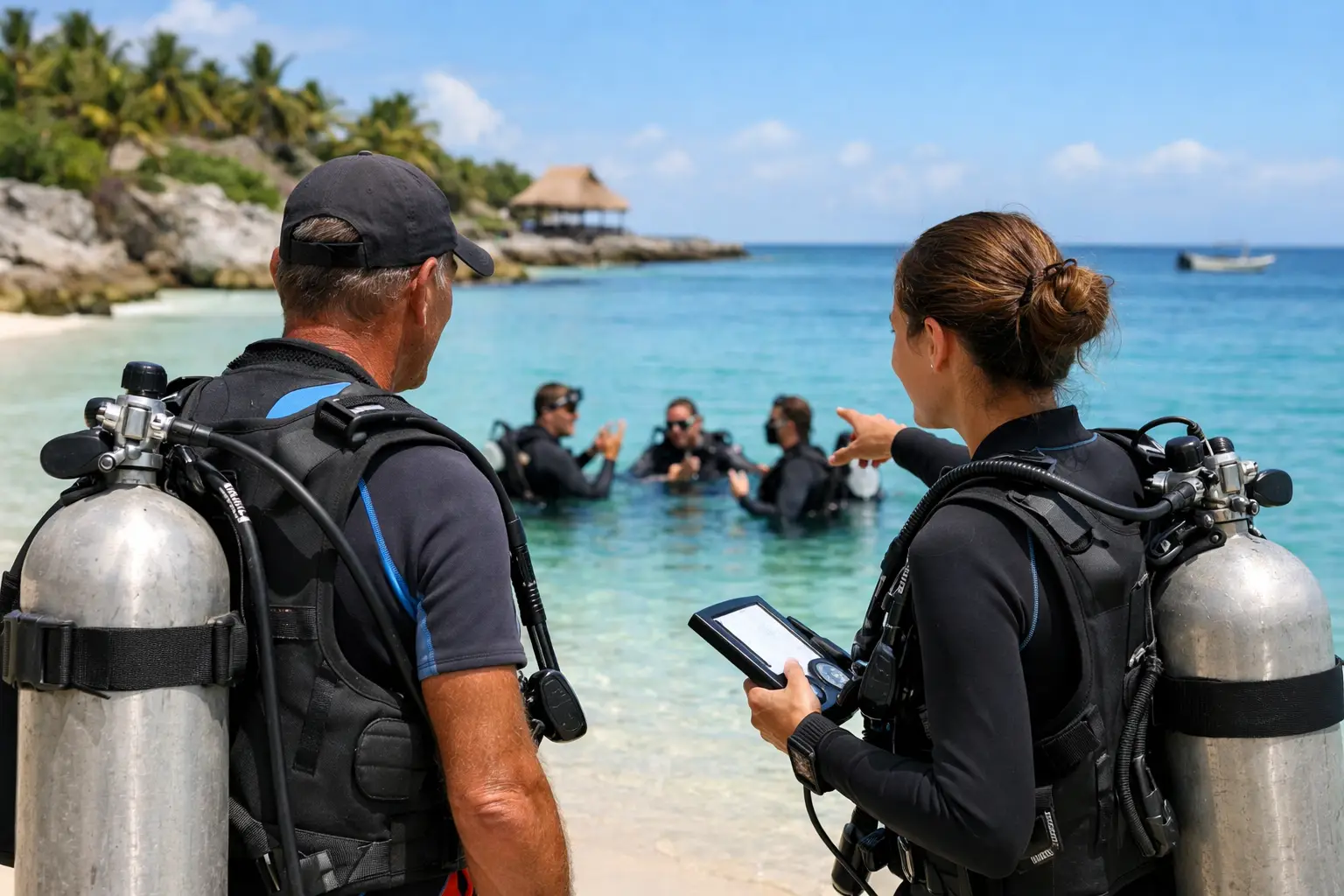
You can tell when a dive pro is ready for more. They stop asking how to pass the next rating and start asking how to lead better, teach smarter, and help other instructors succeed. That is exactly where the staff instructor course PADI pathway comes in. It is not just another card in your wallet. It is a shift from being a capable instructor to becoming a mentor inside the professional training system.
For many divers, that shift happens after real-world teaching experience. You have certified students, handled nerves, solved problems underwater, and learned that great instruction is equal parts standards, judgment, and people skills. At that stage, the PADI Master Scuba Diver Trainer rating often feels like a strong foundation. The next move is becoming a PADI Staff Instructor, where your role grows beyond teaching students and into helping shape future dive leaders.
What the staff instructor course PADI route actually means
A PADI Staff Instructor course is designed for experienced instructors who want to assist with Instructor Development Courses and contribute at a higher professional level. You are not replacing a Course Director, and that distinction matters. Instead, you are becoming qualified to support instructor candidates, help evaluate teaching presentations, reinforce standards, and bring stronger coaching into the training environment.
That makes this course especially attractive for dive professionals who want more responsibility without immediately stepping into the Course Director track. It is also a smart fit for instructors working in busy training centers where IDC support, candidate mentoring, and consistent educational quality are part of daily operations.
In practical terms, the course builds on what you already know. It sharpens your understanding of the instructor development process and pushes you to teach with more precision. You are expected to know the standards, but also to communicate them clearly, model professionalism, and coach candidates through the kind of stress they will later see in their own classes.
Who should take a PADI Staff Instructor course
Not every instructor needs this rating right away. If you are still new to teaching, you may benefit more from building experience, earning additional specialty instructor ratings, and progressing to MSDT first. Time in the water matters. So does time in the classroom, on boats, in confined water, and in those small moments where students need calm leadership.
But if you already love the training side of diving, this course can be a powerful next step. It suits instructors who enjoy mentoring, want to support IDC programs, and see professional development as part of their long-term career. It is also valuable for dive pros who want to stand out when applying for work in competitive destinations. A center running professional-level programs will often see extra value in an instructor who can assist with candidate training, not just entry-level certifications.
There is another layer too. Some divers choose this path because they want deeper involvement in the culture of teaching. They are not only chasing employability. They want to raise standards, contribute to safer training, and become the kind of professional others remember for the right reasons.
What you learn during a staff instructor course PADI program
The biggest misconception is that this course is just about more theory. In reality, it is about better leadership in an instructional setting.
You learn how the IDC framework works from a more advanced perspective. That includes how candidates are evaluated, where common struggles appear, and how to coach improvement without creating confusion. You refine presentation skills, but the real value is learning how to guide developing instructors toward consistency.
There is usually a strong emphasis on standards, educational philosophy, risk awareness, and candidate support. You need to understand not just what PADI requires, but why those requirements exist and how to apply them in a way that protects quality. That sounds technical, and it is, but it is also human. Future instructors do not just need information. They need clear feedback, strong examples, and an environment where they can grow under pressure.
This is where stronger training centers make a difference. The course experience depends heavily on who is teaching it, how organized the program is, and whether you are surrounded by a professional culture that takes mentorship seriously.
Why Tulum is a strong place to take this course
A professional-level dive course should happen somewhere that keeps you inspired. Tulum does that naturally. You are training in one of the most memorable dive destinations in the world, with access to reef systems, ocean conditions, and the unique environment of cenotes. That variety matters because great dive professionals are shaped by more than one type of water and more than one kind of student experience.
There is also a mindset shift that happens when you train in a destination where diving is part of daily life. You are not stepping into a sterile classroom disconnected from the real world. You are developing as a pro in a place where travel, adventure, and high-level dive education meet. For many candidates, that creates stronger motivation and better focus.
At a center like Infinity2Diving, the appeal goes beyond location. The value is in combining serious professional training with a welcoming, safety-led environment. That balance matters. A staff instructor candidate needs high standards, but also constructive support. The best programs feel demanding without feeling cold.
What to look for before you enroll
The course itself is important, but the training environment is just as important. Start with the obvious question: who is leading the program, and how much real instructor development experience do they have? A great course should be structured, current, and standards-driven.
Then look at how the dive center approaches professional education overall. Do they regularly train divemasters and instructors, or is pro training an occasional add-on? Is the culture organized and respectful? Do they communicate clearly about prerequisites, schedule, and expectations? These details tell you a lot about what kind of support you will receive.
It also helps to think about your own goals. If you want to use this rating to support IDC programs and expand your role at a dive center, ask how often those opportunities actually exist. If your goal is resume strength for international work, ask how the course prepares you for that. If you want mentorship experience, make sure the program includes real coaching and not just lectures.
Price matters, of course, but cheap professional training can become expensive if the experience is rushed or weak. At this level, quality instruction is the product.
Is the PADI Staff Instructor rating worth it?
For the right person, yes. But it depends on what you want from your dive career.
If you plan to stay mostly focused on recreational teaching and guided diving, the direct payoff may be slower. You may still enjoy the growth, but you might not use the rating every day. On the other hand, if you want to be involved in professional training, leadership, and mentorship, it can change the kind of opportunities available to you.
It is also worth it for instructors who want more confidence in the training room. Assisting with candidate development forces you to tighten your own teaching. You become more observant, more precise, and usually more mature in how you handle people. Those skills carry into every part of dive work.
There is a long-term benefit too. Divers remember the professionals who helped them believe they could do more than they thought possible. Becoming a staff instructor puts you closer to that role.
What comes after the course
The best next step is to use the rating, not just celebrate it. Get involved in instructor development. Assist where you can. Keep teaching. Keep learning how different candidates respond to feedback, pressure, and responsibility.
You may find that the course opens a bigger question about your future. Some pros take this route because they want to move toward Course Director one day. Others simply want to become stronger team leaders within a dive center. Both paths are valid.
What matters most is that you keep building depth, not just collecting certifications. The dive industry has plenty of people with titles. The professionals who stand out are the ones who combine standards, humility, and real care for the people they train.
If that sounds like the kind of dive pro you want to become, the PADI Staff Instructor course is more than a next level. It is a chance to step into the part of this industry where your experience starts shaping someone else’s future underwater.