
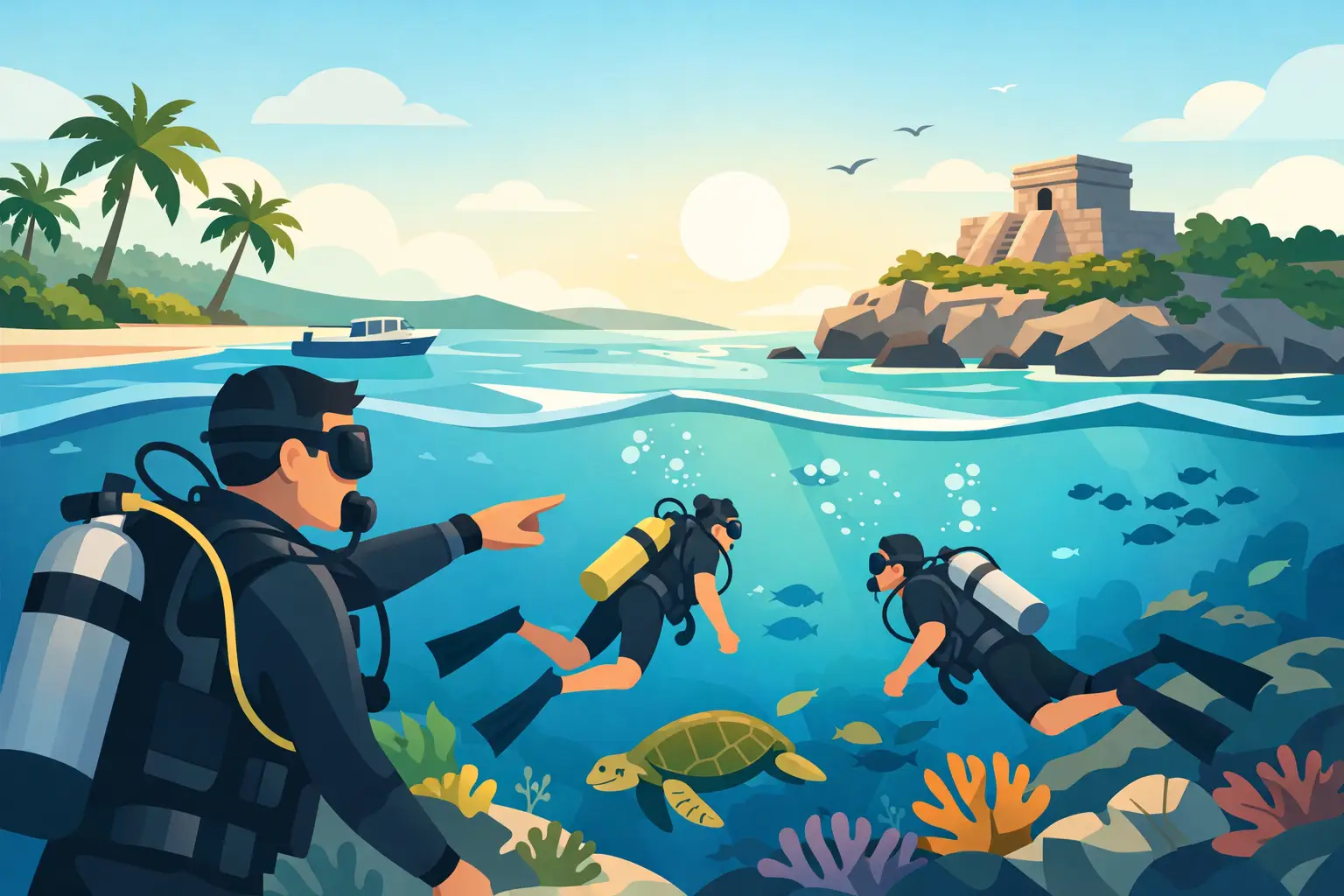
You can tell within a day whether a divemaster candidate is chasing a certification card or building a real professional foundation. The difference shows up in the small things – how they brief a dive, how they move through the water, how they respond when conditions shift, and how they take care of other divers before anyone asks. That is exactly why choosing the right PADI Divemaster course Mexico offers matters so much. This is not just another level of training. It is the point where your diving stops being only about you.
For many divers, Mexico is the place where that shift feels natural. You are not training in a sterile environment or checking boxes in a classroom bubble. You are learning in warm water, varied conditions, and one of the most exciting dive regions in the world. In Tulum and the Riviera Maya, your development happens across reef systems, open water sites, and the unmatched overhead environment of cenotes. That kind of exposure builds better divers and far more capable future professionals.
Why a PADI Divemaster course in Mexico makes sense
A divemaster internship or intensive course should challenge you in the right ways. Mexico gives you the volume, variety, and repetition that professional-level growth needs. If you are traveling from the US or coming from another international destination, it is also practical. Flights are straightforward, water time is consistent through much of the year, and you can train in a setting people already dream of visiting.
But location alone is not enough. The real value of a PADI Divemaster course in Mexico depends on the training culture behind it. Some programs are fast and transactional. You get your required skills done, assist on a few dives, and leave with the credential. That may work if your only goal is to log the minimum and move on.
If your goal is to become a confident dive leader, the better path is more immersive. You want mentorship, not just supervision. You want instructors who will correct your details, raise their expectations as you improve, and show you what professionalism looks like in the real world. That includes diver control, problem prevention, site knowledge, customer care, logistics, conservation awareness, and the calm attitude that guests remember long after the dive is over.
What the course actually prepares you to do
The Divemaster rating is your first professional step in the PADI system. It qualifies you to guide certified divers, assist instructors with training, supervise certain activities, and work in dive operations around the world. Just as important, it changes how you think underwater.
During the course, you refine your water skills until they look easy and controlled. You learn to map dive sites, conduct briefings, identify and solve minor issues before they grow, and support student divers without creating extra stress. Your rescue-level awareness becomes sharper. Your dive theory gets stronger. Your stamina, timing, and task management all have to improve.
There is also a mindset shift that surprises many candidates. You stop seeing a dive as a personal experience and start seeing it as a whole operation. Air checks, entries, exits, group dynamics, currents, visibility, equipment issues, surface support, and emergency readiness all become part of how you think. That is what makes the training so rewarding. It builds leadership from the inside out.
Tulum changes the experience
Not every destination can make a professional course feel this alive. Tulum offers something few places can match: the chance to train between Caribbean reef diving and freshwater cenotes in the same region. That mix matters.
Reef dives teach situational awareness in a living marine environment. You manage navigation, currents, marine life interactions, and group control in open water conditions. Cenotes add another layer. Their crystal-clear water, light effects, and geological structure are unforgettable, but they also demand discipline, buoyancy control, trim, and respect for procedures. Even if your Divemaster program is not a cave track, exposure to cenote diving tends to sharpen divers quickly.
There is also a lifestyle advantage. Training in Tulum attracts people who want more than a card. They want challenge, adventure, and a stronger connection to the ocean. That creates a better learning environment. You are often surrounded by instructors, candidates, and visiting divers who care deeply about the water and are serious about growing.
How to evaluate a PADI Divemaster course Mexico candidates often overlook
A lot of future pros compare prices first. That is understandable, but it is rarely the smartest first filter. A cheaper program can become expensive if it cuts corners, leaves out key materials, adds hidden fees, or pushes you through with minimal mentorship.
Look closely at what is included. Ask whether the pricing covers training materials, PADI fees, equipment, pool or confined water sessions, daily diving, and professional mentorship. Ask how much real assisting you will do with active students. Ask whether the center is used to training career-track divers or mostly sells vacation courses.
Then look at the leadership behind the operation. Professional development is personal. You need a team that holds high standards while making you feel supported enough to grow. That balance matters, especially at the Divemaster level, where confidence can rise and crash in the same week.
At a center like Infinity2Diving, that balance is part of the experience. The environment is welcoming, but expectations stay high. For many candidates, that combination is exactly what helps them step into a professional role with confidence rather than just collecting another certification.
What your days may look like
No two programs run exactly the same, but strong Divemaster training usually blends academics, stamina work, water skills, practical workshops, and real-world assisting. Some days are physically demanding. Others are detail-heavy. Most are both.
You might start with skill circuits, rescue assessments, or watermanship exercises, then move into classroom sessions on physics, physiology, decompression theory, equipment, and the role of a dive leader. On another day, you may assist with open water students, help organize gear, guide certified divers, or practice site setups and briefings.
The best part is how the pieces connect over time. Skills that feel awkward in week one start becoming instinctive. Your briefings get cleaner. Your awareness broadens. You stop rushing. You learn when to step in, when to watch, and how to project calm even when you are working hard.
That progression is where the course becomes transformative. It is demanding, yes, but it also gives many divers their first real sense that they belong in the professional side of the industry.
Who this course is right for
The obvious fit is the diver who wants to work in the industry. If you picture yourself guiding dives, assisting courses, traveling as a dive professional, or continuing toward Instructor Development, Divemaster is your next move.
It is also right for divers who are not fully sure about a career yet but know they want more depth, more competence, and more purpose in their diving. You do not have to decide your whole future before you start. Many candidates begin because they want a challenge and leave with a completely different vision for what diving can become.
That said, it is not the best choice for everyone right now. If you are still building basic confidence, need more fun diving experience, or recently completed your Rescue course and feel shaky in the fundamentals, it may be smarter to spend more time diving first. Waiting a little can make the experience stronger, not slower.
The trade-offs to consider
A destination-based Divemaster course sounds glamorous, and parts of it absolutely are. You are training in Mexico, surrounded by world-class diving, and living inside the kind of experience many people save for one short vacation. But professional training is still work.
Some days will be exhilarating. Others will feel repetitive, humbling, and tiring. You may discover that leading is harder than it looks. You may get excellent feedback that stings a little. That is normal. Growth at this level should stretch you.
There is also a difference between finishing fast and finishing well. Intensive courses can work for disciplined candidates with strong prior experience. Longer internships can offer more repetition, more assisting, and more time to absorb the role. Which is better depends on your schedule, budget, confidence, and long-term goals.
Where this can lead
For some divers, Divemaster becomes the doorway to a new career. They continue to Instructor, Staff Instructor, MSDT, or even more specialized training later on. For others, it becomes the strongest investment they ever make in their own diving, even if they never work full-time in the industry.
Either path is valid. The credential opens doors, but the real value is the person you become during the process. More observant. More capable. More responsible. More ready to lead.
If Mexico is calling you toward that next step, choose a course that treats your potential seriously. The right training center will not just certify you. It will expect more from you, support you through the hard parts, and help you leave the water as the kind of dive professional people trust the moment you show up on the boat.