
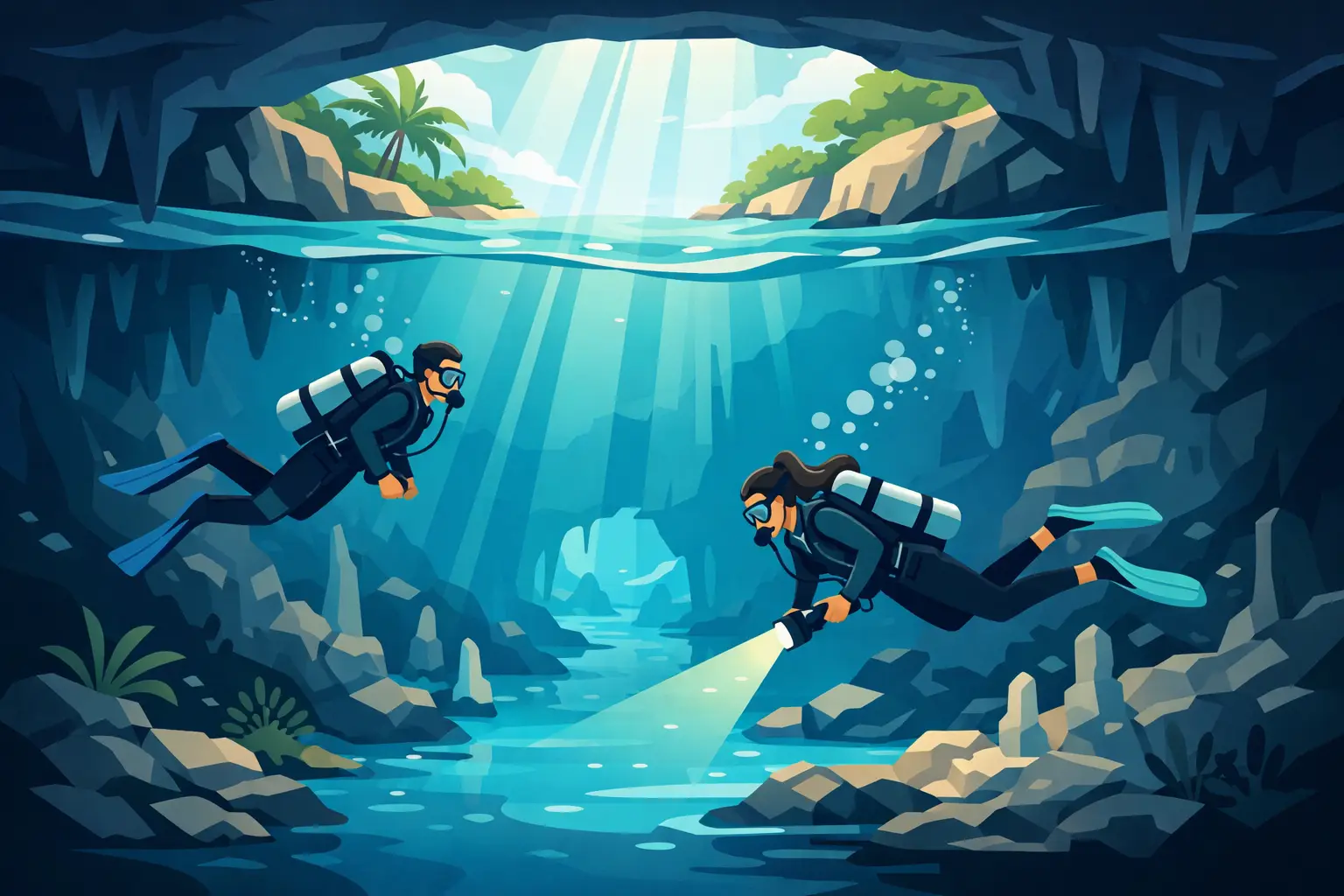
The first surprise is the silence. One minute you are in the jungle outside Tulum, hearing birds and wind through the trees. The next, you are floating over crystal-clear freshwater, watching beams of light cut through a cavern like stage lights. That is why cenote diving Tulum for beginners feels so different from a typical ocean dive. It is not louder, faster, or more extreme. It is calmer, clearer, and often far more memorable.
For new divers, cenotes can look intimidating from the outside. The words cavern and cave tend to make people picture narrow tunnels and advanced technical diving. In reality, many beginner-friendly cenote dives in Tulum are guided cavern dives done within daylight zones, with clear routes, strict safety standards, and professional supervision. If you are already certified and curious, this can be one of the most rewarding first specialty-style experiences in the Riviera Maya.
What makes cenote diving in Tulum different
Cenotes are natural freshwater sinkholes connected to a massive underground river system. In Tulum and the surrounding Riviera Maya, they offer visibility that often feels unreal, dramatic limestone formations, and a peaceful atmosphere you simply do not get on a busy reef day.
The experience is very visual. You may see haloclines, where fresh and salt water meet and create a shimmering effect, or tannic layers that turn the light warm and golden. Stalactites and stalagmites frame the route, and your bubbles echo softly overhead. It feels adventurous, but the beauty is in the control. Good cenote diving is slow, precise, and guided with intention.
That slower pace is exactly why some beginners love it. If you are the kind of traveler who wants more than a quick thrill, cenotes deliver something deeper. You are not just checking off a dive. You are entering one of the most unique underwater environments in the world.
Is cenote diving Tulum for beginners actually suitable?
Yes, with one important condition – beginner does not always mean non-diver. Most cenote cavern dives are for certified divers, even if they are newly certified. If you have your Open Water certification and feel reasonably comfortable underwater, there are cenotes near Tulum that can be a great next step.
If you are not certified yet, it depends on the operator, the site, and your comfort level. Some experiences are designed to introduce newer divers to easy conditions first through training in confined water or ocean dives before progressing to cenotes. That progression matters. A responsible dive center will not push you into an environment that does not match your skill level.
This is where choosing the right team makes all the difference. Beginner-friendly does not mean casual. It means the dive plan, briefing, group size, and site selection are all built around safety, confidence, and clear communication.
What beginners should expect on the day
A well-run cenote day starts long before you enter the water. Your guide will usually review your certification, experience level, air consumption, and general comfort in the water. If you have not dived in a while, say so. That is not a red flag. It is useful information that helps your instructor or guide choose the right approach.
The briefing is detailed, and that is a good sign. You will learn the route, depth, light zones, hand signals, line rules, and buoyancy expectations. In cenotes, divers do not wander. You follow a guideline, stay with the group, and respect the cavern limits set by your guide.
Once in the water, most first-time cenote divers are struck by the visibility and calm. There is usually little to no current, and conditions can feel gentler than the ocean. The challenge is not waves or surge. It is control. Good trim, slow finning, and careful buoyancy matter more here because the environment is delicate and the bottom can be silty.
That trade-off is worth understanding. If you are nervous because of choppy seas, cenotes may feel easier. If you tend to move quickly or rely on constant hand adjustments, they may ask more of your technique. Neither is a problem when you are guided properly, but it helps to know what kind of dive you are signing up for.
Skills that help before your first cenote dive
You do not need to be an advanced diver to enjoy cenotes, but a few basics should feel solid. Mask clearing, regulator recovery, equalization, and buoyancy control should not feel brand new. You should also be comfortable staying close to your buddy and following instructions without hesitation.
If your Open Water course was recent, that can actually work in your favor because the skills are still fresh. If it has been a year or two since your last dive, a refresher is often the smartest move. Confidence underwater is not about ego. It is about being relaxed enough to enjoy the dive and respond calmly if something unexpected happens.
Many travelers try to squeeze cenotes into a packed Tulum itinerary. That is understandable, but if diving is a priority, give it space. Rushing from a late night on the beach to an early morning cavern dive is not the best setup. Cenotes reward focus.
How to choose a beginner-friendly cenote experience
Not every cenote is the right first cenote. Some are better for photographers, some for more experienced cavern divers, and some are ideal for newer certified divers because of their layout, depth, and visibility. Ask direct questions before booking. A professional team should be happy to explain which sites suit your level and why.
Look for a dive center that emphasizes training standards, small groups, quality equipment, and honest screening of diver experience. This is one of those moments when the cheapest option can become the most expensive mistake. Expert briefing, site matching, and guide experience are not extras. They are the foundation of a good cenote day.
For travelers who want that balance of premium service and serious instruction, Infinity2Diving stands out because the experience is built around both adventure and education. That matters when you are trying something unforgettable for the first time.
Safety rules that matter in cenotes
Cenote diving has a strong safety culture for a reason. Cavern diving for recreational divers stays within the daylight zone and follows a permanent guideline. Your guide manages the route and keeps the group within conservative limits. You should never pass restrictions, enter cave zones, or treat the dive as a freestyle exploration.
Environmental respect is part of safety too. Poor buoyancy can damage formations that took thousands of years to form, and careless fin kicks can reduce visibility fast. In a reef setting, beginners sometimes get away with messy movement. In a cenote, technique shows immediately.
This is also why a proper guide-to-diver ratio matters. Beginners do best when there is enough attention, enough time for the briefing, and no pressure to keep up with highly experienced divers on a route that is above their comfort zone.
What gear and exposure protection you will need
Most divers use standard recreational scuba gear for cenote cavern dives, usually with exposure protection that suits cooler freshwater temperatures. Cenotes can feel colder than the Caribbean Sea, especially on longer dives, so a full wetsuit is common even in warm weather.
You generally will not need to overthink equipment if you are diving with a professional center. Well-maintained gear, proper weighting, and a setup adjusted to your body and experience level go a long way. If you are between sizes or unsure about thermal comfort, ask. Being slightly cold can shorten your enjoyment more than most beginners expect.
Good buoyancy is also easier when your weights are dialed in correctly. Too much weight is a common issue for newer divers, and in cenotes it often leads to unnecessary bottom contact or constant correction.
Why beginners often remember cenotes more than reefs
Reef diving is alive with motion and color. Cenote diving is different. It gives you space to slow down, breathe better, and notice details. Light becomes part of the landscape. Rock formations feel almost architectural. The whole dive has a sense of presence that stays with people long after vacation ends.
For some divers, cenotes are the moment scuba shifts from fun activity to lasting passion. You realize how many different underwater worlds exist, and how much skill and confidence can expand what is possible next. Maybe that means more guided dives while traveling. Maybe it means your Advanced course, a buoyancy workshop, or eventually cave training down the road. Every experienced diver started with a first step.
If cenote diving in Tulum is calling to you, trust that instinct, but pair it with the right preparation. Ask questions, be honest about your level, and choose a team that values safety as much as the experience itself. The best first cenote dive is not the most dramatic one. It is the one that leaves you calm, confident, and already thinking about the next time you descend into that clear blue light.