
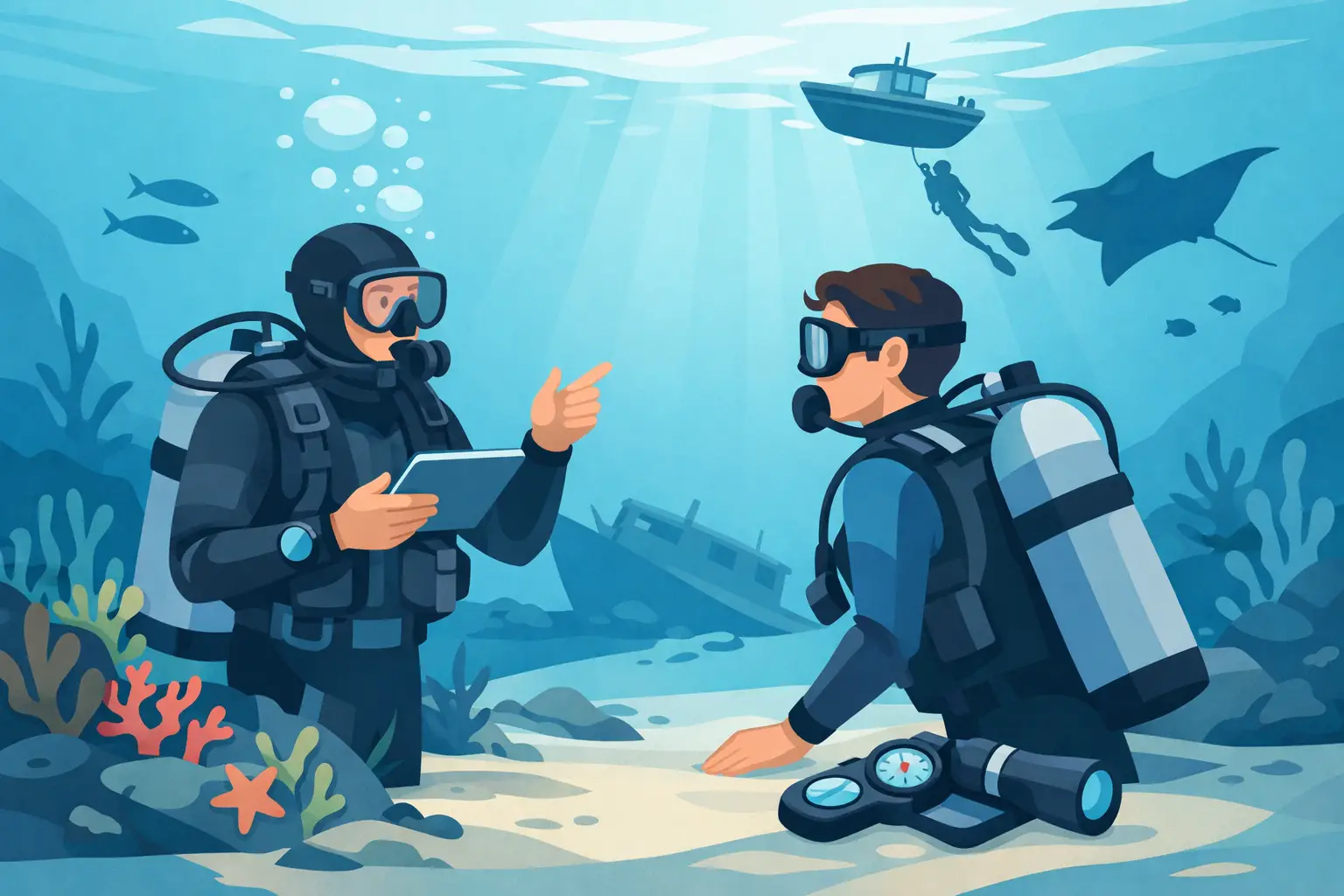
You do not get your PADI Advanced Open Water certification by sitting in a classroom for days. You get it by diving more, stretching your comfort zone, and proving to yourself that the underwater world gets bigger as your skills do. If you are wondering how to get PADI Advanced Open Water, the good news is that the path is simple, practical, and designed for real divers who want more range, more confidence, and better dive experiences.
For many travelers, this is the course that changes scuba from a vacation activity into a real passion. One day you are enjoying easy reef dives. A few days later, you are learning navigation, going deeper with purpose, and feeling far more in control underwater. That jump matters, especially if your next goal is cenotes, wrecks, drift dives, or eventually professional training.
How to get PADI Advanced Open Water step by step
The first requirement is straightforward. You need to be a certified Open Water Diver or hold a qualifying certification from another recognized training agency. If you have already completed your beginner certification, you are eligible to continue.
The course itself is built around five adventure dives. Two are required – Deep Adventure Dive and Underwater Navigation Adventure Dive. The other three are electives, and this is where the course starts to feel personal. Depending on the dive center, location, and conditions, you may choose options like Peak Performance Buoyancy, Drift, Night, Wreck, Fish Identification, or Boat Diving.
Unlike some advanced courses in other sports, this one does not require you to be an expert before you start. The point is to advance through guided experience. You will complete knowledge development connected to each dive, review skills with your instructor, and then apply them in the water. It is education, but in a very hands-on way.
Most divers finish the course in two to three days. The timeline depends on scheduling, travel plans, and the kind of diving available in the destination where you train. If you are visiting a place with easy access to multiple environments, the course can feel efficient without feeling rushed.
What the Advanced Open Water course actually gives you
A lot of divers assume this certification is mainly about going deeper. That is part of it, but it is not the whole value.
The deeper benefit is confidence. You learn how to think more clearly underwater, manage task loading, improve your trim and buoyancy, and navigate with more intention. Even if you never plan to chase the highest certifications, these skills make every future dive better.
There is also a practical access benefit. Many dive sites, charters, and specialty environments are better suited to divers with training beyond Open Water. Some operators strongly prefer Advanced Open Water certification for deeper sites or more demanding conditions. If you want to explore places that are less crowded, more dramatic, or more technical in feel, this certification often moves you closer to those opportunities.
That said, the course is not a magic pass. It does not replace experience. A newly certified Advanced Open Water diver may have broader training but still need time in the water before taking on challenging currents, overhead environments, or demanding dives. Good training centers are honest about that trade-off.
Choosing where to do your PADI Advanced Open Water
Location shapes your course more than many people realize. If you complete the training in calm, shallow, predictable water, you will still earn the certification, but the experience may feel very different from doing it in a destination with stronger currents, deeper profiles, boats, reefs, or specialty environments.
That is why many divers choose to complete this course while traveling. You are already in a place built for diving, and your five adventure dives can double as genuinely memorable experiences instead of just check-the-box training. In Tulum and the Riviera Maya, for example, divers can train in water that is both beautiful and skill-building, which makes the certification feel meaningful from day one.
The instructor matters just as much as the destination. Look for a dive center that teaches, not just processes students. You want a team that pays attention to buoyancy, awareness, air consumption, and decision-making, not one that simply moves a group from dive one to dive five. Premium instruction usually costs more, but it often saves you from developing weak habits that are harder to fix later.
A strong dive center should also be transparent about what is included. Equipment, transportation, certification fees, study materials, and marine park fees are sometimes bundled and sometimes not. If the price looks unusually low, there is usually a reason.
What to expect before and during the course
Before you arrive, you may be asked to complete eLearning or academic sections online. This makes the in-person part smoother and gives you more time in the water. If you are traveling, finishing the theory in advance is usually the smart move.
Once training starts, expect a mix of briefing, skill focus, and actual diving. This is not a boot camp, but it should feel intentional. On your Deep Adventure Dive, for example, you will not just descend and come back up. You will discuss gas management, narcosis awareness, planning, and how depth changes the way you experience time, light, and color underwater.
On the Navigation Adventure Dive, you will work with compass use and natural references. For some divers, this sounds less exciting than night diving or wrecks, but it often becomes one of the most valuable parts of the course. Knowing where you are and how to get back calmly is a major confidence shift.
Your elective dives depend on what the dive center offers and what makes sense for your goals. If your buoyancy still needs work, Peak Performance Buoyancy is a smart choice. If you want to prepare for local diving conditions in places with moving water, drift can be ideal. If you are drawn to structure and history, wreck may fit. The best elective choices are not always the flashiest ones. They are the ones that build the diver you want to become.
Common questions about eligibility, age, and confidence
Many divers ask whether they need a certain number of logged dives first. For PADI Advanced Open Water, the key requirement is your Open Water certification. You do not need dozens of dives before starting, although having a little recent experience helps. If you finished Open Water a year ago and have not been in the water since, a refresher may be the better first step.
Age matters too. Junior divers can enroll from age 12, though depth limits and standards differ for younger students. Adults in their 30s, 40s, 50s, and beyond often do extremely well in this course because they tend to be patient, focused, and intentional about learning.
If you are nervous, that does not mean you are not ready. It usually means you care. The right instructor can turn nerves into progress. But honesty matters. If you still struggle with mask clearing, buoyancy, or basic comfort underwater, rushing into advanced training just because the word advanced sounds exciting may not give you the result you want.
How much it costs and what affects the price
The cost of Advanced Open Water varies by destination and operator. You are paying for instruction, materials, boat or shore logistics, equipment if needed, certification processing, and the quality of the overall experience. A tropical destination with premium service, smaller groups, and strong safety standards will usually cost more than a budget operation running high-volume courses.
That difference is not automatically a bad thing. In diving, cheap and good are not always close friends. If a center includes quality rental gear, transportation, experienced instructors, and thoughtfully planned dives, the higher price often reflects real value.
You should also think beyond the sticker price. If your course includes dives you genuinely want to do in a world-class destination, you are not just buying a card. You are investing in training and memorable underwater time at once.
How to know you are ready after certification
A certification card is one milestone, not the finish line. After the course, the best thing you can do is keep diving while the skills are fresh. Practice buoyancy until it becomes second nature. Work on trim, air consumption, and awareness. Repeat the environments you enjoyed most and slowly expand from there.
This is also where your next path becomes clearer. Some divers go straight into specialty courses. Others build experience first and later move toward Rescue Diver. If you have bigger goals like professional training, Advanced Open Water is one of the key steps that starts turning that dream into something structured and real.
If you want an experience-led course in a destination that gives every dive a sense of purpose, training with a center like Infinity2Diving can make that progression feel both exciting and grounded. The right team does more than certify you. They help you see what kind of diver you are becoming.
The best time to get Advanced Open Water is usually when you still feel excited, curious, and just a little challenged by what is next. That combination is where real progress happens.