
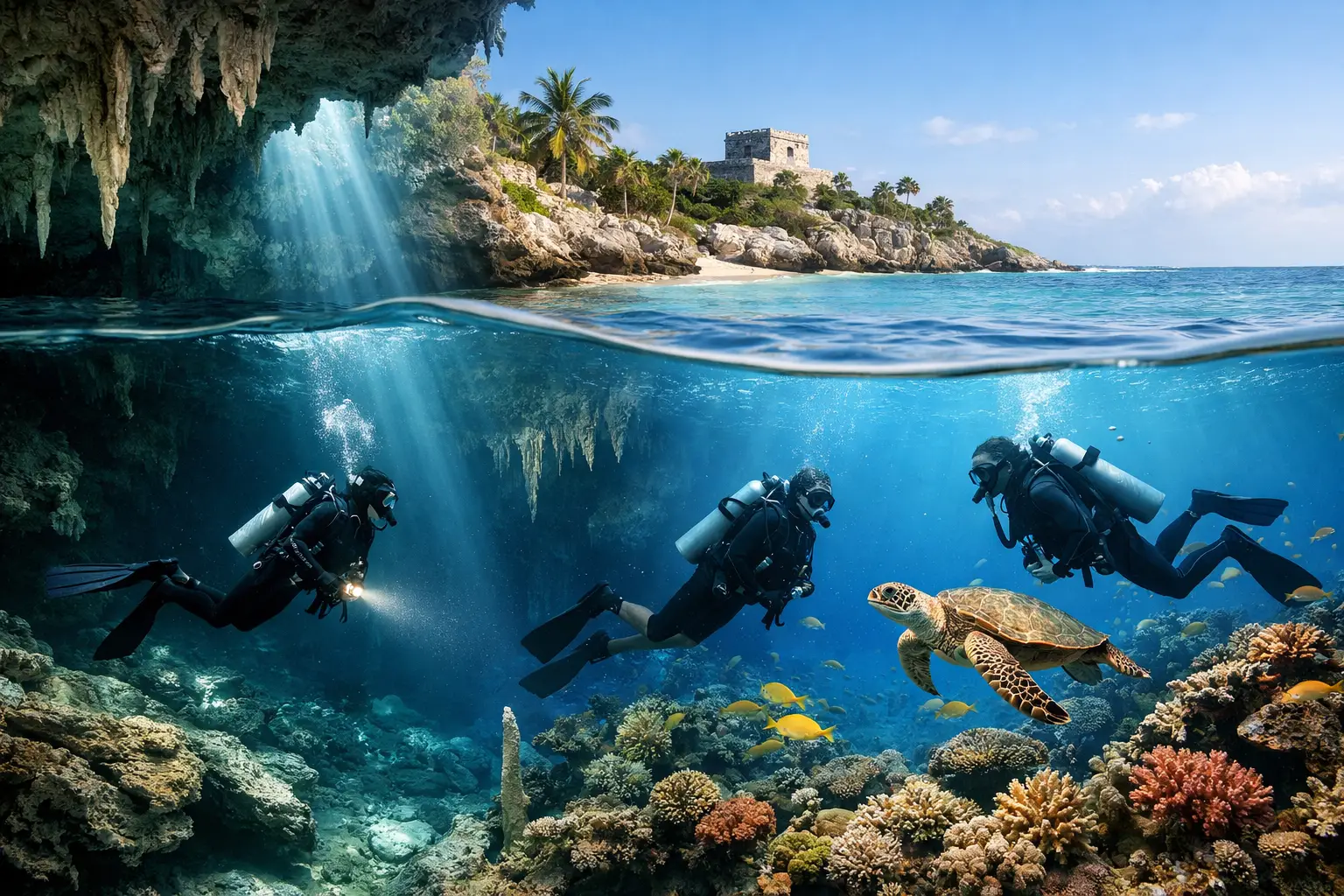
The first breath underwater in Tulum can happen beneath a jungle canopy, with sunlight cutting through crystal-clear freshwater, or above a Caribbean reef where turtles drift past soft corals. That contrast is what makes diving Tulum more than a single type of trip. Here, one vacation can become your first scuba experience, a serious skills-building week, or the next step toward a professional diving career.
The right experience depends on your certification, comfort level, and the kind of memory you want to take home. A thoughtful plan matters because cenotes, ocean reefs, and advanced overhead environments each call for different skills, equipment, and supervision.
Why Diving Tulum Feels So Different
Tulum sits beside one of the world’s most remarkable underwater landscapes. Offshore, the Mesoamerican Reef brings warm Caribbean water, colorful reef structures, and a chance to encounter marine life ranging from sea turtles and rays to schools of tropical fish. Inland, the Yucatán Peninsula’s limestone bedrock holds an extraordinary network of cenotes – natural freshwater sinkholes connected to vast underground cave systems.
Those two settings create very different moods. Reef diving feels open, blue, and alive with movement. Cenote diving is calm, intimate, and almost otherworldly, with mineral-clear visibility, dramatic rock formations, and shafts of light that change as the sun moves overhead.
That variety is a genuine advantage for travelers, but it is not a reason to rush from one environment to another without preparation. A great dive center will match the site to your experience instead of treating every diver like they want the same thing.
Cenote Diving in Tulum: Beauty With Clear Boundaries
For certified open water divers, cavern-zone cenote dives are often the experience they remember most vividly. In the daylight areas near an entrance, guides can lead divers through spacious passages where natural light remains visible. The sensation is peaceful rather than claustrophobic when the route, buoyancy, and group size are managed well.
Cenotes are not the same as cave diving. This distinction matters. Recreational cavern dives stay within established limits, with a direct route to open water and a trained guide leading the way. Full cave diving requires specialized training, redundant equipment, disciplined gas planning, and a completely different mindset. No traveler should enter a cave simply because they are curious or confident in the ocean.
Excellent buoyancy control is especially valuable in cenotes. A careless fin kick can disturb delicate sediment, reducing visibility for the group and damaging a setting that has taken thousands of years to form. If your buoyancy feels rusty, tell your instructor or guide before the dive. A refresher session or an easier first site can make the entire experience more comfortable.
Water temperatures in cenotes are generally cooler than the Caribbean, so exposure protection deserves attention. Your dive team can recommend the right wetsuit thickness based on the site and your personal comfort. Feeling cold may seem minor at the surface, but it can distract from breathing, trim, and enjoyment underwater.
Who Should Choose a Cenote Dive?
Cenote diving is ideal for certified divers who want something beyond a standard reef day and are willing to follow precise guidance. It is particularly rewarding for photographers, divers who love geology, and anyone drawn to quiet, atmospheric environments.
It may not be the best first choice if you feel anxious in enclosed spaces, have not dived recently, or are still getting comfortable with basic skills. There is no loss in choosing a reef dive first. Building confidence is part of the adventure, not a detour from it.
Caribbean Reef Diving: Tulum’s Moving Underwater World
Reef diving near Tulum offers the classic Caribbean scenes many travelers imagine before they arrive: warm blue water, coral formations, parrotfish flashing bright color, and the possibility of a turtle appearing just when you stop searching for one.
Conditions vary by day. Current, visibility, wind, and boat access shape the plan, which is why responsible operators do not promise a specific animal encounter or force a site when the conditions are not right. The better promise is a professionally chosen dive plan, thorough briefing, and a team that puts safety ahead of a fixed itinerary.
For new divers, shallow reef sites can provide an inviting place to practice the fundamentals. Equalizing, maintaining neutral buoyancy, checking your air, and communicating with a buddy become far more meaningful when you are doing them among living coral rather than in a classroom.
Certified divers can use reef days to reconnect with the basics or pursue additional training. A guided dive is perfect when you want to enjoy the ocean without logistics. A PADI Advanced Open Water course or specialty course makes more sense when your goal is to leave with stronger judgment and a recognized certification, not just great photos.
Your First Time Scuba Diving in Tulum
You do not need prior experience to breathe underwater for the first time. A professionally run beginner experience starts slowly: equipment introduction, core safety concepts, shallow-water skills, and close instructor supervision. The point is not to prove that you are fearless. The point is to learn how scuba feels while knowing an experienced professional is beside you.
Many first-timers arrive worried about breathing through a regulator. Most are surprised by how quickly it becomes natural once they relax and focus on slow, steady breaths. Equalizing ear pressure can take more patience. Never push through discomfort. Signal early, ascend slightly if directed, and try again. Good instructors expect this and create space for you to learn at your pace.
If you fall in love with it, a Discover Scuba Diving experience can become the beginning of a longer path. An Open Water Diver course gives you the foundation to dive independently with a buddy within your training limits. From there, Tulum offers meaningful progression: advanced training, rescue skills, specialties, divemaster development, and instructor-level professional programs.
How to Choose the Right Diving Tulum Experience
Start with an honest answer to one question: what do you want this trip to give you? If you want a beautiful, low-pressure introduction, choose a beginner program with a patient instructor and small groups. If you are already certified and want scenery unlike anywhere else, pair a reef dive with a guided cenote experience. If diving is becoming part of your identity, use your time in Tulum to invest in structured PADI education.
When comparing dive centers, look beyond the price shown first. Ask what is included, whether equipment rental and transportation are covered, how many divers are in each group, and who will lead your dives. Confirm the certification and experience level required for each site. For courses, ask about the instructor’s teaching approach, schedule flexibility, and how much time is devoted to practical skills rather than simply checking boxes.
A premium experience should feel personal from the first conversation through the final debrief. At Infinity2Diving, that means pairing adventure with high standards, warm guidance, and training built around the diver you want to become.
Safety and Conservation Are Part of the Experience
The most memorable dives are usually the ones where you felt completely present. That only happens when planning and safety are handled with care. Complete medical forms honestly, disclose recent illnesses or ear concerns, stay hydrated, and avoid alcohol before diving. Listen closely to briefings, even if you have hundreds of logged dives. Local conditions and site procedures always deserve your attention.
Respect for the environment is equally practical. Keep your fins, gauges, and hands away from coral and cave formations. Use reef-safe sun protection where appropriate, secure loose gear, and never chase or touch marine life. In cenotes, perfect trim protects fragile formations and preserves visibility. In the ocean, calm movement gives wildlife room to behave naturally.
Travelers often come to Tulum seeking a moment that feels extraordinary. The best way to find it is not to chase the most extreme option. Choose the dive that fits your skills today, learn from professionals who take your goals seriously, and leave the water more capable, more curious, and more connected to the world beneath the surface.